India’s Ethanol Push Raises Feed Costs, Hits Poultry Farmers
India’s ethanol fuel drive is increasing maize prices, putting pressure on small poultry farmers who depend on the grain for feed, raising concerns about food security and rural livelihoods.
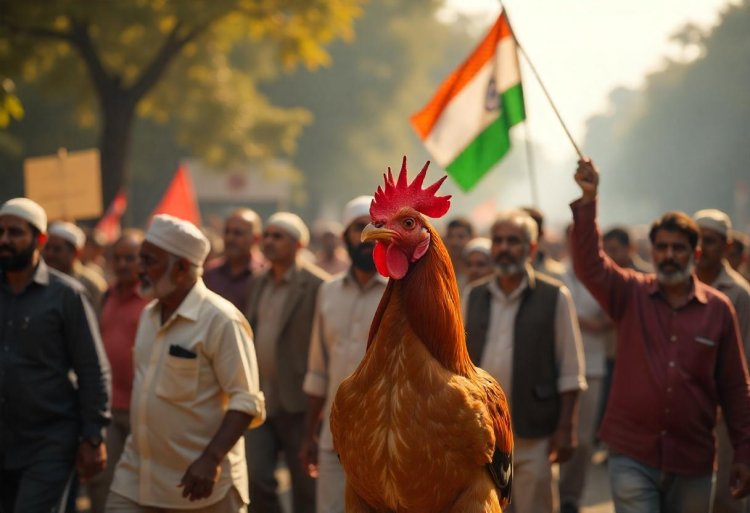
India's push towards aggressive ethanol fuel blending is finally coming with unintended consequences for the nation's small poultry farmers, who must shell out extra cash for their feed as siphoning of maize stocks now starts taking its toll. While the government targets a 20% ethanol content in all the petrol that is on sale across the country by December 2025, the prices of maize—a major raw material for biofuel—have skyrocketed. This boom is driving maize prices up and pushing small-scale chicken farmers into tight financial corners.
In areas such as Ghazipur and Varanasi in Uttar Pradesh, small farmers who utilize maize-based feed to raise chickens are struggling to stay in business. Maize prices have risen over 20% in the last year, and feed prices in general have risen up to 40%, affecting chicken and egg production. While maize price is still going up and egg prices follow the market trend, poultry growers cannot transfer the extra cost to the end-user. This difference is chipping away at already razor-thin margins.
India's ethanol plan aims to cut dependence on imported crude and minimize carbon footprints. Government accounts put the total savings to the nation in terms of oil imports at around ₹1.06 trillion (USD 12.37 billion) for the years 2014 to 2024. It also averted the emission of 54.4 million metric tonnes of carbon dioxide, or the equivalent emissions of almost 12 million petrol vehicles in a year. But the economic and ecological advantage of the ethanol push is being paid for in terms of food security and rural livelihoods.
Indian ethanol production from maize rose from 1 million metric tonnes in 2022 to more than 6 million metric tonnes in 2024 and is estimated to hit 11 million metric tonnes by the end of the year 2025. Ethanol production alone absorbs about a third of maize nationwide. This comes at the expense of the poultry industry, which independently uses about 60% of the maize in the country. With more maize being consumed as fuel, local supplies tighten, prompting India, once a net exporter, to begin importing maize to meet demand.
Small-scale poultry farms, the majority in the industry, are increasingly struggling to survive under these circumstances. The small operators have no access to tools like forward contracts or long-term supply agreements that can assist them in adjusting to input price volatility. Increasing feed prices are compelling many into using lower quality substitutes, again further lowering egg-laying and chicken-growing efficiencies, making their operations less sustainable.
Pressure is also added from other issues such as poultry disease, low-cost credit access being restricted, and extreme weather such as heatwaves that impact not just egg production but even the survival of birds. Feed and chick distributors in smaller scale businesses are also seeing their profit margins fall, leaving additional cost pressure down the chain.
Experts argue that if the maize price keeps going up, most small-scale poultry farmers will be left with no option but to close shop or scale down operations. That would not only affect rural employment and incomes but also national egg and chicken production volumes. Meanwhile, the government remained silent on how it would safeguard poultry farmers or adjust food and fuel security requirements.
India's existing maize demand—fueled by the ethanol industry as well as liquor and industrial consumption—already exceeds domestic supply. A study by the Centre for Study of Science, Technology and Policy (CSTEP) finds that in order to meet the target of a 20% ethanol blend, it would require an extra area of about seven New York Cities entirely planted with maize and other biofuel crops. This large-scale land use transformation creates additional issues like sustainability, food security, and natural resource depletion.
A switch to second-generation (2G) ethanol technologies, using agricultural residues and inedible biomass as raw material instead of food crops, is being advocated by experts. The alternative processing can decrease dependence on maize and improve avoidance of fuel versus food competition. But 2G ethanol is still in the nascent stage of commercialisation in India and is far from widespread practice.
To avoid these, the government is recommended by experts to impose a ceiling on land and water use of ethanol production, give top priority to non-food feedstocks, and specify sustainable ethanol. At the same time, increasing maize sowing by policy support, subsidy, or incentives can stabilize supply to the fuel as well as food industry.
Farmers and farm lobby groups also urge the government to limit the level of maize applied to ethanol production and step in to boost domestic production. Without policy intervention, small poultry farms risk being battered by volatile prices and can never survive under the nascent biofuel economy.
As India progresses towards energy security with biofuels, agricultural industry impacts, specifically poultry culture, underscore the need for a holistic approach. Harmonization of environmental objectives with agriculture production and rural livelihoods will be essential to long-term sustainability of the nation's agriculture and energy policies.
Source:
Thomson Reuters Foundation, republished with permission through Context (https://www.context.news/), July 2, 2025
Credits:
Thomson Reuters Foundation, Context, ILRI (Image Credit: CC BY-SA 3.0 via Flickr)
What's Your Reaction?