The Ministry of Jal Shakti convened the All India Water Secretaries' Conference in New Delhi to review irrigation, dam safety, water conservation and state-level water reforms, while urging faster implementation of key initiatives.
The Ministry of Jal Shakti brought together roughly 200 water secretaries and senior officials from states and Union Territories on Monday for a conference reviewing India's key water management programmes, from irrigation and dam safety to conservation efforts.
Union Jal Shakti Minister C. R. Patil chaired the meeting, with Minister of State Raj Bhushan Choudhary also in attendance. Officials from the Department of Water Resources, River Development and Ganga Rejuvenation rounded out the gathering.
The agenda covered eight priority areas: progress on the Modernisation of Command Area Development and Water Management (M-CADWM) Scheme, the rollout of the Catch the Rain 2026 campaign, revised appraisal guidelines for irrigation and flood management projects, reservoir rule curves, the State Water Reforms Framework, dam safety evaluations, irrigation censuses, and a proposed Model State Water Awards framework.
Department Secretary V. L. Kantha Rao opened proceedings by laying out the agenda and pressing the case for tighter coordination between the Centre and states on water management.
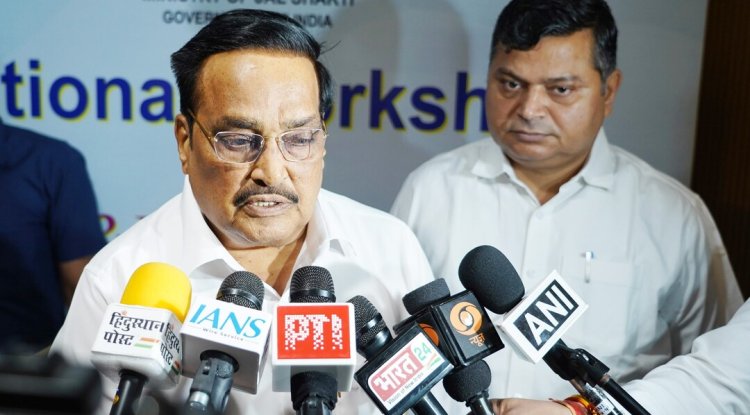
Patil, addressing the gathering, framed water security as central to economic growth, food production, environmental protection and public welfare — and flagged climate change, groundwater depletion and rapid urbanisation as mounting challenges requiring scientific, efficient management.
He pushed states to ramp up the Catch the Rain 2026 campaign through rainwater harvesting, groundwater recharge, restoration of traditional water bodies, afforestation and community involvement, while also calling for faster execution of the M-CADWM Scheme, stronger Water User Associations and better irrigation efficiency.
Patil also called for simpler project appraisal procedures to speed up irrigation and flood management works, and set a December 2026 deadline for states to finish comprehensive dam safety evaluations under the Dam Safety Act, 2021. He asked states to also address reservoir sedimentation.
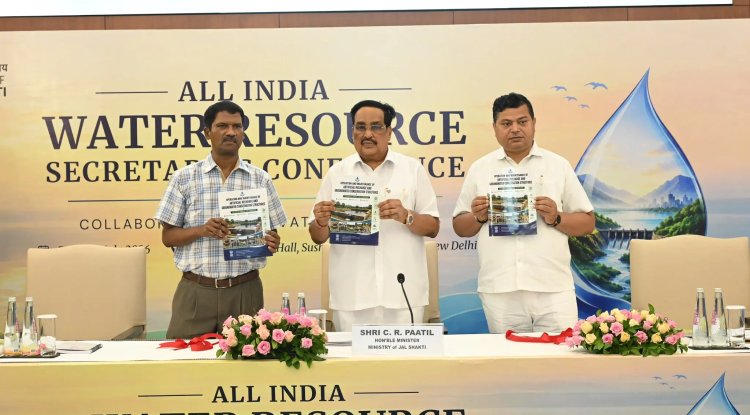
The ministry used the occasion to release three publications: a framework for reusing treated wastewater in Varanasi, an operations and maintenance manual for artificial groundwater recharge structures, and a Schedule of Rates manual for drilling work prepared by the Central Ground Water Board.
States and the Centre wrapped up the conference, agreeing to fast-track ongoing water management programmes, with a shared focus on water security, infrastructure and sustainable use of resources.
What's Your Reaction?