EU clears France’s €63 billion offshore wind program to expand clean energy and boost renewable power generation.
The European Commission, France offshore wind plan, €63bn state aid, renewable power and Clean Industrial Deal are all working on a flagship policy package to accelerate Europe's shift to a low-carbon economy. The Commission has given approval for the €63 billion state aid scheme for France to support 25 years of offshore wind projects. It is hoped the project will substantially increase the renewable energy power of France and boost the EU's overall climate and industrial goals.
The approval marks one of the biggest investments in offshore wind power in Europe, and underscores the EU's reliance on clean energy to reach its net-zero goals. The program has received approval from the European Union's Clean Industrial Deal State Aid Framework (CISAF), which aims to facilitate investments in renewable energy and clean technologies for Member States to boost their economies and ensure a level playing field for all EU Member States.
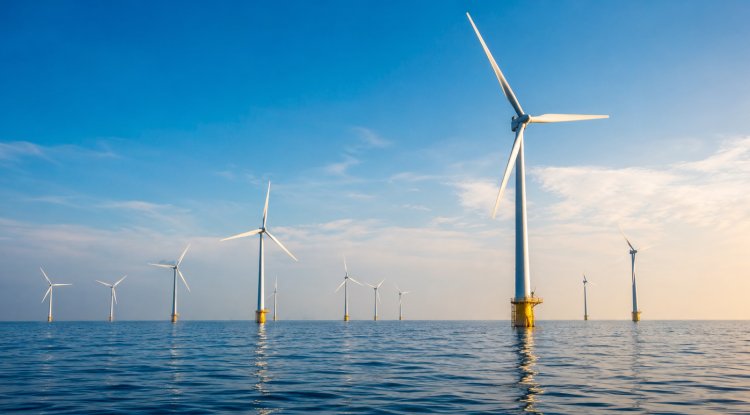
France plans to bring its offshore wind power to 11 new windfarm projects.
The approved scheme is for the installation and use of a group of 11 offshore wind farms throughout the North Sea, Atlantic Ocean and Mediterranean Sea. The projects are expected to provide a total installed capacity of up to 11.1 GW, which would make them some of the largest renewable energy projects in the country.
The offshore wind farms once installed will contribute with about 47.8 terawatt-hours (TWh) of renewable electricity each year. This production would fill over 10% of France's electricity needs for an entire year, thereby enhancing the country's energy security, and lowering its reliance on fossil fuel-powered electricity generation.
The long-term investment also contributes to France's energy transition and its strategy of diversifying its electricity mix by boosting renewable energy while maintaining their low carbon energy mix.
Approved under Clean Industrial Deal Framework
The Commission's determination followed the Clean Industrial Deal State Aid Framework (CISAF), launched in May 2025 to streamline and speed up the approval of government support for clean energy projects and decarbonisation efforts.
It allows EU Member States to offer financial support for the deployment of renewable energy, clean technology production, and industrial transformation, while maintaining a consistent approach in accordance with European competition rules.
CISAF is part of the European Union’s Clean Industrial Deal, which aims to enhance the competitiveness of industry and promote climate action. The framework is designed to incentivize investments in clean technologies, increase renewable energy production, and provide favorable conditions for Europe's move towards a net-zero economy.
Financial Support through Two-Way Contracts for Difference
The French support scheme will be implemented via a two-way Contract for Difference (CfD) with a variable price, a mechanism that is also commonly used to support renewable electricity generation and that safeguards the investors and consumers from the volatility of the electricity market.
This will be done using a “pay-as-bid” model at a competitive bidding process where a reference or strike price will be determined. Should the price of electricity be lower than the strike price, the French government will reimburse the project developers for the difference. On the other hand, when the market price of electricity surpasses the strike price the developers will return the surplus to the government.
The idea here is to offer a sustainable income stream for the offshore wind developers and a flexible support regime for the public. The European Commission highlighted that the financial support for the scheme will be provided by a competitive tender process, without discrimination or prejudice.
Commission declares Scheme compatible with the EU rules.
After the assessment, the European Commission has decided that the French scheme meets the requirements set by CISAF. The aid is in line with the European Commission's rules and principles, and is considered necessary, appropriate and proportionate for supporting the development of renewable electricity generation and enabling economic activities which promote the implementation of the Clean Industrial Deal.
The approval is part of the Commission's overall goal of allowing Member States to speed up investments in clean energy while adhering to EU state aid rules.
EU Reiterates Ambition on Climate Action.
On the decision, Teresa Ribera, Executive Vice-President for Clean, Just and Competitive Transition, commented: “This is a positive decision that opens the door to France's support programme for offshore wind and strengthens the country's decarbonisation pathway towards a fully decarbonised energy system.
The European Commission (EC) will remain supporting Member States in achieving their joint climate targets, she added, with a focus on promoting the deployment of renewable energy and on industrial decarbonisation.
The Commission's decision also reflects the EU's continued priority to build up the EU's internal clean energy infrastructure and ensure its economic competitiveness in the long term through sustainable industrial development.
The EU is set to push for more renewable energy as part of a wider initiative.
The European Commission's approval of France's offshore wind support programme comes after it made a similar decision for state support for solar in Italy.The European Commission's approval of France's offshore wind support programme is the latest in a series of state aid decisions. The Commission also recently approved a €23bn state aid programme for Italy for the deployment of renewable electricity generation under the same CISAF framework.
The European Union has been stepping up its use of joint public investment and policy measures to speed up the rollout of renewables across its Member States, as these approvals demonstrate. The EU's climate and energy goals, as well as its energy resilience and competitiveness, are expected to benefit significantly from such energy investments, as countries continue to make progress on the expansion of clean energy infrastructure.
What's Your Reaction?