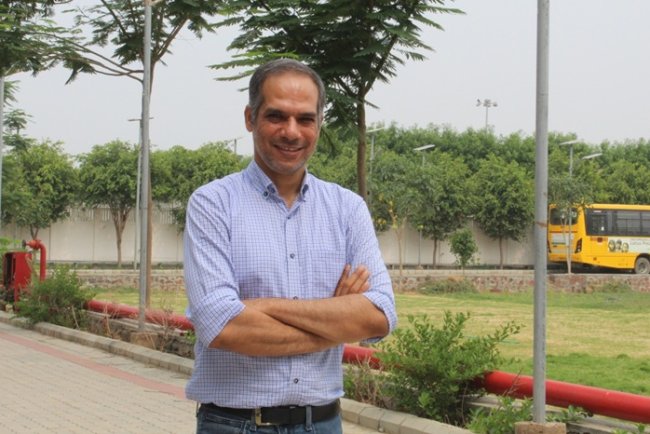
The Chief General Manager (CGM), Department of Climate Action and Sustainability (DCAS) at NABARD (National Bank for Agriculture and Rural Development), says climate is no longer being treated as a peripheral development issue within the institution

India’s rural climate finance story is entering a new phase. What began largely as grant-led adaptation projects is now moving into mainstream lending, with climate risks increasingly shaping how rural credit is designed and deployed. But while institutions have become more ambitious, one challenge remains unresolved: getting climate finance to the small farmer at scale.
In conversation with ResponsibleUs, S D Rohilla, Chief General Manager (CGM), Department of Climate Action and Sustainability (DCAS) at NABARD (National Bank for Agriculture and Rural Development), said climate is no longer being treated as a peripheral development issue within the institution. It is now influencing core lending strategy, district planning and product design. He pointed to a broader shift from grant-heavy programmes toward market-linked green finance, but cautioned that access on the ground remains uneven, especially for smallholders.
Rohilla said rising heat stress, water scarcity and climate-linked crop losses are beginning to reshape how rural finance institutions think about risk. Yet despite stronger policy frameworks and growing momentum, the biggest gap remains implementation at the last mile, where many farmers still struggle to access climate-linked support.
NABARD has been central to climate finance in rural India. What has changed in the last 2–3 years in terms of where the money is actually going?
Three shifts stand out. First, climate has moved from being an embedded activity to being mainstreamed. Second, the Climate Strategy 2030 we released on Earth Day 2024 gave us a four-pillar architecture – accelerating green lending, a market-making role, internal green transformation, and strategic resource mobilisation. That is reshaping product design, not just reporting.
Third, we are moving from a grant-heavy focus to market-oriented instruments. We have designed ‘NABARD Green Lending Facility’ through which we have supported Indian entrepreneurs in carrying out investments across a range of sectors aligned with India’s developmental agenda – setting up Clean Energy plants in rural areas, Circularity based on agricultural waste, Waste Management in smaller districts, EV logistics in tier 2/3 towns, etc.
We hear a lot about green finance, but on the ground, are farmers and rural institutions really able to access it easily?
Access has improved, but friction remains. The macro picture itself tells the story: India needs roughly USD 170 billion a year in green finance, and the latest available estimates show inflows closer to USD 49 billion, with only about USD 5 billion going to adaptation. Most of that has historically bypassed smallholders.
What we want to work upon is the aggregation route – FPOs, PACS, SHG federations, and cooperatives as the interface between climate finance and the individual farmer. That is why PACS digitisation, FPO strengthening, and microfinance partnerships are strategic priorities of NABARD. Our Chairman, Dr Shaji has laid a phenomenal amount of importance upon mainstreaming and empowering these last-mile collectives, and yes, climate finance and adaptation will be a part of the efforts as we go ahead.
Another thing which he has laid a lot of stress upon is product simplification. A farmer shouldn’t need to know the words “climate finance” to access a solar pump loan, a drip irrigation subvention, or crop-shift support. Our job is to hide that plumbing – and we are moving in that direction through KCC-linked climate-smart products, leveraging the reach of our subsidiary NabKisan to provide agri value chain financing for climate resilient agriculture, etc.
With rising heat stress, especially in states like UP, Bihar and Rajasthan, are you seeing climate risks now affecting credit decisions or project planning?
Yes, and this is one of the quieter but important shifts. Our District-level Potential Linked Plans and State Focus Papers now increasingly incorporate climate vulnerability. The ESCAP Asia-Pacific Disaster Report 2025 projects that parts of UP, Bihar, Rajasthan, MP, Telangana and Maharashtra may face near-permanent heat exposure by the end of the century, and working hours lost to heat in India could rise to the equivalent of 34 million full-time jobs by 2030. Those numbers cannot be treated as an externality in credit planning.
Practically, this is showing up in three places: how best to incentivise state governments to invest in climate adaptation, the way we finance projects that have a direct impact on farmers like minor irrigation and cold storage, and identifying measures to support 5 critical agri value chains in heat-vulnerable districts.
We still have distance to cover on granular, district-level climate risk scoring integrated into credit decisions, but the direction is set.
Do you think heat is still treated as a seasonal issue in rural planning, or has that started to change?
Two years ago, I would have said largely seasonal. Today, it is starting to be treated as structural – but unevenly.
It is structural now when we talk about dairy – where heat stress directly hits milk yield and animal health – or when we design housing for poultry and storage for perishables. It is also becoming structural in labour and sowing calendars; studies are consistently showing wheat yield losses of 10–20% in North India without adaptation, and much higher losses in high-warming scenarios.
Where heat is still treated seasonally is in household-level planning, local infrastructure design, and insurance product structuring. A heatwave is still largely seen as a weather event rather than a planning parameter. Our view is that over the next Five-Year cycle, heat-proofing – shade infrastructure, cool roofs in rural markets and storage, and heat-tolerant varieties – should be as normalised as flood-proofing has become in the east.
There has been a push around climate-resilient agriculture and natural farming. Are these still pilot ideas, or are they scaling in a meaningful way?
Some are well past the pilot stage, others are still in transition. The National Mission on Natural Farming, with a Rs 2,481 crore outlay and a target of 7.5 lakh hectares across 15,000 clusters and 1 crore farmers, has moved quickly since its approval in November 2024. Over 10 lakh farmers were enrolled within eight months, more than 70,000 Krishi Sakhis trained, and 806 training institutions engaged. That is genuinely scale, not pilot.
Within climate-resilient agriculture more broadly, practices like zero tillage, SRI, AWD in rice, and micro-irrigation are well past the demonstration stage and now embedded in state extension systems. Others – biochar, landscape-level IFS, carbon-sequestering agroforestry at scale – are in the pilot-to-scale transition, which is the hardest part.
What we are focused on is reducing the mortality rate of that transition – through outcome-linked financing, aggregator-backed market linkages, and de-risking tools that make these models bankable for commercial lenders.
How aligned are state-level programmes with national climate priorities right now?
All States and UTs have revised or are revising their State Action Plans on Climate Change, and these feed into the national missions under the NAPCC. NAFCC, for which NABARD is the National Implementing Entity, explicitly prioritises interventions identified in SAPCCs – that institutional bridge is working.
States are also running some of the most advanced programmes in their own right – Andhra Pradesh on natural farming, Odisha on millets and mangroves, Rajasthan on drought-proofing, Himachal on mountain ecosystems. Assam has just appointed a PMU to assist them in climate budgeting.
What still needs to be achieved is convergence – between climate plans, agriculture plans, rural development plans and watershed plans – which still sit in different departments.
A lot of global focus is still on cutting emissions. But in rural India, adaptation feels more urgent. How is NABARD balancing the two?
This is a balance we think about every day. Globally, climate mitigation finance crossed USD 1.2 trillion in 2022; adaptation received only about USD 68 billion. In India, there is a lack of standardisation and mandatory disclosure requirements. Hence, it is difficult to obtain completely accurate data but it is undeniable that climate finance flows are overwhelmingly more in favour of mitigation as compared to adaptation.
NABARD has taken the first step in standardisation by defining and implementing a green taxonomy. A number of our interventions promote adaptive capacity in the form of food security, access to water, livelihood generation and rural infrastructure creation. But adaptation and mitigation are not always separable: a solar irrigation pump reduces emissions and protects against power cuts; agroforestry sequesters carbon and diversifies income; biogas reduces methane and cuts fertiliser costs.
Our approach is to lead with adaptation, treat mitigation co-benefits as a bonus rather than a constraint, and use the new Green Impact Fund and Carbon Fund to further our objectives.
Are we investing enough in simple adaptation measures like water conservation, crop diversification and local infrastructure?
More than before, but not yet at the scale the science would demand. Between 2015 and 2021, India lost approximately 33.9 million hectares of crops to excess rains and another 35 million hectares to drought. The return on simple, non-glamorous adaptation – watershed treatment, farm ponds, check dams, drought-tolerant varieties, minor irrigation – is among the highest in the development portfolio.
NABARD’s watershed programmes, RIDF-funded minor irrigation, and Tribal Development Fund investments are the workhorses here. These don’t make headlines, but they move the needle.
Where we need more capital is in things that don’t fit neatly into subsidy schemes – aggregated crop diversification backed by assured markets, decentralised cold storage, rural drainage, and community-managed groundwater. That is where blended capital and concessional windows have to do the heavy lifting, because pure commercial finance will not get there on its own.
We often talk about plans and frameworks. From your experience, where does implementation usually break down?
There are 3 typical failure points. First, last-mile institutional capacity – at the Gram Panchayat, FPO or cooperative level. A very good district plan will not deliver if the implementing unit at the village has neither the staff nor the training to absorb funds and outcomes.
Second, ensuring that different schemes targeting different parts of the value chain converge to create a market-based solution. A farmer’s climate resilience depends on credit, inputs, extension, water, market access and storage – each from a different scheme, often a different ministry. Where we see programmes succeed – Lakhpati Kisan, some of the FPO-led natural farming clusters – convergence has been deliberately engineered, not accidental.
Third, the data-to-decision loop. We generate a lot of data – crop surveys, satellite data, SAPCC monitoring – but too much of it sits downstream of decisions rather than informing them in time. Closing that loop is a priority for us, including through our DICRA platform.
Is the lack of local data still a challenge when it comes to designing climate projects?
It is a constraint, but a shrinking one. At the district level, we now have reasonably good climate vulnerability assessments – our Climate Vulnerability Index work, combined with IMD data and remote sensing, gives us a workable picture.
The real data gap is at the sub-district and panchayat level – where crop-specific, micro-watershed-specific, and household-level climate data would meaningfully change project design. That is where the Government of India’s Agri Stack and the DPG in agriculture will play a critical role.
Equally, we are trying to move from data availability to data use – training our own staff and partner institutions at the Centre for Climate Change at BIRD Lucknow so that climate data is actually priced into project design, and not just annexed to it.
Climate action is often seen as a cost. But are you seeing examples where it is actually improving incomes for rural communities?
Yes, and this is the story that deserves more airtime. Watershed-treated villages routinely see 40–60% increases in irrigated area, with corresponding gains in cropping intensity and household income. FPO-anchored natural farming clusters in Andhra Pradesh and elsewhere have shown significant reductions in input costs alongside price premiums on produce.
The mental model has to change from “climate action is a cost” to “climate resilience is a revenue strategy”. The economics are there; the challenge is to make them visible and bankable at scale.
What are the biggest risks for small farmers in the current climate transition?
Compounding shocks is the biggest risk – heat, water stress, and market volatility landing together. A single bad season can wipe out years of asset-building, and small farmers have the thinnest buffers. Studies suggest a 2.5–4.9°C warming could reduce wheat yields by 41–52% and rice by 32–40% in India. Without financing adaptation measures, the downside will be severe and can create social stresses.
Another risk is the transition risk – how can we support the farmer in moving away from traditional practices to practices that enhance adaptive capacity? Any change in practices (flooding to AWD/DSR in terms of rice) or into more climate resilient crop varieties or in the adoption of natural farming techniques has real transition costs, and if those costs fall on the farmer, uptake stalls and trust erodes. That is why lowering the cost of finance and designing mechanisms to address the income gap during transition is so important.
Are private players stepping in meaningfully in rural climate projects, or is it still largely government-driven?
From a financing perspective, it is still predominantly public and concessional. However, the private pipeline is playing an increasing role in providing the package of solutions that can be adopted by the farmers. The challenge is the economics of lending – small ticket sizes, dispersed geographies, long payback periods.
On the equity side, Nabventures has already backed a portfolio of agri and climate-tech startups, and the Rs 1,000 crore Green Impact Fund and Rs 300 crore Carbon Fund – developed with Intellecap as technical partner – are specifically designed to crowd private capital into adaptation and carbon space.
What kind of partnerships are working on the ground right now?
Trust is a key element of any partnership – especially one which deals with smallholder farmers. So, from a farmer's perspective, any partnership that involves a high-trust interface is the way ahead. These could be
FPO-anchored partnerships – where a farmer collective is the vehicle and a technical partner (NGO, agri-tech, research institution) brings practice, while also arranging finance, possibly through Nabkisan.
State convergence partnerships – where SRLMs, PACS, and state agri departments co-implement with NABARD, leveraging each other’s reach.
From a global capital flow perspective, multilateral and bilateral partnerships – the GCF (where we are reaccredited as a Direct Access Entity), the Adaptation Fund (country cap for India has been raised to USD 20 million), NAFCC, JICA, ADB, GIZ and UNDP have all contributed both capital and technical depth. I will be remiss in not acknowledging the critical role played by the Gates Foundation in providing high-risk grant capital to support a range of agricultural interventions.
Compared to five years ago, what is the one shift in climate action that stands out to you the most? And what is one thing we are still not getting right?
The shift that stands out most is that climate has moved from being a grant mechanism to being part of the core business of finance itself. A few years ago, “climate finance” was one of the activities of one of NABARD’s Departments. Today, it is reflected in the Climate Strategy 2030, in district plans, in private and public-sector financing, and in fundraising.
We still need to get the aggregation of finance for the small and marginal farmers right. Our products are getting better, our pipeline is thickening, but the last mile remains the hardest mile. Too much of our capital still requires intermediaries that are themselves under-capacitated. Fixing that – through FPO strengthening, PACS digitisation, parametric insurance, and simpler farmer-facing products – is the agenda of the next five years. We are clear-eyed about it, and we are working on it.
What's Your Reaction?