


The organisation exists to provide educational services and aims to produce empathetic adults who will take their social responsibilities seriously
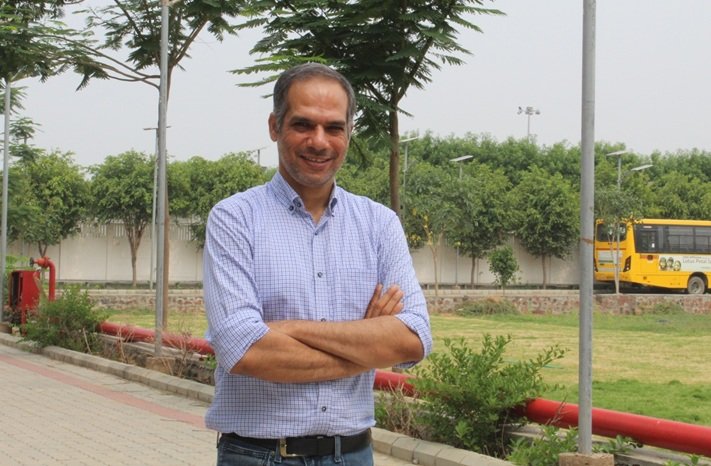
Every day, people across India struggle to get even one meal a day, despite being one of the largest food producers. A classroom to learn, clean water to drink, and a clean place to live are the basics, but luxuries for some. About one in 10 people across During winters, these basics become a necessity, which is often out of reach for many. Stories are often published about deaths due to extreme weather, be it summer or winter. In one such case, the number was 474 homeless people who died due to winter exposure in Delhi, an NGO claims. These numbers do not show a lack of resources. They show the failure to reach people in need. The story of the Lotus Petal Foundation began on a cold winter morning in November 2011, to serve people in need, says Kushal Raj Chakravorty, Founder and Managing Trustee of the organisation.
He used to work in a lavish office in Gurugram. Following his daily routine, on that day, he saw a group of children walking past him while he waited at a bus stop to take his children to school. His own children were dressed in warm clothes, while the other children had no shoes, no socks, and no caps. One of them was barefoot. “That moment hit me hard,” Chakravorty recalls. “I was worried about whether my children were warm enough. Right in front of me were other children without even basic winter wear.”
Chakravorty went to a nearby school and found around 250 children facing the same situation. They were attending classes but struggling in the cold. He bought shoes, caps and socks for all of them. That was the first step.
As he stayed connected with the school, he noticed another deeper issue. Many children were studying at grades far below their age. Teenagers were stuck at primary school levels. According to him, this was not an exception but a widespread reality. “I realised how many children were either out of school or stuck at very low learning levels,” he says. “The numbers were frightening.”
Chakravorty founded a one-room school in a shopping arcade by using his personal savings to launch the school, which started with six students. All of them were between 14 and 15 years old, but they studied at a Class 4 or 5 academic level. The program aimed to accelerate their educational progress while they acquired their Class 10 and Class 12 qualifications through open schooling and developed their English and digital skills.
“Without education, income does not grow,” he explains. “If you do the same job for 30 years, your earning stays the same. Education is what allows upward movement.”
The early years were difficult. Teachers were hard to find. Fast-track learning was demanding. But in 2016, all six students cleared Class 10 through the National Institute of Open Schooling. That year, Chakravorty left his corporate job to work full-time with Lotus Petal Foundation.
The work expanded steadily. An age-appropriate school was started in a nearby slum. Hunger became a barrier to learning, so a food programme was added. Health issues were common, leading to the start of preventive healthcare support.
In 2018, the first group completed Class 12. Five boys took up jobs immediately. Today, Chakravorty says, they are graduates with several years of work experience. Some are married. Some have children. Some own cars and homes in their communities.
One girl from the group followed a different path. “She was very bright,” he says. “We supported her coaching. She is now a doctor.”
Today, Lotus Petal Foundation runs a CBSE-affiliated school in Gurgaon, with 1,200 children from nursery to Class 12. About 45 per cent of the students are girls. The foundation has nearly 500 alumni.
“We track our alumni closely,” Chakravorty says. “Most are earning 1.5 to 2 times India’s per capita income, even though they come from families below that level.”
Beyond its campus, the foundation runs a live teaching platform that supports more than 275 government schools across India. These schools often face teacher shortages or learning gaps. The platform provides supplementary teaching to improve basic reading and maths skills.
The foundation has also upgraded over 55 government schools, including building new infrastructure. In Gurgaon’s Jacobpura area, it helped construct a new block for a government girls’ school. Enrolment there doubled from about 1,500 students to 3,600.
Funding comes mainly from CSR support and individual donors. The first corporate grant came in 2013. Since then, over 40 companies have supported the foundation. Five of them have stayed on for more than ten years. “Transparency and impact tracking are the reasons,” Chakravorty says.
The foundation also measures environmental impact. The campus operates its wastewater treatment system to handle all wastewater while treating and reusing water. The campus generates almost all of its energy requirements through solar power systems. The building currently emits 98 kilograms of carbon dioxide, which the company intends to eliminate while working toward net zero emissions. Chakravorty believes that real consequences exceed numerical data.
The organisation exists to provide educational services, according to him. The organisation aims to produce empathetic adults who will take their social responsibilities seriously.
He states that the route of Lotus Petal Foundation begins at a winter bus stop and develops into a network of educational institutions and former students, which demonstrates how small efforts can create enduring transformations.
What's Your Reaction?










Leave a Comment







