From water conservation and renewable energy to sustainable farming and cleaner aviation, companies across sectors are increasingly focusing on measurable operational changes rather than broad environmental commitments

Beyond the green campaigns and Environment Day messages, many companies have been making practical changes to their day-to-day operations. Some are small, others more significant, but together they are helping reduce environmental impact.
Water is where Kohler begins, and with good reason. Buildings and bathrooms are among the most wasteful users of fresh water, and most of that waste is invisible — it just disappears down the drain. The company's Reach Eco Toilet uses 3.6 litres per flush, saving up to 12,000 litres of water per bathroom every year compared to conventional systems. At scale, across thousands of installations, that's not a marginal improvement. Beyond the product itself, Kohler is running water stewardship programmes, including Safe Water for All and WaterPro — a plumbing training and certification initiative developed in partnership with the Water Management and Plumbing Skill Council in India — while working towards its Net Zero 2035 target.
Fast food and sustainability don't often appear in the same sentence without some scepticism attached. KFC India is trying to change that, and the numbers it's putting forward are specific enough to take seriously. Several of its restaurants across India now run on solar energy, generating over 800 KW of renewable power collectively and cutting an estimated 850 metric tonnes of CO2 emissions annually. Its flagship restaurant in Hyderabad's Hi-tech City carries one of the largest solar installations in the quick service restaurant industry, avoiding 30.5 metric tonnes of CO2 every year on its own. Water consumption has dropped by over 50% across operations. More than 3,500 metric tonnes of plastic have been removed, and 80% of packaging has shifted to recyclable or compostable alternatives. Three restaurants now hold IGBC green building certification — one Platinum, two Gold. It's not the whole chain, but it's a direction.
In manufacturing, sustainability lives or dies on the shop floor — not in the annual report. Greenlam Industries has been focusing on exactly that, conserving over 8 million litres of water and saving more than 80,000 kWh of energy through changes to its manufacturing processes. In an industry where waste is built into the process, measuring and reducing it consistently matters more than a single dramatic gesture.
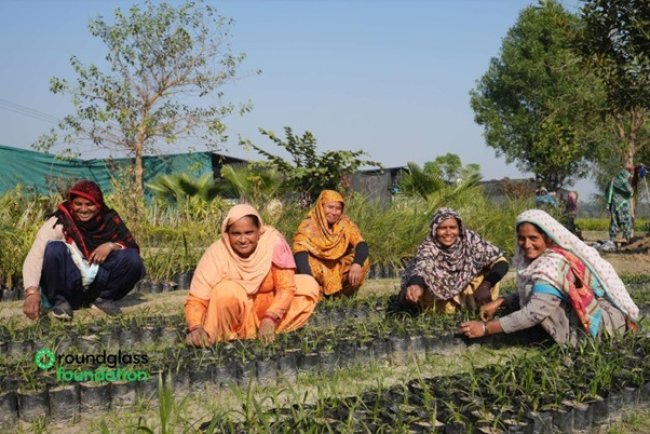
Most food companies talk about sustainability in terms of their factories and packaging. McCain Foods India has pushed the conversation upstream — all the way to the farms where its potatoes are grown. Through its Smart and Sustainable Farming programme, the company works with over 1,000 potato growers, promoting water-efficient irrigation and regenerative agriculture. Today, every one of McCain's partner growers uses drip or sprinkler irrigation systems — a shift that reduces water consumption while also improving productivity for the farmers themselves. If the farming practices that feed a food business are wasteful, no amount of efficiency at the factory fixes the underlying problem.
Aviation is one of the harder conversations in sustainability, and Air France isn't pretending otherwise. Flying produces carbon — the question is what the industry does about it while demand continues to grow. The airline's response runs along two tracks: replacing older aircraft with newer-generation planes that burn less fuel, and expanding the use of Sustainable Aviation Fuel, which can reduce lifecycle CO2 emissions by at least 65% compared to conventional jet fuel. Neither is a complete solution, but pursuing both simultaneously is more honest than leaning entirely on carbon offsets.
The packaging question sits at the centre of the sustainability debate for consumer brands, and Swagatika Das, CEO and Co-founder of Nat Habit, is one of the few founders willing to talk about how hard the ground-level work actually is. When the company decided to transition its PET bottles to recycled PET, the first challenge wasn't cost — it was finding a consistent, certified supply of food-grade recycled plastic that met global quality standards. "While demand from responsible brands is growing rapidly, the domestic supply ecosystem is evolving to meet this opportunity," she says. Today, 72% of Nat Habit's PET bottles use recycled content, 48 tonnes of virgin plastic have been replaced, and 35 tonnes of plastic bubble wrap eliminated from shipments entirely. Das is clear-eyed about where the real blockage is: "The success of recycling does not depend on brands alone. It depends on the strength of the entire ecosystem, particularly at the municipal and collection level." Intent without infrastructure, she argues, only goes so far.
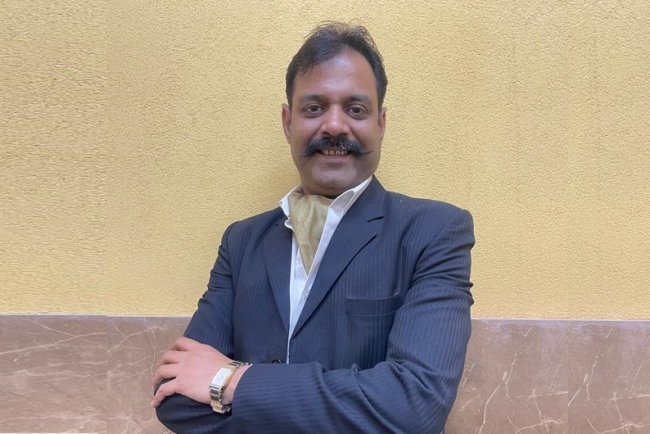
The luxury sector is having its own version of the same conversation, and it tends to be a more uncomfortable one. Anurag Lunia, COO of Solitario, a lab-grown diamond company, frames it as a fundamental rethink of what luxury actually means. For a long time, premium products were associated with resource extraction — the heavier the footprint, the more exclusive the product felt. That logic, he says, is shifting. "The younger generation of Indian consumers — especially Gen Z and millennials — aren't just buying things to show off anymore; they want to buy things they can feel good about." Lab-grown diamonds, created in controlled environments without the environmental toll of mining, are part of how Solitario is making that argument tangible. On traceability, Lunia sees blockchain and digital tracking becoming standard within the next few years — not as a marketing tool but as a baseline expectation. "Shoppers will be able to scan a product and see its whole journey — where it came from, how it was made, and exactly what its impact was on the planet."
What connects a toilet manufacturer, a fast food chain, a laminate company, a potato processor, an airline, a natural beauty brand, and a diamond company? Not very much on the surface. But each of them is treating sustainability as an operational question rather than a communications one — measuring what they use, reducing what they can, and being specific enough about it that the claims can actually be checked. That specificity is what World Environment Day increasingly demands. Not the greenest possible version of a brand's story, but an honest account of where things stand and what's actually changing.
What's Your Reaction?