Deep Sky And Skyrenu Achieve Carbon Removal Milestone
Deep Sky and Skyrenu complete North America’s first full carbon removal cycle using DAC technology.
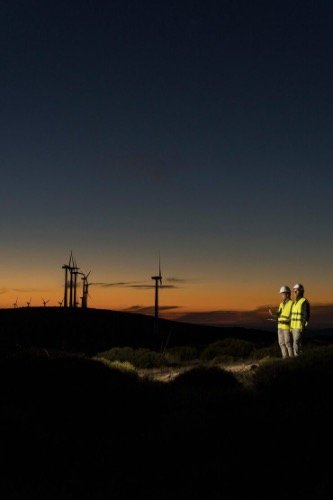
Deep Sky, a Montreal-based company, on Thursday, said that it has completed North America’s first underground storage of carbon dioxide taken directly from the air. The project was carried out at its Deep Sky Alpha site in Alberta, using new Direct Air Capture (DAC) technology developed by Quebec-based Skyrenu.
This marks the first time in North America that the full carbon removal cycle—capturing CO₂ from the air and storing it underground—has been completed. It shows Canada’s leading role in carbon removal and its potential to become a hub for climate technology. The breakthrough is powered by Skyrenu’s DAC unit, developed from research at Quebec’s Sherbrooke University.
Before Deep Sky oversaw its permanent geological storage, the device successfully extracted carbon dioxide straight from the atmosphere, showing a closed-loop system that is currently one of the most viable and scalable options for carbon removal. Key considerations for enabling carbon removal to achieve climate-relevant impact are affordability and scalability, which are at the core of Skyrenu's DAC technology. The pilot facility at Deep Sky Alpha can currently remove 50 tons of CO2 annually, which is a small amount, but as the technology moves closer to commercialization, there is room for a lot of improvement.
According to Gabriel Vézina, CEO of Skyrenu, this accomplishment is crucial not only for his business but also for Canada's role in promoting climate solutions. "We're incredibly proud to lead the way as the first Quebec-based DAC technology to capture CO2 for permanent storage in North America," he stated. "Our partnership with Deep Sky is a powerful example of how to accelerate DAC to climate-relevant scale. Together, we can deliver impactful projects faster, generate high-quality carbon removal, and set a new benchmark for the industry."
The accomplishment occurred at Deep Sky's Alpha facility, which is the first carbon removal center in the world that uses solar energy and crosses different technologies. The hub's goal was to close the gap between prototype technologies and widespread implementation by providing a realistic setting for testing, validation, and quick expansion. Companies like Skyrenu may advance beyond laboratory demonstrations and pilot projects to commercialization routes that include the release of verifiable carbon removal credits. This guarantees that the remedies created are both economically and technologically practical, which is essential for gaining investment and fostering industry trust.
The larger implications of this occasion for climate innovation in Canada were emphasized by Alex Petre, CEO of Deep Sky. "This is precisely what Deep Sky Alpha was made for," Petre stated. "Skyrenu's achievement, which is a product of Sherbrooke University, demonstrates that Canadian climate technology can lead on a global stage and that carbon removal is ready to scale today." Petre said the Skyrenu–Deep Sky partnership shows how teamwork can speed up carbon removal efforts.
This project is different from emission cuts as that only prevent new CO2, DAC with underground storage removes existing carbon in a permanent way—more stable than nature-based options like tree planting, which can be undone by fires or deforestation.
The success of Skyrenu comes as the need for carbon removal credits is growing worldwide. Companies that are attempting to counteract emissions that are difficult to reduce are now employing technologies that ensure openness and long-term storage. Deep Sky has already taken efforts to foster trust in this developing industry by signing its first DAC offtake agreement with Rubicon Carbon, a move that shows there is business interest in premium removal credits.
This project is more than just a technical breakthrough, however, it shows that carbon removal is moving from an idea to a real solution. By combining research, business collaboration, and commercialization, they’ve taken a big step toward making carbon removal a practical and impactful tool against climate change.
What's Your Reaction?