FJCCI has urged the Jharkhand government to address delays in net metering approvals, warning that the issue is slowing rooftop solar adoption and affecting renewable energy growth.
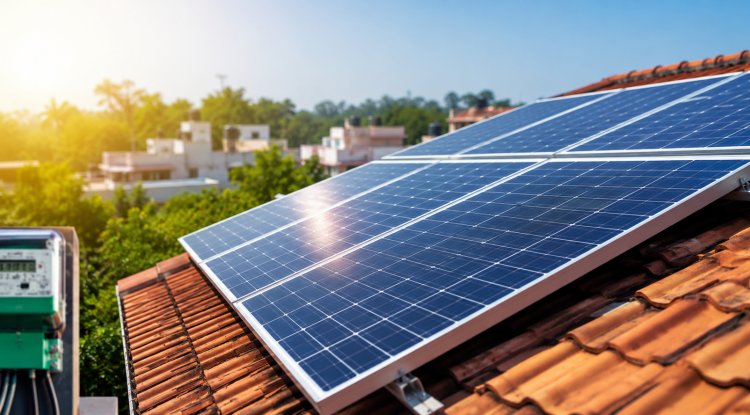
Delays in net metering approvals are emerging as a major challenge for the growth of rooftop solar projects in Jharkhand, prompting the Federation of Jharkhand Chamber of Commerce and Industries (FJCCI) to seek the intervention of the state government.
The association, in an appeal made to the Chief Minister of Punjab, noted that there was discouragement among citizens to invest in solar power systems on account of the delays in approval of the net metering applications. The problem is being faced by both state and central government authorities, who have been promoting clean energy technologies.
Net metering is the process that enables the consumer who installs the rooftop solar panels to sell the excess energy produced by these panels to the electric utility company to offset the electricity consumption. It is a significant part of making rooftop solar energy more economical for consumers.
The industry body stated that delays in approvals, inspections and commissioning processes are creating uncertainty for consumers and developers. Several solar projects remain pending despite installations being completed, resulting in financial losses and longer payback periods for investors. FJCCI has urged authorities to simplify procedures and ensure faster approvals to support the expansion of rooftop solar capacity in the state.
The topic has acquired importance because of certain regulatory changes concerning the manufacture of solar equipment. It should be noted that according to the MNRE, there will not be any extension of the deadline set for ALMM List-II compliance of 1 June 2026. According to the new regulatory requirements, the projects put into commission after the stipulated date need to comply with the local sourcing requirement of solar cell and module manufacture.
However, stakeholders in the industry have expressed concern about further delays on the part of the administration, which would lead to increased costs for those projects that were already prepared for launch before the deadline due to circumstances beyond the control of the consumer and developer. However, some projects might qualify for an exemption based on their progress before the deadline date.
India has been actively promoting rooftop solar installations through initiatives such as the PM Surya Ghar programme, with the goal of increasing clean energy generation, reducing carbon emissions and lowering electricity costs for consumers. Experts note that timely net metering approvals remain critical for achieving these targets and accelerating the transition towards renewable energy.
What's Your Reaction?