Delhi's air quality declined to 'poor' on May 15, 2025, following an overnight dust storm that reduced visibility and increased particulate matter levels.
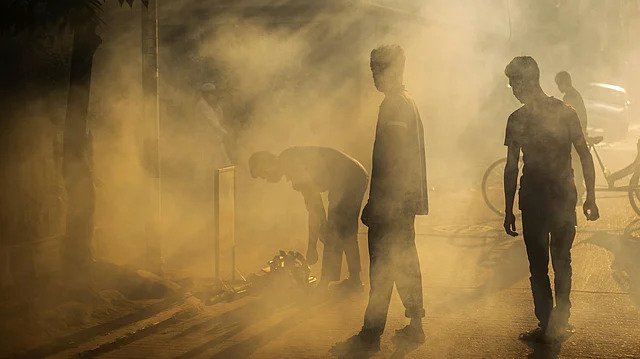
Delhi experienced a significant decline in air quality due to a dust storm that swept through the city overnight. The storm, characterized by strong winds reaching speeds of 30 to 40 km/h, led to a substantial increase in airborne dust particles, causing the Air Quality Index (AQI) to fall into the 'poor' category. Visibility was notably reduced, with measurements at Indira Gandhi International Airport dropping from 4,500 meters to 1,200 meters between 10:00 PM and 11:30 PM on May 14.
The India Meteorological Department (IMD) attributed the dust storm to gusty westerly winds transporting dust from North Pakistan through Punjab and Haryana into Delhi-NCR. This influx of dust particles led to a significant rise in PM10 levels, with some areas experiencing up to a tenfold increase within five hours. The sudden spike in particulate matter posed health risks, particularly for individuals with pre-existing respiratory conditions.
In response to the deteriorating air quality, the Delhi government has implemented measures aimed at mitigating pollution levels. These include the installation of water sprinklers and anti-smog guns along major roads to suppress dust particles. Additionally, the government has approved cloud seeding trials in collaboration with IIT Kanpur, intending to induce artificial rain to cleanse the atmosphere.
Despite these efforts, experts emphasize the need for long-term strategies to address the recurring issue of air pollution in Delhi. Short-term solutions like smog towers and water spraying have shown limited effectiveness, highlighting the necessity for comprehensive policies and regional cooperation to tackle the root causes of pollution.
Source: Outlook Business
What's Your Reaction?