E20 Fuel Rollout: Government Push Vs Public Concerns
India rolls out E20 fuel in 2025 to cut crude imports, support farmers, reduce pollution, and move toward a cleaner, greener future
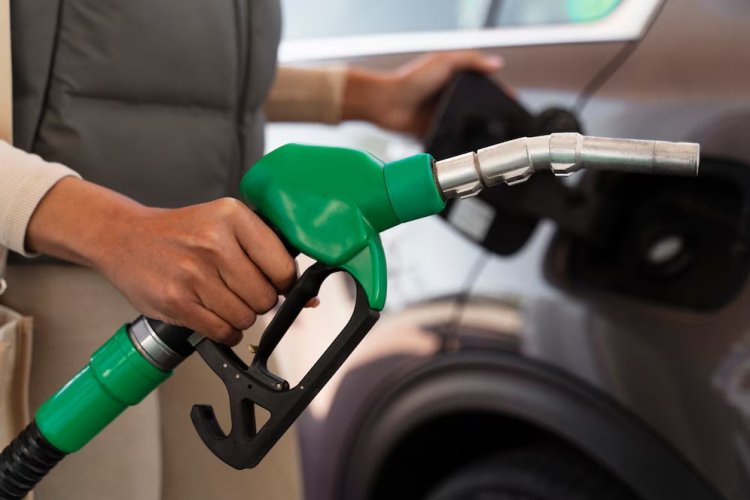
In 2021, the government announced that it will soon implement E-20 fuel all over India. Earlier, it was planned to rollout in the year 2030, however, it has been preponed and accelerated to 2025, the current year. India is dependent on other countries to fulfill its needs as we import about 90% of crude from other countries. This decision has been taken to lower the dependency on imports. India imports a large percentage of its crude oil, and increased ethanol blending helps lower this dependence.
When E20 fuel is discussed, the reference is only to petrol, not diesel. The simple meaning of E20 petrol is that 80% of normal petrol will be regular petrol, while 20% will be ethanol mix.
For example, E15 means that 85% is normal petrol and 15% is ethanol. Ethanol is basically an alcohol made from crops like sugarcane and maize. That is ethanol in simple terms. The introduction of E20 fuel is linked to the fact that 85-90% of crude oil in India is imported. From crude oil comes petrol, diesel, and other fuels, and petrol is used in vehicles.
By reducing the proportion of petrol and increasing the proportion of ethanol, the volume of crude oil imported is lowered. This reduces dependence on imports. Farmers also benefit, since ethanol is produced from crops such as sugarcane and maize. Pollution levels are also reduced through this blending.
India's ethanol blending policy was introduced in 2018 and amended in 2022. Initially, the target for achieving E20 was set for 2026-27, but the target has now been reached in 2025. Where it is not yet implemented, E20 petrol will be available across the country by 2025.
In India, blending has already reached 18-19%. Globally, Brazil leads with 27.5% ethanol blending, while the US runs on E10 and the EU on E15. India is now moving toward E20.
Why is E20 being promoted?
According to the Ministry of Petroleum, E20 petrol is better because it provides better acceleration and quality. Ethanol has a higher-octane number than petrol. A higher-octane rating means the fuel can handle engine compression more effectively without causing noise or vibration, which allows the engine to run smoothly. This advantage is particularly clear in vehicles designed for E20 petrol. When such cars use E20, they run more smoothly.
However, fuel efficiency is a concern. The government itself admits there will be a slight drop. For cars manufactured after 2023, which are E20-compliant, the reduction is estimated at only 1-2%. But for older cars, the efficiency drop is higher, around 3-6%. For example, if a car earlier ran 10 km on one litre of petrol, with E20 the distance may be slightly less.
This is what the government believes. When it comes to engines, which is a major concern, different agencies have carried out tests. Their claim is that there is no damage to engines if E20 petrol is used. Modern vehicles launched after April 2023 are already E20-ready, so owners don't need to worry.
But the debate continues, and people are angry. Despite the government's big claims, reports and user feedback on social media tell a different story. The government says mileage only drops by 3-6%, but citizens report otherwise.
Several surveys, including one with 36,000 petrol car owners, show mileage drops of 10-15%, while some reported 15-20% losses, and a few even claimed higher. For instance, the owner of a Volkswagen Vento said the car's mileage dropped from 10 km per litre to just 1 km per litre, nearly halving its efficiency.
The worry is also because E20 petrol costs the same as normal petrol. If mileage drops by 15-20%, drivers have to spend more, refuel more often, and this adds to their burden. On top of that, there's fear of long-term engine damage. Cars manufactured before 2023 are not ethanol-resistant—their fuel pumps, pipes, and seals are not designed for higher ethanol content. Ethanol attracts water, which can corrode metals and damage rubber parts over time.
What Government Say
To address all these queries, the Ministry of Petroleum and Natural Gas on 4 August 2025 issued a detailed response to certain concerns raised on the impact of 20% Ethanol Blended Petrol (E-20) on mileage and vehicle life. It says biofuels and natural gas are India's bridge fuels. They represent a viable, non-disruptive transition towards meeting our commitments to a greener world and are in line with our Nationally Determined Contribution (NDC) wherein India has signed up to Net Zero by 2070. A study on life cycle emissions of ethanol done by NITI Aayog has said that GHG emissions in case of use of sugarcane and maize-based ethanol are less by 65% and 50%, respectively, than those of petrol.
In addition to pollution reduction, there have been transformative benefits in terms of support to the rural economy, elimination of sugarcane arrears, and improving the viability of maize cultivation in the country. More income to farmers has not only contributed to furthering their well-being but has also helped decisively tackle the challenge of farmer suicides.
With the ethanol blending programme, money which was earlier spent on crude oil imports is now going to farmers who have become "Urjadaatas" apart from being "Annadatas". During the last eleven years from Ethanol Supply Year (ESY) 2014-15 to ESY 2024-25 up to July 2025, ethanol blending in petrol by Public Sector Oil Marketing Companies (OMCs) has resulted in savings/conservation of more than Rs. 1,44,087 crore of foreign exchange, crude oil substitution of about 245 lakh metric tonnes providing crucial energy security, and CO2 emission reduction of approximately 736 lakh metric tonnes, the equivalent of planting 30 crore trees.
At 20% blending, it is expected that payment to farmers in this year alone will be to the tune of Rs. 40,000 crore and forex savings will be around Rs. 43,000 crore.
Why Alternatives People Are Asking For
People are asking for a choice in selecting the ethanol blending. They say if E20 is available, consumers should also have the option of E5 or E10. Why are people demanding the same? They say there is a concern about mileage, and real-world testing should also be done before rolling out the new fuel on the ground.
In lab conditions, engines are tuned perfectly and tested under ideal scenarios, so the results naturally look good. But in real life, cars run differently. Driving styles vary, roads are often in poor condition, and fuel quality itself changes from one petrol pump to another. This is why the outcome on the road can be very different.
As per the government, all the lab tests are complete, results are good, and that's why E20 blended fuel has been launched in 2025. However, people are demanding a real-world test so that the government can also work on E10 and E5 options. If we talk about design, the new E20 engines are ethanol-efficient. But old engines cannot burn the fuel properly. Because of this, there is a sharp mileage loss. Add to this the fuel supply chain, where quality differs from one pump to another, and the problems multiply. This is the main reason behind the gap between government claims and public experience.
Consumers Seek Choice
Now, the matter has also reached the Supreme Court. Advocate Akshay Malhotra has filed a petition against the mandatory rollout of E20 petrol without giving any option to consumers, as media houses report.
The petition raises several points. First, it says the government should not remove choice. People should have the option—if they want E20, they can buy E20, but others should still be able to buy E5 or even pure petrol.
Second, the issue of vehicle compatibility has been highlighted. Old vehicles, and even some newer BS6 models, are not specifically designed for E20. This can damage vehicles, and in such cases, insurance companies may refuse to cover the losses.
Third, there is a question of consumer rights. Fuel pumps do not carry proper labelling. If the petrol is E15 or E20 compliant, that should be clearly written.
Finally, the petition calls out arbitrariness. The policy was pushed through without proper consultation with automakers or the public. A decision of this scale should have come after discussion, not imposed overnight.
When you go to the fuel pump, you should know what kind of petrol is available there. E5, E10, E20 - this should be clearly shown, which is not the case today. Then consumer advisories on vehicle compatibility.
There is a need for proper advisories about which vehicles are E20 compliant and which are not. According to that, people will be able to fill. Right now, people don't even know whether their vehicle is compatible or not. Then there should be a nationwide study. What is the long-term impact of E20 on the engine, mileage, and environment? According to that, it should be implemented.
What Is Government's Take
As far as the government's response is concerned, the Petroleum Ministry describes this whole allegation as baseless and fear-mongering. They say this is being done deliberately to scare people. And as mentioned earlier, the government says that E20's mileage will not be affected much. Surveys have also been done where no such damage was found.
The government says that proper standards have already been implemented. BIS norms, corrosion inhibitors, everything is in place. And Nitin Gadkari's ministry has directly blamed the Petroleum Lobby, saying that the lobby is deliberately fear-mongering to protect its own interests.
What's Your Reaction?