UK Govt. to Bring Solar Panels to all Homes by 2027
The UK government will mandate solar panel installations in nearly all new homes by 2027 to cut energy bills, improve energy security, and support net-zero targets. The policy affects new construction and aims to save households over £440 annually.
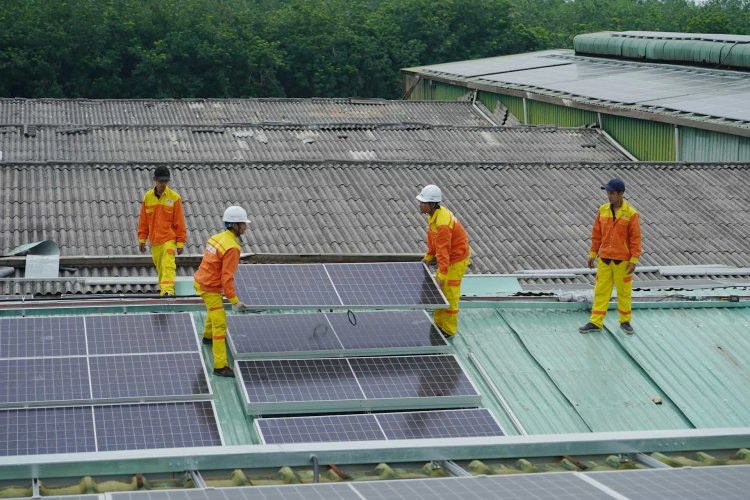
In a bid to cut the domestic energy bill and move towards net-zero commitments, the UK government announced that nearly all new houses built in England will have rooftop solar panels from 2027. The policy is expected to boost domestic energy security and move towards clean and low-cost energy sources.
Currently, solar panels are fitted into just 40% of new UK house developments. The government's new strategy suggests that making solar integration a requirement in virtually all new housing developments will take place. Under the new strategy, 80% of new developments will get solar panels installed on a minimum of 40% of roofs, 19% on a section of a roof, and just 1% of new developments will be exempt.
This is part of a broader policy by the Labour government to deal with through-the-roof energy bills and meet climate change objectives. Mandatory fit-out of solar panels will cost homeowners more than £440 per year on their energy bills. Even though the installation cost may be between £3,300 and £4,000 for this type of home, the long-term saving and decrease in dependence on fossil fuels will probably offset the upfront investment.
The approach will guarantee energy efficiency as an integral part of new home construction across England. Solar energy, as the most available renewable form of energy, will be crucial to local power supply while constraining carbon output. Prioritization of housing within the UK is also indicative of broader policy shift towards decentralised energy infrastructure with homes able to produce and utilize energy at the local level.
This is part of a broader package of energy and climate policies the government has rolled out, including further green hydrogen plans, further incentives for renewable technology, and emissions reductions across a number of sectors. By mandating solar in building codes, the government aims to place energy efficiency on the requirement list rather than the wish-list.
New-build solar technology aligns with existing energy and climate policy within the UK's legally binding 2050 net-zero target. It is in accord with the government's vision to bring to an end the importation of fossil fuels and mitigate the economic risk of global energy markets.
While the initiative has been welcomed by the majority of players in the energy and environmental sector, there are others who have expressed doubts regarding its political and financial feasibility. The previous leaders questioned whether the scale and intensity of action that has been taken so far would be sufficient to achieve radical reductions in carbon. Others also assert that house builders will oppose coercive measures that will increase the cost of construction, even though in the long run, energy savings are assured.
However, the administration is holding firm to the fact that solar panel program is not only feasible but also warranted. It would be expected to cut down carbon emissions from homes, provide clean energy employment, and enhance the green building sector. Further, the increased demand for solar equipment and installation firms would most likely lead to local manufacturing and design of renewable equipment.
Currently, solar power is a waiting-to-be-harnessed resource in the UK. Although it's cheap to run and plentiful, lack of mass market penetration in home use has been the holdout. By requiring solar panels for new construction, the government hopes to create a scalable clean energy market that becomes less costly and more prevalent in the future.
The move is also included in the broader strategy of reducing dependence on gas and solving fuel poverty for the nation. As fuel is made expensive to buy and the cost of living tight, empowering households to generate their own power is being seen as a sound decision. Through the reduction in household energy costs, ministers believe that they are taking money pressures off homes without having to forgo climate benefits.
Further, this shift in policy would revolutionize the economics of the residential housing market so that energy-efficient homes become attractive to homeowners. In a competitive real estate market, the lower-cost homes with onboard clean energy systems would likely have significant influence on the market side.
Green campaigners welcomed the initiative as a necessary and sensible step towards using renewable energy on a big scale. They argued that the UK had underinvested in solar power throughout its history and in-home installations are once-and-done chance to begin decarbonisation without upending lives on a mass basis.
The UK government's decision to make solar panels part of almost all new homes from 2027 is a definite indication of mainstreaming sustainability in the housing sector. With the potential to save individuals money, improve energy security, and reduce emissions, the policy has the potential to be a template for future climate policy and building rules. Although there may be issues of implementation and affordability, the benefit to the economy, the consumer, and the environment in the long term appears to be justified.
Source/Credits:
Source: Independent
Credits: KnowESG | Published on: 02 May 2025
What's Your Reaction?