Earth Day 2025 highlights renewable energy as a global priority. Marked annually on April 22, the event promotes climate action, clean energy, and environmental awareness. Despite past achievements, challenges like greenwashing and insufficient progress remain. The campaign aligns with global goals to triple renewable energy capacity by 2030.
Earth Day, which is observed annually on April 22, has become one of the globe's biggest environmental happenings. Established in 1970 in America by Senator Gaylord Nelson and Harvard student Denis Hayes, the holiday began as a result of escalating environmental concerns, such as the 1969 Santa Barbara oil spill. Originating as a national activity, today it touches over a billion individuals in nearly 200 countries.
Earth Day's primary purpose is to concentrate the minds and hearts of people on the necessity for a rapid clean-up of the planet and the creation of worldwide action. Earth Day's initial observance rallied an estimated 20 million Americans onto the streets in support of environmental change. Its impact was felt immediately on U.S. policy with the creation of the Environmental Protection Agency (EPA) and enforcement of such laws as the Clean Air Act.
Earth Day became international in 1990, extending its scope and making a greater impact. Throughout the decades, Earth Day activities have targeted major environmental concerns like climate change, deforestation, loss of biodiversity, and plastic pollution. The movement has also aided tree-planting efforts, sustainable agriculture programs, and climate education campaigns.
In 2016, Earth Day became historic when it was chosen as the signing date for the Paris Agreement, an international climate agreement that aims to limit warming of the planet to below 2°C. This was a turning point for global climate collaboration.
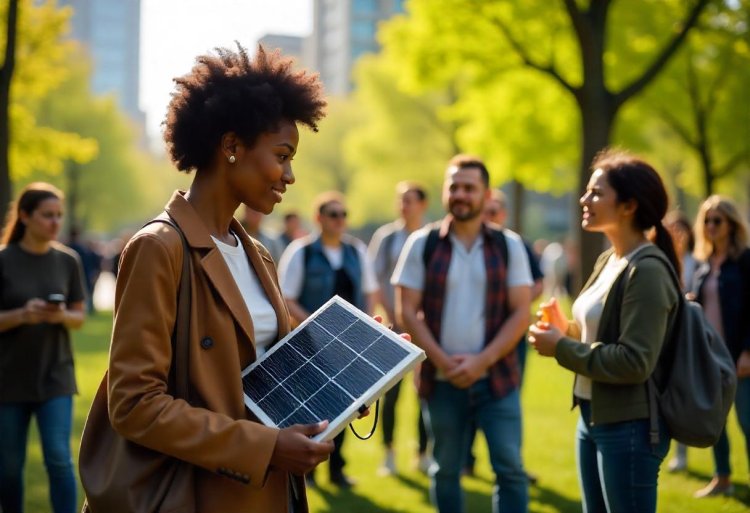
The 2025 theme for Earth Day is "Our Power, Our Planet," emphasizing the need for renewable energy transition. The initiative is in line with the target agreed at the COP28 climate summit in 2023 to triple the renewable energy capacity by 2030. The focus is on building clean sources such as solar and wind energy to reduce the dependence on fossil fuels. According to the International Energy Agency, the world is currently not on track to meet this goal, projecting less than 9,800 GW of renewable capacity by 2030, as opposed to COP28's target of 11,000 GW.
Along with formal campaigns, Earth Day is observed through a number of grassroots movements throughout the nation, including community clean-up campaigns, education workshops to enlighten, and community activities for reducing carbon footprints. Such local initiatives go a long way in mobilizing people and focusing on green responsibility at a personal level.
While Earth Day has been successful in some regards, it has also been the subject of criticism. Environmental indicators like speeding up global warming and increasing extinction rates indicate that current efforts are still not sufficient. Critics argue that the symbolic nature of the event sometimes hides the necessity for fundamental policy changes and long-term measures.
Another source of contention is corporate exploitation and commercialization of Earth Day messages. Various corporations are accused of "greenwashing"—offering an appearance of concern about the environment but not embracing substantive change. It undermines credibility of the sustainability campaigns and raises suspicions among the people.
However, Earth Day is still a constant reminder of the issues concerning the earth today. A solution, no, in and of itself, it does create attention towards instilling stricter policies towards the safeguarding of the earth, in addition to getting everyone together throughout the world in order to cease the harms that are occurring. Successful movement of developments such as the utilization of renewable energy does not solely rely on awareness, however, but government accountability, community involvement, as well as ongoing policy implementation.
While the world marks Earth Day 2025, the message is clear: accelerating the transition to renewable energy is essential to a sustainable future. Symbolic gestures are their place, but lasting impact requires a transition from promises to action.
Source/Credits:
Content obtained from BBC News Climate & Science, article by Mark Poynting & Maddie Molloy.
What's Your Reaction?