Officials warned that small temperature rises are causing major environmental impacts globally.
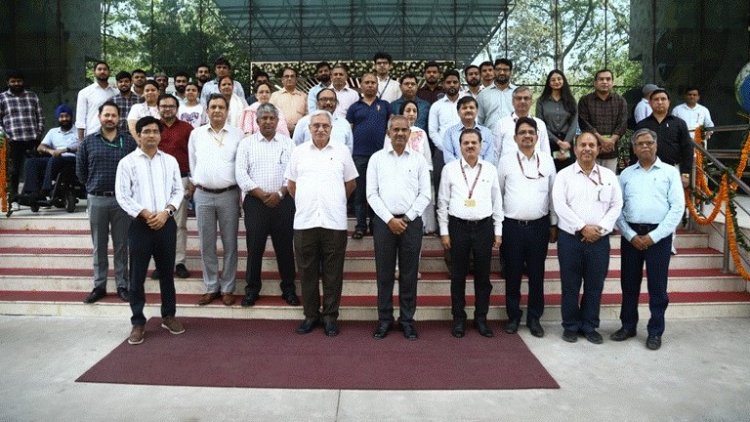
The Ministry of Earth Sciences marked Earth Day 2026 at Prithvi Bhavan with a focus on the theme, “Our Power, Our Planet,” bringing together scientists, officials, and staff to reflect on environmental challenges and collective responsibility.
The event involved the participation of senior officials and experts, who also made a promise on Earth Day, signifying the importance of being better environmental custodians considering that the world’s climate is rapidly changing.
Among the personalities present were Dr. Shailesh Nayak, who is the former Secretary of the ministry and currently the Director at National Institute of Advanced Studies, and Dr. M. Ravichandran, Secretary, MoES, as well as Dr. Mrutyunjay Mohapatra from the India Meteorological Department.
Focus on climate risks and knowledge
Dr. Shailesh Nayak provided a historical perspective on human adaptation, noting that while humans have survived dramatic climate shifts over 200,000 years, the rate of change in the last century, rise in global temperature, is unprecedented.
"The question today, especially for the Ministry of Earth Sciences, is generating critical knowledge to address global environmental change," said Dr. Nayak. "We must move beyond understanding 'how' changes occur to understanding the specific risks and implications. Our future must not only be resilient but equitable."
Highlighting agricultural impacts, he noted that rising CO2 levels impact C3 crops like wheat and rice more severely than C4 crops like millets, underscoring the importance of the "Mission Millet" initiative. On water resources, projections indicate an increase in water for the Indus Basin, but a significant reduction for the Ganga and Brahmaputra basins, affecting India’s most populous regions.
He also referred to issues of climate equity, Dr. Nayak emphasised that while India’s per capita energy use is significantly lower than the developed world the nation is leading in global "greening" efforts alongside China and Europe.
“Earth is running a fever”
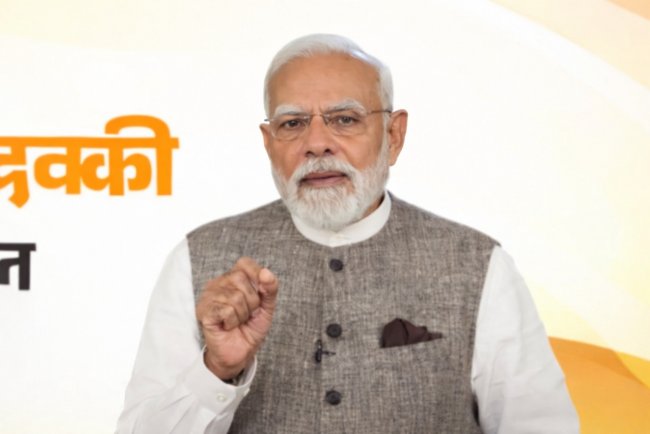
Dr. Ravichandran highlighted the need for immediate action regarding the environmental crisis. According to him, global warming is like a fever and even slight changes will cause serious consequences since both the ocean and the poles are experiencing fast warming.
He mentioned that the present rate of consumption has crossed 1.8 times the rate of regeneration of the planet. Furthermore, he also revealed that India is one of the countries where there exists a Ministry of earth sciences responsible for schemes like Deep Ocean Mission, Mission Mausam, and PRITHVI.
Emphasis on action
A speech on the plans of the ministry for Earth Day 2026 was also given. Speakers stated that there should be action beyond simply being informed about climate change issues since environmental protection can’t happen just on one particular day.
The debates indicated that the fight against climate change will not be accomplished overnight but will need effort and progress through science.
What's Your Reaction?