EVERTA’s Fast Chargers and Bengaluru Hub Boost India’s EV Infrastructure
EVERTA launches DC fast chargers and a Bengaluru manufacturing hub to support India’s EV adoption, targeting 15% market share by 2030.Explore EVERTA’s new DC fast chargers and Bengaluru hub, their role in India’s EV ecosystem, and challenges in scaling sustainable transport infrastructure.
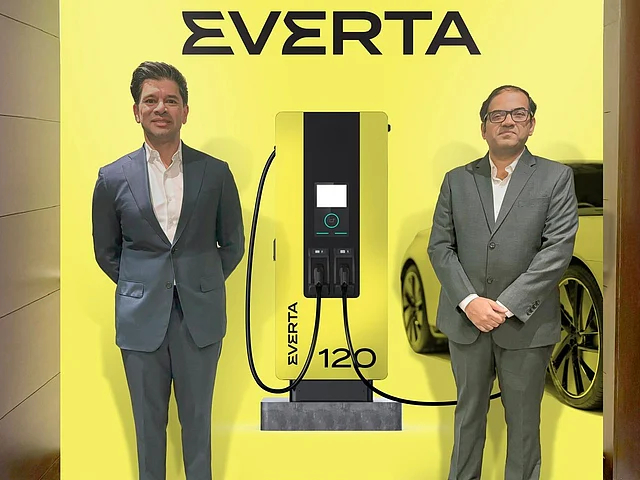
EVERTA, an Indian EV charging solutions provider, has launched a new line of DC fast chargers and announced a manufacturing hub in Bengaluru, operational by Q3 2025. This move supports India’s 30% EV adoption target by 2030. This article examines EVERTA’s strategy, impacts, and challenges in advancing India’s EV ecosystem.
EVERTA’s Bengaluru facility will produce 3,000 DC fast chargers annually by 2027, ranging from 60 kW to 320 kW, targeting electric three-wheelers, passenger vehicles, buses, and trucks. The company aims for a 15% market share in India’s DC charging segment by 2030, supporting 4 million EVs. A technology licensing agreement with StarCharge, a global leader with 2 million units deployed, enables localized production with over 50% domestic value addition initially, aiming for full localization. The initiative aligns with Make in India and Atmanirbhar Bharat programs.
Economically, the hub will create 2,000 jobs in Bengaluru, boosting Karnataka’s EV ecosystem. The $50 million investment strengthens domestic manufacturing, reducing reliance on Chinese imports, which dominate 60% of India’s EV charging market. Charger costs, currently Rs 5–10 lakh, could drop 20% with localization, enhancing affordability. Critics argue that high land and setup costs may delay profitability, with breakeven projected for 2028.
Environmentally, EVERTA’s chargers, powered by 60% solar energy, could cut 5 million tonnes of CO2 annually by enabling cleaner transport. India’s 12,000 charging stations, with 7,000 solar-powered, support this shift. However, critics note that manufacturing and battery production emit significant CO2, and India’s coal-heavy grid limits net gains. Scaling renewable-powered chargers is essential.
Challenges include infrastructure and competition. India’s charging network, with a 1:100 charger-to-EV ratio, lags behind the EU’s 1:10. Grid upgrades, costing $1 billion, are needed for high-power chargers. EVERTA faces competition from Tata Power and Magenta, which hold 50% of the market. Regulatory variations across states complicate deployment, requiring streamlined policies.
Community engagement fosters adoption. EVERTA’s partnerships with fleet operators and training for 1,000 technicians ensure reliability. Public campaigns highlight cost savings, with EVs reducing fuel costs by 70%. Critics caution that rural areas, with only 10% of chargers, need focus to ensure equity.
Globally, EVERTA’s model mirrors China’s charging expansion, led by StarCharge. Collaboration with the International Solar Alliance could enhance technology. Critics argue that over-reliance on foreign tech risks long-term self-reliance, urging R&D investment.
Long-term success depends on scale and innovation. IoT-based chargers will optimize uptime, while $10 million in R&D aims to develop 500 kW ultra-fast chargers by 2030. Government subsidies under PM E-Drive will support expansion, but policy clarity is critical.
Conclusion
EVERTA’s fast chargers and Bengaluru hub are pivotal for India’s EV infrastructure, offering economic and environmental benefits. Addressing infrastructure gaps, competition, and rural access will ensure its role in sustainable mobility.
Source :Outlook Business
What's Your Reaction?