A former Tesla employee criticizes CEO Elon Musk for political actions that allegedly led to declining sales and internal unrest, prompting a public protest and website calling for Musk’s resignation, raising concerns about corporate leadership and employee dissent.
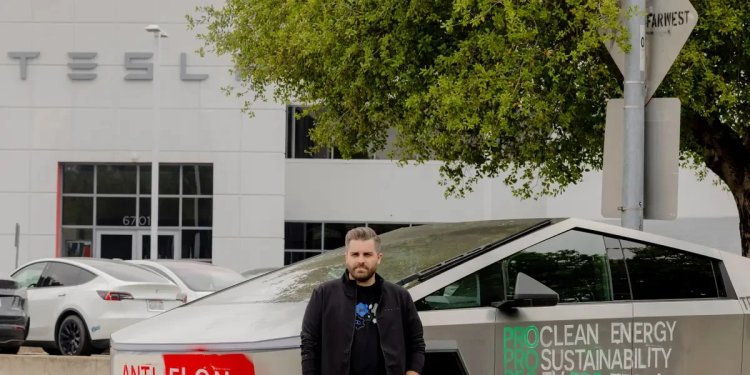
Among Tesla's ex-employees, the company's one-time employee Matthew LaBrot has openly disparaged Tesla CEO Elon Musk. LaBrot, a former employee of Tesla's sales training department, maintains that Musk's political moves and his controversial choices have hurt the company's public image and sales track record. According to LaBrot, the company's internal culture and public reputation soured after Musk's takeover of Twitter (currently X) and has been rapidly moving in the direction of former U.S. President Donald Trump.
A long-time dedicated believer in the vision of Tesla, LaBrot was an active participant in the world of the company—owning a Model Y, a Cybertruck, and solar panels for his residence. In the past two years, though, he asserts that he became disillusioned when Musk's political opinions began to conflict with those of his own. The straw that broke the camel's back, says LaBrot, was when Musk supported Trump in the 2024 election cycle and thus, he believes, lost a major percentage of Tesla's buyers.
He also complained that Musk's actions, such as a controversy-sparking salute during a Trump party that Musk disavowed, caused reputational damage and waning consumer excitement. Tesla experienced a sudden drop in traffic at showrooms and car sales in spite of incentives to try out the new Model Y, LaBrot reported. Salesmen, including LaBrot, were said to be being pressured tremendously to close deals with waning public interest.
Within the firm, LaBrot observed an increasingly fearful atmosphere in which workers did not speak up for fear of being fired. He asserts that he cautioned management in private many times but elicited no serious response. With mounting pressure to make his objections public, he employed the Internet in April 2025 to create a webpage calling for Musk to step down as CEO of Tesla. The site was serious about itself in requiring the company leadership shift alongside further promoting its clean energy initiative.
Beyond the site, LaBrot further made a real-world statement with spray-painted slogans on his Cybertruck standing up for sustainability and leaving it outside one of Tesla's plants. Tesla got rid of him the following day, accusing him of using corporate resources to create the site—an accusation he maintains is unfounded.
LaBrot's case has escalated controversy over the aftermath of leadership decisions at prominent corporations and the danger of blurring personal political beliefs with corporate strategy. He is convinced his demonstration was in protest of a need to uphold the integrity of Tesla's mission to clean energy, which he still supports. However, he maintains that there has to be a leadership change if consumer confidence can be restored and the corporation's reputation stabilized.
This episode brings into focus more extensive concerns about the intersection of public perception, political action, and corporate governance. As a clean energy and electric vehicle disruptor company, Tesla has seen rising criticism in recent years over work culture, CEO behavior, and strategic focus. The outcomes resulting from these internal and external controversies raise questions over the means by which firms find balance between innovation and public responsibility.
The event also demonstrates the position of company employees in corporate ethics. As it was evidenced by LaBrot's situation, going against the leadership carries a heavy toll on the individual and professional life. His act of defiance, however, exposes things not being discussed in large organizations, particularly in sectors with high changes and increased public observation.
Tesla has not made a public statement in reaction to LaBrot's individual accusations. Although Musk remains CEO, the negative reaction of parts of the staff and public figures indicates that internal resistance and brand risk may be present unless confidence is re-established.
LaBrot's account contributes to the larger discussion regarding employee rights, business leadership, and what corporate leaders ought to do. With Tesla broadening its offerings on sustainability, the brand also needs to figure out how to navigate its reputation and company culture in a more polarized world.
Source/Credits: KnowESG
Original Source: Business Insider
Published on: 09 May 2025
Image Credit: Cayce Clifford/BI
What's Your Reaction?