Extreme heat is breaking records worldwide, with deadly health impacts, worsening air quality and wildfires affecting millions, according to the World Meteorological Organization. Between 2000 and 2019, nearly half a million people died annually from heat-related causes. July 2025 was the third-warmest July ever recorded, with temperatures exceeding 50°C in parts of Asia, North Africa and Europe. The WMO and WHO stress the urgent need for expanded heat-health warning systems, which could save thousands of lives each year
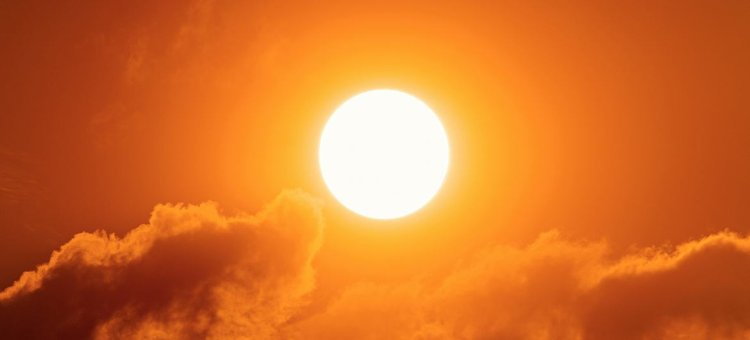
Extreme heat is setting records all throughout the world, affecting millions of people and driving fires. Experts caution that the problem is becoming a major public health concern. Rising temperatures, together with worsening air quality from smoke and pollution, are producing hazardous circumstances in many areas, according to the World Meteorological Organization (WMO). Between 2000 and 2019, heat-related factors caused an estimated 489,000 deaths year-round; around half of these deaths occurred in Asia, and more than a third in Europe.
The urban heat island effect, in which thick cities capture heat and see much greater temperatures than adjacent rural locations, makes urban areas especially susceptible. This makes health risks worse, especially for people who are already at risk. Following 2023 and 2024, July 2025 ranks as the third-warmest July on record and further confirms a concerning growing trend in world temperatures.
Last month, Europe saw strong and sustained heat waves, and Sweden and Finland had unusually long stretches of temperatures above 30C. Southeastern Europe also had very hot weather, and Trkiye set a new national record of 50.5C. Wildfires increased due to these circumstances, therefore requiring evacuations and harming ecosystems.
Areas including the Himalayas, China, and Japan in Asia experienced temperatures considerably higher than usual in July; heat lasted into August. Temperatures above 42C were recorded in West Asia, southern Central Asia, the southwest United States, most of North Africa, and southern Pakistan during the first week of August. While portions of eastern Iraq and southwestern Iran surpassed 50C, some areas hit over 45C, therefore upsetting electricity, water access, education and work.
Morocco issued heat advisories for temperatures reaching 47C; Korea also experienced extensive warnings. Several station records were shattered in China, and on August 5 Japan established a fresh national record of 41.8C, eclipsing a record established only a week earlier. According to the World Meteorological Centre in Beijing, the heatwaves would continue into the next week with high temperatures expected in the Iberian Peninsula, northern Mexico, Saudi Arabia, Iraq, Iran, North Africa, and sections of the southwestern United States. With some areas seeing temperatures between 38C and 40C, many others are predicted to reach over 45C once more.
As extreme heat events worsen and become more common, the implications for public health, infrastructure, agriculture and ecosystems are expected to increase. Without adequate mitigation and adaptation measures the world will see heat-hreferinqwaves, that are longer, more intense and more dangerous than it has previously experienced in decades to come. Other climate impacts such as droughts, wildfires, storms and biodiversity loss, also compound the situation, due the inextricable links to extreme heat events.
The increasing heat, air quality, and healthcare system strain point to an urgent need for collective global action. Extreme heat conditions are no longer a sporadic phenomenon—it has become one of the main facets of the global climate crisis. Requiring a sustained effort to save lives and livelihoods across the globe.
With 6.6 million hectares burnt year to date, Canada is having one of its worst wildfire seasons ever. In sections of the northern United States and in a number of states, the fires have produced major air pollution. Smoke from Canadian wildfires crossed the Atlantic twice this summer, in late June over Central and Southern Europe and in early August over Western Europe influencing skies.
Cyprus, Greece, and Turkey have additionally reported wildfire disasters that have caused evacuations and loss of life. A fire in Arizonas Grand Canyon National Park ruined local ecosystems and slowed down tourism in the United States.
Thanks to scientific breakthroughs, statistics, and monitoring systems, the WMO emphasizes that severe heat, usually known as a silent killer, is currently better understood. Experts estimate that with current technology, effective warnings, public awareness campaigns, and focused action plans may help to prevent most heat-related fatalities. WMO is collaborating with partners under the Early Warnings for All program to improve heat-health action plans and reinforce early warning systems. These initiatives want to make sure at-risk areas have access to tools and timely notifications to help shield them during heat waves.
Ten UN organizations, among them the WMO, support the call to action on extreme heat issued by the UN Secretary-General, which aims to lessen the effects of high temperatures by means of coordinated worldwide activities. As stated in the 2015 Paris Agreement, a main objective is to limit world warming to 1.5C above pre-industrial levels. Strong economic, social, and environmental policies aimed at lowering greenhouse gas emissions and boosting community resilience would be needed to reach this objective.
Scaling up heat-health warning systems in only 57 nations, the WMO and WHO project, might save almost 100,000 lives annually. These systems link policy decisions with scientific data to make sure that preventative actions get to the areas most at risk. Experts say that changing to a warmer world will need not only new technologies but also community involvement and government will.
What's Your Reaction?