Formula 1 Cuts Emissions by 26% Since 2018, Stays on Course for Net-Zero by 2030
Formula 1 cuts carbon emissions by 26% since 2018 despite global expansion. Key efforts in travel, logistics, and energy place it firmly on course for net-zero emissions by 2030.
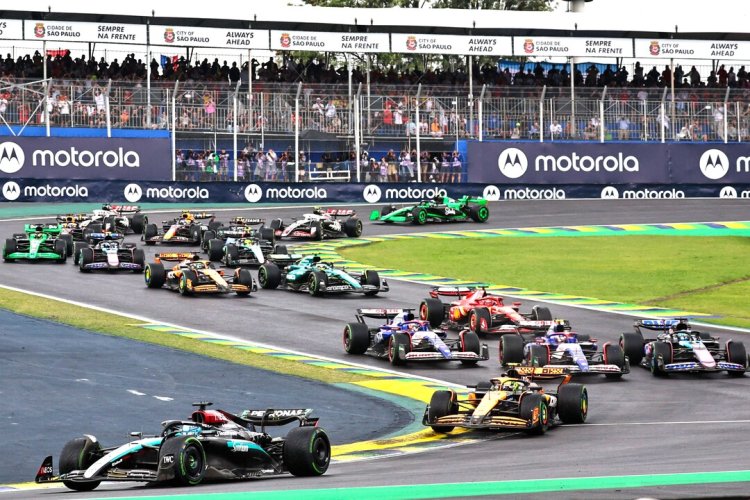
Formula 1 lowered its carbon footprint by 26 percent compared to 2018, confirming that it will meet its target of net-zero carbon emissions by 2030. The confirmation, made on Tuesday, comes as the sport has grown exponentially in terms of international fan base, attendance, and race schedule.
Between 2018 and 2024, Formula 1 went from having 21 to 24 races per year, and worldwide attendance rose from 4 million to 6.5 million. As a result of this increase, emissions dropped each year from a revised baseline of 228,793 tonnes of carbon dioxide equivalent (tCO2e) to 168,720 tCO2e. The new baseline is based on improved supplier data and meets international standards for sustainability reporting.
Without the improvements that have been achieved since 2018, Formula 1 is certain emissions would have risen by 10 percent during the same time frame. The decrease is the part of the sport's overall sustainability plan, launched in 2019, to reduce half of emissions by 2030 and cover the other half through verified carbon removals initiatives.
The statistics on hand demonstrate that sustainable development in even high-performance, high-profile global industries is possible," Formula 1 chief executive and president Stefano Domenicali stated. "For the fourth consecutive year, this strategy has enabled us to take massive leaps forward, not only for the individuals who live in this world but for society as well."
Significant improvement has been registered in all areas of activity. F1 factory and plant emissions decreased by 59 percent, led primarily by the shift to renewable energy sources. Emissions associated with travel decreased by 25 percent as a result of the use of sustainable aviation fuel and greater adoption of remote production broadcasting. Logistics emissions decreased by 9 percent with greater use of trucks powered by biofuels in Europe and the operation of more efficient Boeing 777 aircraft.
On-site race operations have also been improved. Overall emissions per event fell by 12 percent even with the addition of new races to the calendar. Low-carbon power system trials based on renewable energy are in progress, with a target of powering all European races through 2025.
Forward-looking is the introduction in 2026 of 100 percent sustainable fuels, which are derived from standard road cars, to be used alongside a next generation of hybrid power units. The transition is believed to have begun profitable repercussions for the sport as well as wider transport sustainability objectives.
There are also proposals to reduce emissions through smarter race scheduling. The Japanese Grand Prix was moved back in April in 2024 to align Asian rounds and the Canadian Grand Prix will now be staged in May from 2026, improving organization of the European season.
Investments remain to use sustainable aviation fuel, shipping alternative products, and regional equipment centers. Remote manufacturing technology has been enlarged to allow approximately 140 employees to remotely manage race operations from the UK-based Media & Technology Centre. All of these are anticipated to offer environmental as well as cost advantages.
From 2025, all Formula 2 and Formula 3 cars in the support series will compete on fully sustainable fuel, further solidifying Formula 1's net zero future commitment.
Ellen Jones, Formula 1 head of ESG, emphasized the work of collaboration that went into designing the development. "When we look to the future, we have a clear direction to meet our promises," she added. "Formula 1 is well positioned to demonstrate that sustainability and performance are not mutually exclusive."
What's Your Reaction?

















