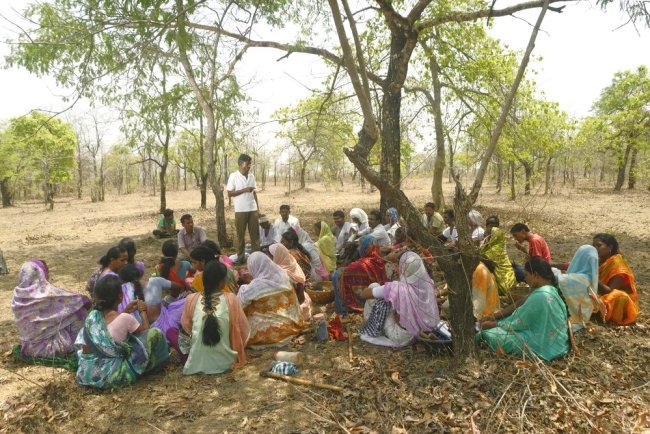
Garanti BBVA issues a €30M green bond to finance climate-resilient agriculture and water management in Türkiye.

As climate risks grow, Garanti BBVA has launched a €30 million green bond to support climate adaptation initiatives in the agricultural sector in Türkiye. The bond, which was issued in the bank's international funding programme and Sustainable Debt Finance Framework, was to be used for enhancing the resilience of agricultural activities. The move points to the increasing importance of green bond, sustainable finance, climate adaptation, Türkiye agriculture, and water management solutions as means of tackling environmental and economic problems.
The funds will be used for various projects, such as Organic agricultural production, Sustainable agricultural production, Land management, Efficient irrigation infrastructure, Water management systems, and Agricultural infrastructure. It is a sign of the growing recognition of the importance of investing in green bond, sustainable finance, adaptation to climate change, Türkiye agriculture, and water management in the sectors most vulnerable to climate-related risks.
Funding Climate-Resilient Agriculture
The bond proceeds will only be used for projects to improve adaptation to climate change in the agriculture sector, Garanti BBVA said. Investments will be directed for more efficient irrigation, sustainable land use, more water conservation facilities and infrastructure that allows for more resilient farming.
Climate change has been a greater challenge for the Turkish agriculture sector and the issue of climate change adaptation is an emerging concern for rural sectors in the country, including policy makers and financial institutions. The bank is focusing on sustainable agriculture to ensure productivity and safeguard natural resources over the long term.
Agriculture emerges as a sustainable finance priority
Increased food security and water shortages, the impact of agriculture on the rural economy and climate resilience, have made agriculture an important component of environmental, social and governance (ESG) financing. The need to adapt is becoming more necessary in addition to the need to reduce greenhouse gas emissions as climate impacts are occurring more often.
Financial institutions are broaden and expand sustainable finance to sectors that need increased climate physical risk resilience. Agriculture is one such sector that has gained more focus, given its economic importance and its susceptibility to the impacts of climate change.
CEO Highlights Importance of Sustainable Finance
Chief Executive Officer (CEO) of Garanti BBVA Mahmut Akten stated that sustainable finance is still an important tool in supporting the transformation of the economy of Türkiye. He said agriculture has strategic role in food security, adaptation to Climate Change, etc., in the community.
The new bond would help to support adaptation to climate effects through sustainable agriculture projects, which would build resilience, Akten said. He also highlighted the need for investment in resilient agriculture production for the country's future, given the changes in the weather patterns that are becoming visible and the increasing environmental pressures.
The Sustainable Finance Strategy continues to grow in its scope.There continues to be expansion of the Sustainable Finance Strategy in scope.
The green bond is part of Garanti BBVA's sustainable finance approach. The bank has increased its sustainable finance target for the 2018–2029 period to TRY 3.5 trillion. At the end of Q1 2026, it has reached around TRY 1.3 trillion towards this goal.
The target has been broadened to reflect the increasing demand for funding relating to the energy transition, industrial competitiveness, climate adaptation, sustainable agriculture and natural resources conservation, etc. Sustainable debt instruments are gaining recognition by financial institutions and are becoming a more effective way of directing foreign capital to projects that have an environmental impact.
The increasing role of adaptation finance.Emergence of adaptation finance.
Traditionally, climate finance has been about emissions reduction, renewable energy projects, etc., but the attention is now shifting to adaptation finance as countries see more and more climate-related disruption. Increasing importance is being placed on investments in water infrastructure, resilient farming systems and efficient management of resources in order to ensure food production and rural economies.
The Garanti BBVA issuance is an example of how green bonds are developing to fund projects that help to manage physical climate risks, not just emissions. The importance of efficient irrigation schemes and better irrigation management has become more important for areas with high water stress.
Communicate clearly and effectively, prioritizing transparency and impact.
Investors are expected to keep track of the use of proceeds and the environmental results of financed projects in other labelled debt instruments as well. It is essential to keep investor confidence by ensuring transparent reporting, project selection and ensuring that they are consistent with the bank's Sustainable Debt Finance Framework.
Garanti BBVA will continue to finance projects in renewable energy, energy efficiency, circular economy, sustainable agriculture and social impact projects. The new green bond brings agriculture into the fold of sustainable finance and also shows that capital markets can help to build climate resilience in the sector most vulnerable to climate change.
What's Your Reaction?