The Goa government has designated more than 1.03 crore square metres of eco-sensitive land in Salcete as a No Development Zone to protect wetlands, paddy fields, salt pans and other ecologically important landscapes from urban expansion.
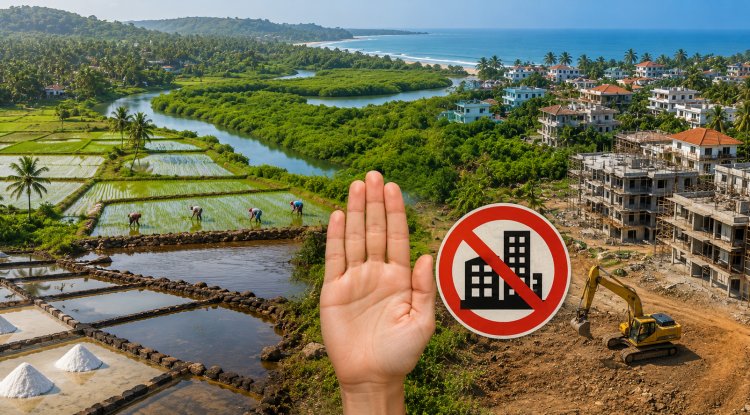
Goa has always held a special place in the minds and hearts of the population of the state and is renowned for its beaches, leisurely lifestyle and its historical bond with the sea. But behind the postcard-perfect images is a tension between a fast-growing urban population and the pressing need to conserve the natural systems that sustain the state. The Goa government has declared a huge area of 1.03 crore square metres of land at Salcete taluka in South Goa as a No Development Zone in a major initiative to preserve its dwindling ecological heritage. It is a significant administrative decision in the coastal state's recent past, and a clear demarcation line around important, environmentally sensitive areas that have been under heavy pressure from concrete construction.
The sweeping policy announcement by state Town and Country Planning Minister Vishwajit Rane, under the Regional Plan Framework, is a positive step to protect highly vulnerable landscapes before they are lost to urban sprawl. This is not merely a zoning update; it's an intervention designed to safeguard the distinct character of Goa's natural and ecological landscape. All the designated parcels are surrounded by ecological assets – ancestral salt pans, traditional low-lying paddy fields and natural water networks, which are the climatic buffers of the region. A new concept of non-developable classification has been given to these lands, which is another indicator of the authorities' understanding that some natural areas are simply too precious to be traded for real estate development.
On a closer analysis of the geographical distribution of the notification, it is found that the protection is very narrow and it has been issued to seven key villages of Salcete, one of the fastest-urbanising and sought-after coastal sub-districts of Goa. The biggest chunk of protected land is in the village of Talaulim, with a massive 29.13 lakh square metres put out of bounds for developers altogether. The protective shield is steadily spreading in neighbouring communities, with 17.64 lakh square metres in Majorda, 16.81 lakh square metres in Seraulim and 16.71 lakh square metres in Loutolim. A contiguous stretch of eco-sensitive areas has also been designated in Utorda (9.92 lakh sqm), Orlim (9.49 lakh sqm) and in village lands of Calata, a total of 21.42 lakh sqm that creates a continuous corridor of protected green space in the southern part of the district.
The maintenance of these special habitats is critical for the day-to-day security and economic viability of local communities. The salt pans and low-lying agricultural fields that are enveloped in this mandate provide not only a beautiful background but are also an important barrier to the sea. These particular lands absorb the massive monsoon rains, filter brackish water and block the intrusion of salt water from damaging valuable underground drinking water. The utilisation of these fields by the construction of housing complexes will immediately cause local villages to experience severe flash flooding and water well problems. The preservation of this land allows Goa's traditional way of life to continue, safeguarding the livelihoods of local farmers and salt harvesters who have long worked on this land.
This is the largest zoning scheme to be implemented in Salcete, and the next stage of an extensive project initiated on a state-wide basis to map and safeguard Goa's remaining natural areas. Earlier this year, the Town and Country Planning department laid the groundwork by designating large swathes of ecologically fragile land around the historic, UNESCO-listed heritage precinct of Old Goa and the sensitive mangrove ecosystems of St. Cruz village in North Goa as non-developable territory. This continuous growth of protected areas marks a significant change in the state's planning approach, from piecemeal zoning decisions towards long-term conservation planning that aims to ensure that the state's precious landscapes are protected before the pressure of development is too great.
For Goa, the launch of an aggressive push to increase the area of No Development Zones finally demonstrates that the survival of the economy is not independent of that of the environment. As the travel industry and construction boom expand quickly, it can seem like a great thing until it drives up the demand for the same natural beauty, clean water systems and local heritage that attracted people to the region in the first place. The Government's move to set aside over a crore square metre of Salcete's eco-sensitive land is a significant step towards a balanced future. The move is a testament to the strength of political resolve and proper planning to show that a community can protect its valuable natural resources and preserve the special atmosphere of Goa for future generations.
What's Your Reaction?