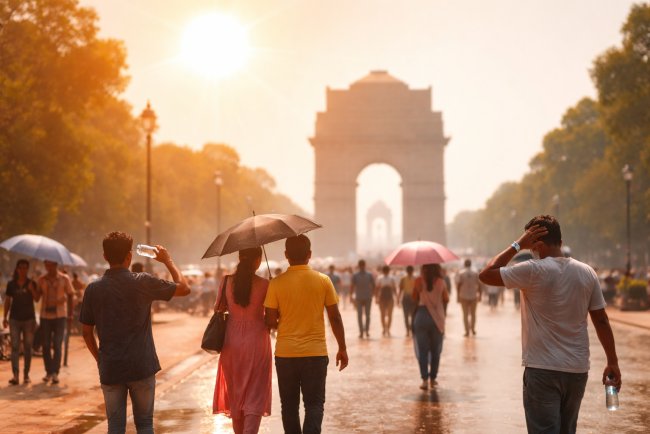
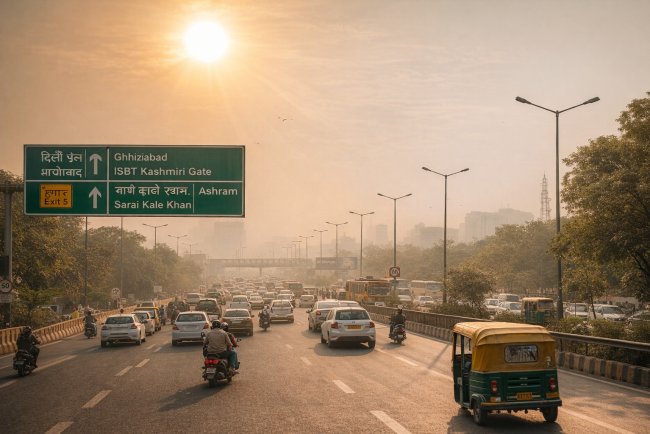
With more than three-quarters of its population exposed to high heat risk, India is strengthening Heat Action Plans, local climate adaptation measures and community resilience to address the growing impacts of extreme heat.
India is undergoing a subtle but significant shift in its climate, with extreme heat moving from a seasonal event to a development crisis affecting the country's economy. Recent climate data shows a shocking statistic: more than three-quarters of the country's population live in high or very high-risk areas for extreme heat. This is not only about one afternoon each day when temperatures rise. It is the combination of hot, blistering days followed by hotter-than-normal nights that is becoming an increasingly serious threat. This constant cycle deprives the body of its natural cooling period, a crucial physiological recovery phase that helps prevent severe heat-related illnesses, heat exhaustion and prolonged cardiovascular stress.
India has taken a significant qualitative step by explicitly including extreme heat action and community preparedness for disasters in its updated Nationally Determined Contributions (NDCs) under global climate frameworks, recognising the scale of this threat. This paradigm shift represents a reframing of heat stress as an economic and public health crisis that requires multi-sectoral planning and sustained public investment. However, policy commitments can only be effective when they are implemented on the ground. India's geography, urban landscape and socio-economic dynamics are highly diverse, making the role of subnational institutions and municipal governance critical in protecting citizens.
The subnational response has grown enormously since the city of Ahmedabad implemented its first Heat Action Plan in 2013, and more than 250 Heat Action Plans are now in place across 23 heat-prone states. These early frameworks have undoubtedly helped save lives by structuring awareness campaigns, standardising hospital emergency procedures and creating municipal warning systems. However, when these plans are examined in detail, it becomes clear that they remain incomplete in structure. Most remain firmly focused on short-term emergency response measures, such as issuing heat advisories and setting up emergency medical wards, and often fail to include the more fundamental measures required to protect local economies and vulnerable ecosystems through long-term adaptation. In addition, very few local plans specify dedicated funding sources, leaving implementing departments to identify resources within their own budgets.
However, a handful of cities and states are beginning to rewrite the rules, demonstrating how innovation at the local level can reduce the impacts of extreme heat. To address the urban heat island effect, the city of Nagpur has taken proactive measures by implementing large-scale cool roofing projects across various neighbourhoods, applying reflective coatings to cool indoor spaces in high-density residential areas. Further south, Hyderabad has adopted an advanced approach using urban heat island mapping to identify the exact locations of heat hotspots and direct highly targeted cooling measures. Meanwhile, cities such as Chennai and Jaipur have been incorporating nature-based solutions (NbS) into city master planning, developing urban green corridors and focusing on water-sensitive urban design to reduce ambient temperatures naturally.
In fact, one of the most technologically advanced local initiatives is taking place in Delhi, where AI and satellite imaging are explicitly integrated into the city's Heat Action Plan to safeguard informal settlements. The city has created building-level vulnerability maps in collaboration with academic institutions and resilience teams, identifying the hottest clusters. This detailed data has enabled local teams to carry out focused relief efforts, such as applying reflective solar paint, erecting temporary shade structures and establishing clean drinking water points in places like Vivekananda Camp, where they are needed most. These machine learning models offer more than prediction—they forecast the combined effects of humidity and nighttime heat, a dangerous combination that can give communities an advantage in disaster response.
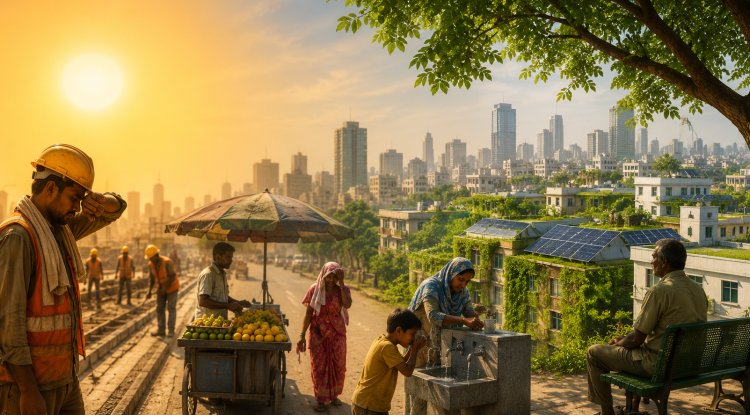
Finally, the success of India's heat adaptation strategy should not be judged by the complexity of digital maps or national policy documents. It will succeed only if it improves the daily lives of the people most exposed to climate change, such as construction workers exposed to extreme summer heat, street vendors working long hours under the scorching sun, and families sleeping inside metal-roofed homes that remain hot throughout the night. India must make its climate adaptation efforts a success by providing local governments with flexible disaster financing, incorporating equity into the urban design process and scaling up well-tested subnational models.
What's Your Reaction?