Google Partners with Energy Dome to Scale CO₂ Battery Storage Globally
Google has partnered with Milan-based Energy Dome to deploy CO₂ Battery technology for long-duration energy storage. This global agreement supports Google’s 2030 carbon-free energy target and scales clean power access in key regions while enhancing grid resilience with sustainable storage.
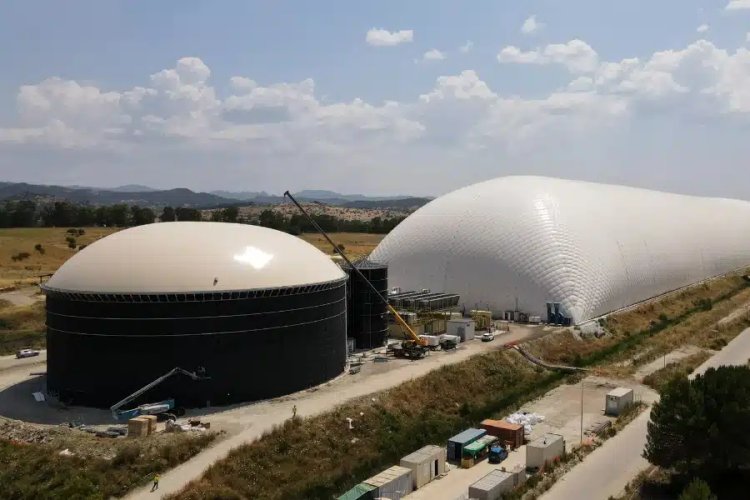
Google has reached a worldwide business deal with Italian energy storage company Energy Dome, renowned for its CO2-based CO Battery technology. Long-duration energy storage solutions are important for keeping a steady supply of power as the tech industry depends more and more on renewable energy sources like solar and wind, which may not be available all the time. The partnership wants to improve these solutions.
Unlike lithium-ion batteries or pumped hydro systems, the CO-based method uses a thermo-mechanical process to store energy by compressing and expanding carbon dioxide. This approach is a cheap and scalable storage option with a much smaller environmental impact than other methods. Suitable for both baseload and grid flexibility needs, the system can continuously supply electricity for 8 to 24 hours.
Energy Domes technology will be used in carefully chosen locations all around Europe, North America, and the Asia-Pacific under this deal. By 2030, the project helps Google reach its larger goal of running on carbon-free energy around the clock.
Google also made a strategic investment in Energy Dome as part of the cooperation. This move comes after earlier investments in clean energy firms and utilities including NTPC (India), Alliant Energy (USA), and Engie (Italy) by the tech giant. These investments highlight Googles continued effort to lower the carbon footprint of its worldwide operations.
Google and Energy Dome are working together for the first time in the world to use long-duration energy storage (LDES) technology on a big scale. Together, the two businesses will create initiatives combining renewable energy installations with CO Battery systems, therefore enhancing general energy resilience as well as corporate sustainability.
The CO Battery's closed loop stores carbon dioxide to lower emissions and improve environmental safety. Its design lets it run without the expensive and resource-intensive materials that traditional battery technologies need. This makes it a good option for energy-intensive tasks like data centres, which need a constant and dependable power source.
Achieving 24/7 carbon-free energy throughout all of its sites and data centres is part of Google's energy policy. Meeting this aim depends crucially on the inclusion of LDES systems including the CO Battery. Google claims that this collaboration will not only enable the business to speed up its transformation but also provide more general advantages to society by means of better grid dependability and energy access.
With this commercial agreement, Google and Energy Dome want to show that cost-effective and carbon-free energy systems are possible. They hope this will inspire other big energy users to embrace such technology. Long-duration energy storage is projected to be quite important in closing supply-demand gaps as worldwide demand for renewable energy rises.
What's Your Reaction?