Demand for piped natural gas is rising rapidly among Pune housing societies as expanding infrastructure and government support encourage a shift towards cleaner and more convenient cooking fuel.
For decades, LPG cylinders have been a common feature in Indian households, requiring regular bookings, home deliveries and storage space. But in Pune, that trend is steadily changing. Housing societies across the city are increasingly opting for Piped Natural Gas (PNG), with demand for new connections nearly tripling as residents look for a cleaner, safer and more convenient cooking fuel.
The growth in demand indicates a larger trend that is taking place in India, which is the growing importance of piped gas in the urban energy scenario of the country. This can be attributed to the fact that the government is working on expanding the City Gas Distribution network of the country.
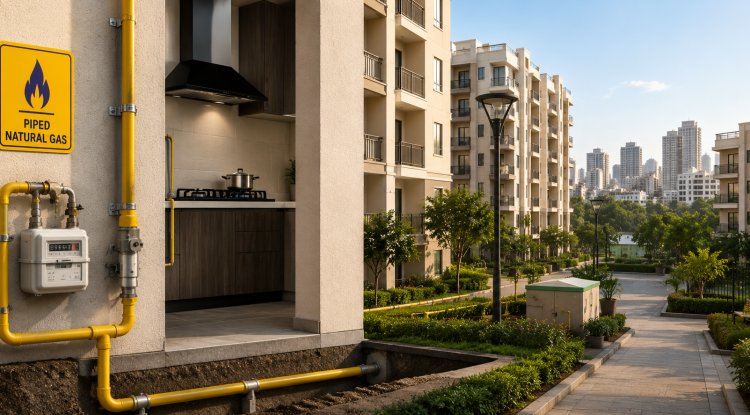
PNG is different from LPG, which requires refilling cylinders. The latter is delivered straight to households by means of pipelines under the ground. Therefore, problems associated with delayed refilling of cylinders, space constraints, and physical efforts needed to move the cylinders can be avoided.
As per the reports of industry experts, there has been a considerable rise in applications for PNG from housing societies in the last one year. Many housing societies are choosing to plan with the piped gas arrangement from the very start while others are retrofitting their societies with pipelines.
The rise in demand is also facilitated by India's attempt to encourage the use of natural gas. The government has plans to increase the proportion of natural gas in India's energy basket to about 15 percent from the current 6 percent. An extension of PNG connections in cities is one of the ways through which this objective will be realized, among others, the use of CNG in the transport sector.
As far as users are concerned, it does not remain as simple as convenience. The PNG system runs on a metered basis, which means that users have to pay for the amount of gas they use and do not need to book cylinders ahead of time or be afraid of any unexpected price increase related to the purchase of cylinders.
Environment is another important aspect influencing the popularity of natural gas in India. The consumption of natural gas produces lesser carbon dioxide emissions compared to other commonly used fuels for cooking. Though it is a form of fossil fuel, it is considered to be one of the cleanest fuels to use in the interim period before making the switch.
The rising popularity of PNG is also leading to an increase in infrastructure development efforts by gas utility companies. As more housing societies are getting connected, utilities are laying down underground pipelines to extend their networks to new residential areas.
However, challenges remain. Expanding pipeline infrastructure requires substantial investment and coordination with urban development authorities. Older neighbourhoods with dense construction often present engineering challenges, while awareness about the long-term benefits of PNG still varies among consumers.
Despite of all these difficulties, there is hope that this increasing demand in places like Pune is part of a bigger picture. In view of the increasing urban population of India and the increasing need for energy solutions which can help reduce the use of cylinders of LPG, it appears that piped natural gas will be a very important solution in the near future.
Government support and increased infrastructure may lead to the transformation of residential energy consumption in India, as seen from the example of Pune.
What's Your Reaction?