


India’s power demand crosses 250 GW amid extreme heat and delayed monsoon, highlighting the need for stronger grids, reliable energy supply, and accelerated clean energy solutions.
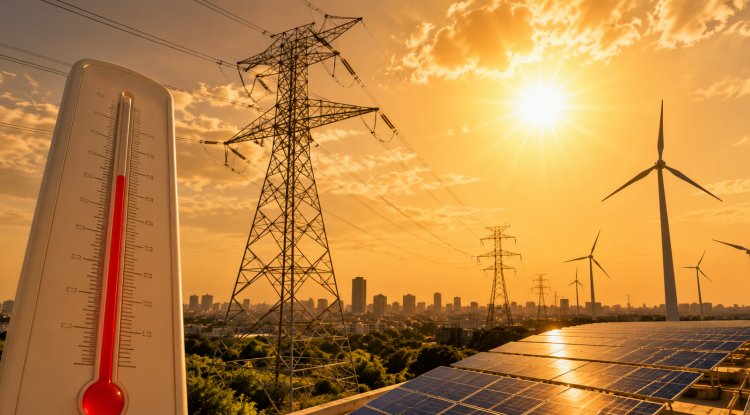
India’s electricity system is facing another major test as persistent heat and delayed monsoon progress push power demand to unprecedented levels. With temperatures remaining high across several regions, electricity consumption has stayed above 250 GW for the past two weeks, highlighting the growing pressure on the country’s energy infrastructure.
This high demand is shows shift in the energy environment, where the weather, the economy, and the need for cooling are increasingly influencing electricity usgae patterns. The peak demand for power stood at 264.8 GW on Saturday, after which it remained high at 250.6 GW on Sunday.
A Summer Challenge Intensified by Weak Monsoon
Normally, the arrival of the southwest monsoon brings relief from extreme temperatures and reduces electricity consumption. However, slower monsoon progress has extended the period of high electricity demand, increasing dependence on air conditioners, coolers, and irrigation pumps.
Government estimates suggest that peak power demand would be within the range of 247 GW to 278 GW during the monsoon season especially if rainfall is lower than expected. Less rainfall would still contribute to higher electricity demand as more groundwater would be required for agriculture.
Power Sector Prepares for Sustained Pressure
To ensure uninterrupted electricity supply, the government has activated backup plans to maintain adequate generation availability. These include increasing the availability of coal-based power plants by postponing planned maintenance activities, especially during periods when solar power generation is unavailable.
Additionally, there is a proposal under consideration by the authorities to increase the use of gas-fired power stations in case of need. Even though India has several gas-based power stations, most of them run under their capacity because of the exorbitant cost of fuel.
Officials have also indicated that coal stock in the thermal power stations is adequate, and the coordination between power producers, transmitters, and operators is being improved.
Climate Change Adds New Pressure on Energy Systems
Current consumption trends point to a larger problem for India's power industry, there is an increasingly strong effect of climate change on energy consumption. Higher temperatures have led to higher cooling demand, resulting in more pronounced peak consumption periods.
With economic development and increased prosperity in the country, electricity demand is likely to keep growing. There will be not only a need to generate additional power but also to ensure the sustainability of the electricity system.
Renewable Energy and Grid Flexibility Become Critical
The increasing generation of renewable energy in India will be vital for fulfilling the demands of the future. Nonetheless, the effective management of times of peak demand will be achieved through better transmission facilities, energy storage, and intelligent grid management systems.
Solar energy continues to provide power needs during the day, but the demand at evening and night hours becomes a problem since solar power is not available at that time.
Building a Future-Ready Power System
The increasing electricity consumption shows that India’s energy problem is not merely about generating more electricity anymore. India needs a system of producing power that can withstand tough climate, altered consumer behaviour, and clean energy production.
With the increased frequency of heatwaves and future expectations of rising electricity demand, grid resilience and investment in clean energy would be vital for secure electricity access.
What's Your Reaction?


















