A new TPCI report highlights how bio-energy is helping India convert agricultural and organic waste into clean energy, rural income and stronger energy security.
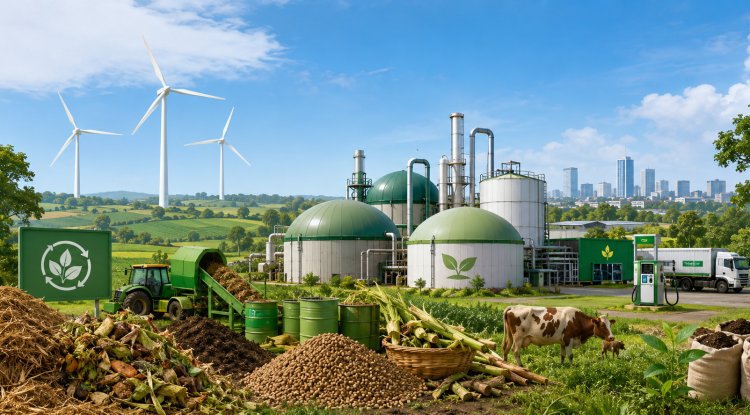
Discussions around clean energy are often dominated by vast solar farms and towering wind turbines along coastal regions. But a similar transformation is taking place across rural India, where agricultural and organic waste is being converted into a key source of industrial energy. In a detailed study titled 'Bio-Energy: The Mainstreaming of a Critical and Indispensable Component of Green Growth', the Trade Promotion Council of India (TPCI) has concluded that bio-energy is now a key and inescapable component of the country's green growth agenda. The nation is charting a viable circular economy model to generate clean energy from organic waste, crop residues and municipal waste, thereby helping address challenges related to energy security, rural livelihoods and air pollution.
This sector is being driven by a growing awareness of environmental challenges among policymakers. For many years, excess farm waste after harvest was an expensive problem to deal with, often leading to large-scale seasonal stubble burning around major urban centres, which produced heavy smog. The TPCI report shows that the country is successfully changing this environmental burden into a highly profitable asset by adopting these advanced technologies, such as compressed biogas production, biomass pelletisation, and advanced liquid biofuel technologies, supported by stronger policy and institutional backing. This also represents a reliable supply of baseload power that runs continuously even in the absence of wind and solar.
One of the key advantages of bio-energy is its ability to reduce India's dependence on global energy markets. India imports a large share of its crude oil and a significant portion of its natural gas requirements, making the economy vulnerable to global energy price shocks and geopolitical tensions in major oil-producing regions. The development of a strong network of bio-refineries can help replace a portion of fossil fuel consumption with domestically produced alternatives. This transition would keep more economic value within the country, strengthen energy security and help protect consumers from sharp increases in fuel prices.
In addition, the growth of the bio-energy sector is revitalising rural economies that have often received less investment than urban industrial centres. Establishing biogas plants and biomass collection hubs requires decentralised infrastructure across farming districts. By selling straw, crop residues and animal waste to processing facilities, farmers can generate an additional source of income. This infrastructure creates thousands of stable green jobs in logistics, supply chain management and bio-processing, particularly in regions where employment opportunities are limited, while also helping reduce migration to already congested urban centres.
However, scaling up this organic energy network to a national level will require overcoming significant structural and logistical challenges. The TPCI notes that the central challenge is not the technology itself, but ensuring that millions of small and geographically dispersed farmers can supply biomass feedstock consistently throughout the year. To address this challenge, substantial investment is needed in local storage facilities, advanced biomass collection and straw-compacting equipment, and transparent long-term supply contracts. Such measures would help ensure that small farmers and plant operators are protected from market price volatility while maintaining a reliable supply chain for the bio-energy sector.
Financial institutions are also playing an important role in this green transition, viewing bio-energy projects as stable, predictable and long-term investment opportunities. The integration of bio-energy production with organic fertiliser manufacturing has improved the commercial viability of these facilities by creating multiple revenue streams. The nutrient-rich digestate residue generated during biogas production can be used as a high-quality organic fertiliser that helps restore nutrient-depleted topsoil and reduces farmers' dependence on expensive chemical fertilisers, thereby further lowering the agricultural sector's environmental footprint.
In conclusion, TPCI's analysis highlights the vast untapped energy potential within India's agricultural sector and its importance in supporting a sustainable future. As the bio-energy industry continues to expand, one lesson remains clear: the most effective environmental solutions are often those that align with local economic interests. The success of this grassroots energy revolution will become increasingly evident in the coming years as new processing facilities are established and advanced biofuels become more integrated into India's energy system, demonstrating how agricultural and organic waste can help support the country's industrial and environmental ambitions through natural biological and chemical processes.
What's Your Reaction?