A water conservation and environmental sustainability project at Pune’s SRPF Group 1 Campus has improved rainwater harvesting, wastewater recycling, and ecosystem restoration, benefiting over 4,000 police personnel and their families.
On this World Environment Day, a water conservation and environmental sustainability project has been completed at the SRPF Group 1 Campus in Pune. The Hinduja Foundation announced the completion of an environmental sustainability project. The foundation, in collaboration with the Centre for Environmental Research and Education (CERE), launched a multi-faceted programme on rainwater harvesting, recycling wastewater and planting urban forests. The initiative, which is part of their flagship Jal Jeevan initiative, is supported by Hinduja Renewables Energy and Gulf Oil Lubricants and directly improves the lives of more than 4,000 police personnel and their families on site every day.
Raman Kalyanakrishnan, CEO, Hinduja Foundation, said: “This initiative at the SRPF Group 1 Campus demonstrates how water conservation, wastewater recycling, and biodiversity restoration can come together to create climate-resilient ecosystems within urban environments. By strengthening groundwater recharge, improving green cover, and promoting ecological restoration, we are not only enhancing environmental resilience but also contributing towards healthier and more sustainable communities for future generations.”
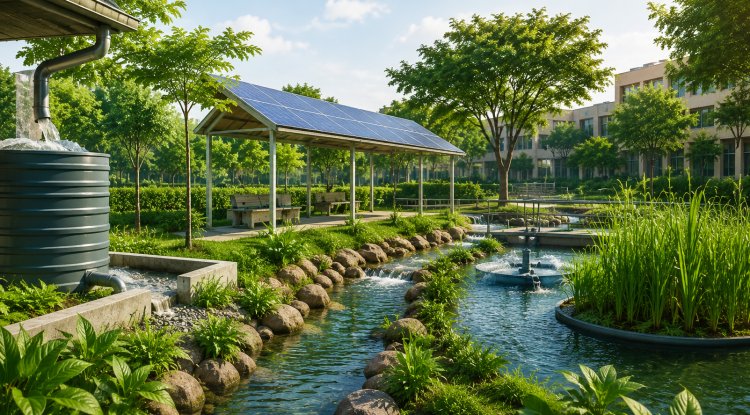
The large training area for the police force was always suffering from issues relating to water management and treatment of waste water. Rather than opting for an immediate remedy, a sustainable design was adopted which replicated the natural method of filtering and recycling. In this regard, construction of thirteen deep pits and 55 storm water drains were planned to channel the seasonal rain water from monsoons into aquifers underground. In addition, they remediated a 250m length of a local stream and excavated 400m² of dedicated water absorption trenches. This is an effective way to collect rainwater on site and not as wasted urban runoff.
The project also included wastewater treatment measures. A wastewater recycling system was introduced, specifically for the staff quarters with 330 households. A floating reed bed (100 m2) system was installed in a neglected campus pond to restore the pond ecosystem while treating the water biologically instead of chemically. The water is continuously treated and recirculated with this arrangement and floating aerators, as well as high-tech vortex micro-aeration systems. The project has also had benefits beyond the campus boundaries. According to the project team, nearby farmland that was previously affected by wastewater seepage has shown signs of improvement, with farmers reporting better crop yields.
What's Your Reaction?