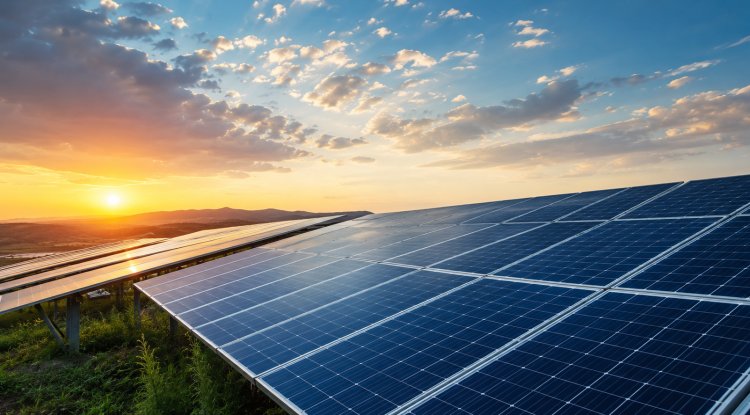
India's remarkable solar expansion is reshaping the country's energy landscape, accelerating the shift towards cleaner electricity, lower carbon emissions and a more sustainable future.
India’s rapid growth in solar energy is becoming increasingly significant in reducing decreasing the country's dependency on fossil fuels, in lowering carbon footprints, and creating a sustainable power grid. With the growing share of renewable energy in India's overall power supply, it is said that this growth in the sector is contributing to India's energy security as well as climate goals.
According to the information shared by the Ministry of New and Renewable Energy (MNRE) in Parliament, India’s total installed solar power capacity increased from 2.82 GW in 2013-14 to 162.15 GW till June 30, 2026, thereby registering an almost 57-fold growth within a decade.
This is one of the most rapid instances of transitioning to clean energy worldwide and is testament to the increased investment made by India towards renewable energy. Speaking on the issue, the Union Minister for New and Renewable Energy, Pralhad Joshi, in a written statement to the Lok Sabha, stated that India has become the third-largest installed solar power market in the world.
A Cleaner Energy Mix
However, the fast-paced development of solar energy is making the nation slowly decrease their reliance on coal because it provides most of the nation's electricity. With every new unit of electricity produced by means of solar energy, the need to use the energy obtained from fossil fuels decreases, thus reducing carbon footprint.
Unlike thermal power plants that release CO2 directly into the atmosphere while generating power, solar panels produce energy without any emissions. Solar energy is among the best methods of curbing climate change in line with India’s goal of achieving zero emission in 2070.
Furthermore, the transition to solar energy helps create clean air by reducing pollutants like sulphur dioxide, nitrogen oxide and particulate matter which are emitted by thermal power plants.
Saving Water Alongside Energy
Moreover, solar energy has other environmental advantages besides lowering carbon emissions. The traditional thermal power stations use a significant amount of water for the purpose of cooling and generating electricity, whereas the photovoltaic solar systems need a minimal amount of water during the entire process.
Considering the increasing pressure on water sources due to climate change in India, the expansion of solar energy will certainly prove to be useful in reducing pressure on the water resources.
Supporting India's Renewable Energy Targets
India's objective to achieve 500 GW of capacity from non-fossil sources of power by 2030 is based on the development of solar power in the country. The solar power sector will help India meet its Nationally Determined Contributions (NDCs) made under the Paris Agreement by increasing its renewable energy-based electricity generation. Various government policies, including large-scale solar power parks, rooftop solar schemes, and PM Surya Ghar: Muft Bijli Yojana have helped in the development of this sector.
The expansion is also creating new opportunities for green jobs across manufacturing, engineering, installation, operations and maintenance, supporting the development of a broader clean energy economy.
Challenges on the Road Ahead
Despite the fast pace of development, according to experts, ensuring this trend is continued requires increased investment in battery energy storage systems, as well as efficient power grid infrastructure which can handle renewable energy.
The installation of roof-top solar power, enhanced domestic production of solar panels, and less reliance on foreign elements of solar modules is important to boost the renewable energy sector in India.
Land availability, finance problems and quicker approvals for projects are some of the most important areas which need policy intervention in order for renewable energy to expand.
A Key Step Towards Sustainable Development
The rapid development of solar power by India illustrates the use of renewable energy as a foundation of sustainable development. In addition to cutting down on carbon emissions, solar energy promotes clean air, water conservation, and energy security.
In light of growing electricity demands, it is predicted that India's growing solar power capabilities will make a vital contribution to the creation of sustainable energy future.
What's Your Reaction?