Heat waves can become dangerous even without record-breaking temperatures. Here's why staying cool matters, who faces the highest risk, and practical ways to prevent heat-related illness without air conditioning.
Heat waves can become deadly despite the fact that temperatures may not have reached record-breaking highs. Humidity, hot nights, and long duration make it difficult for the body to dissipate heat, leading to dehydration, heat exhaustion, and heat stroke. Even though air-conditioning provides the fastest way out of a dangerous situation, there are other ways to ensure safety.
Why are hot nights a concern?
Night-time temperatures are as significant as daytime temperatures. Our body needs cool nighttime temperatures to compensate for heat exposure over time. Once night-time temperatures stay at 24 degrees Celsius (75 degrees Fahrenheit) or higher, our body cannot get rid of accumulated heat. Long-term exposure to high nighttime temperatures has been associated with an increased incidence of heat-related diseases among elderly patients and those with preexisting conditions.
Weather forecasters usually measure heat using the heat index formula that takes into account temperature and humidity. Some use the Wet Bulb Globe Temperature method that accounts for sun radiation and wind speed.
What should one do if there is no air conditioning?
It is easier to cool a single room rather than try to cool the whole house. Sleeping in the coolest part of the house will allow the body to heal at night time. It is helpful to keep curtains or blinds drawn during the day, while windows can be opened once it gets dark outside and the outdoor temperature drops.
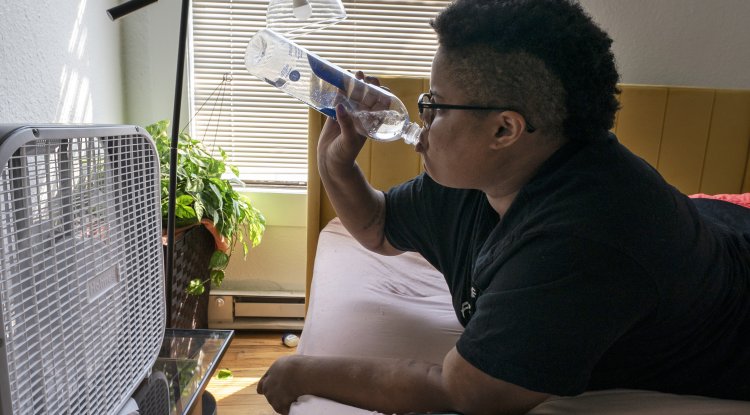
Using fans will increase air movement and will also make hot, humid weather more bearable. Evaporative coolers will help in arid areas, but become less useful as the humidity increases.
In case of high indoor temperatures, spending a couple of hours in an air-conditioned public place such as a library, shopping mall, or community center might prove beneficial.
What are the ways of preventing heat illnesses?
Drink plenty of water without waiting to become thirsty. Wear light clothes and take showers or wet cloths around the neck, wrists, and armpits to bring down body temperature. It is important for anyone doing physical activities outside to work in cooler parts of the day, rest in shaded spots, and have plenty of drinking water with them.
Heat waves put children, older people, outdoor workers, and those with existing health conditions at high risk. However, a few days of continuous hot weather will even affect fit people, especially if there is no cooling at night.
Heat waves occurring more often and lasting longer have become increasingly common across the globe. It is becoming increasingly vital to reduce heat exposure as a way of ensuring public health. Simple actions like staying hydrated, avoiding outdoor activities when temperatures are at their peak, making one’s immediate surroundings cooler, and taking care of vulnerable individuals can go a long way in reducing the risks associated with high temperatures.
What's Your Reaction?