The bank expands its social impact initiatives across healthcare, women’s empowerment and environmental sustainability
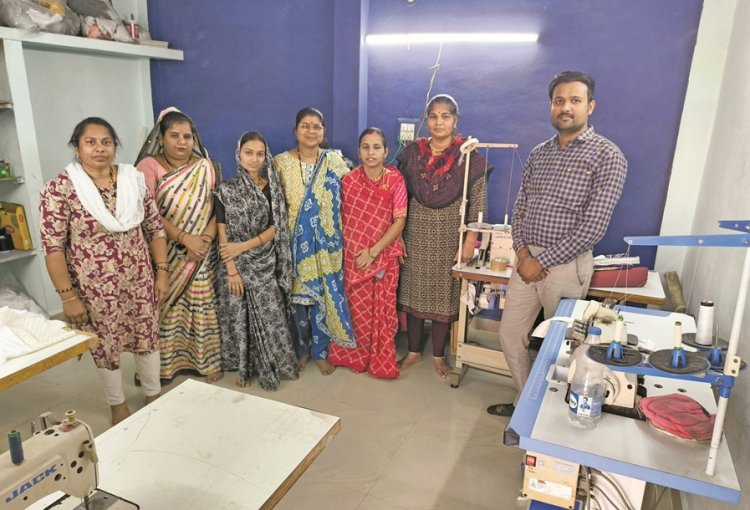
According to ICICI Bank’s Environmental, Social and Governance Report 2024–25, Corporate Social Responsibility (CSR) expenditure stood at Rs 801 crore in FY25, a 54% increase from Rs 519 crore in the previous year, underscoring its growing commitment to long-term community development.
The increased expenditure showed that the bank had expanded its social impact initiatives across healthcare, women’s empowerment, and environmental sustainability, reaching 1.89 crore people during the financial year 2024–25.
As per the report, a significant focus was placed on empowering women through Self-Help Groups (SHGs). In FY25, 10 lakh women were supported under this programme, bringing the total number of beneficiaries to 1.1 crore since its inception. These initiatives have enabled women to access credit, enhance financial literacy, and generate sustainable income opportunities in rural and semi-urban areas. Additionally, over 91 lakh individuals benefited from programmes aimed at skill development, agriculture, and micro-enterprises, substantially improving rural livelihoods.
The bank had also expanded in the healthcare area by partnering with 550 hospitals and had facilitated medical treatment for 4 lakh individuals, bringing the total number of healthcare beneficiaries to over 25 lakh. As part of its long-term healthcare commitment, the bank had increased its support to the Tata Memorial Centre to Rs 1,800 crore, which would contribute to establishing three new cancer hospitals across India.
Environmental Initiatives
FY25, the Bank created water harvesting capacity of 3,387 crore litres and restored 17,453 water bodies, the report said. Additionally, rainwater harvesting systems were implemented in 9,690 schools. The Bank planted 12 lakh trees during the year, bringing the total to 49 lakh trees since FY22. Through forest conservation projects across states like Madhya Pradesh, Maharashtra, Rajasthan, Andhra Pradesh, and Telangana, the Bank has actively contributed to afforestation and biodiversity conservation. Notably, in Bihar’s Gaya district, the revival of traditional ahar-pyne systems benefited over 11,973 acres of farmland, while watershed development projects in Maharashtra helped improve 1,295 acres of land and supported 370 households.
Governance and ESG Strategy
ICICI Bank continues to enhance its governance frameworks and integrate ESG factors into its operations. In FY25, the Bank expanded its ESG risk assessment tool to cover additional sectors, and incorporated ESG criteria into credit evaluations for large corporate proposals. The introduction of sector-specific ESG analysis for hard-to-abate industries further strengthens its sustainability initiatives. The Bank remains committed to achieving carbon neutrality for Scope 1 and Scope 2 emissions by FY2032.
What's Your Reaction?