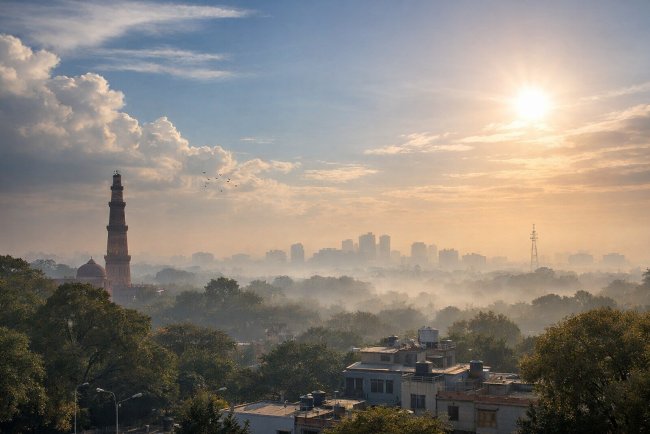
An IITM-led study projects that India's forests and croplands will expand and absorb more carbon dioxide by 2100, driven by increased rainfall and higher plant productivity.

The Indian Institute of Tropical Meteorology (IITM), Pune, led the study, which suggests that India could become greener in the coming decades as forests and croplands are expected to increase and remove more carbon dioxide from the air.
The study, published in the International Journal of Climatology, used data for the period between 1985-2014 and future projections until 2100 using the latest climate models of the Coupled Model Intercomparison Project Phase 6 (CMIP6). These models predict continued heavy use of fossil fuels and minor reductions in carbon emissions.
The study found that Gross Primary Production (GPP), which indicates the capacity of plants to take up carbon dioxide through photosynthesis, has increased in India from 729.1 gC/m²/year in 1985 to 830.1 gC/m²/year in 2014 and is expected to grow to 1,304.8 gC/m²/year in 2100. The CMIP6 model ensemble projects that GPP will increase, an increase in GPP will occur over the second period under discussion, going beyond the trend observed historically and showing a much greater growth than CMIP5 projections.
Areas with the highest forest densities and intensive cultivation areas, such as the Indo-Gangetic Plain, Northeastern India and the Western Ghats, as well as areas with relatively low forest cover in arid northwest India, are expected to see the greatest increases.
Increased projected rainfall and CO₂ fertilisation of plants were the main reasons behind the long-term greening trend observed, according to Yogesh K. Tiwari of IITM. The trend in rainfall was a more important factor than changes in vegetation climate sensitivity from more recent models.
However, it does not always mean more carbon being stored in the long term, as more plants grow and heat stress can release carbon from plants and soil, Tiwari added. The ecosystems and biodiversity may be negatively impacted even during the growth of vegetation due to this temperature rise increments.
Smrati Gupta, Yogesh K. Tiwari of IITM, along with researchers at Banaras Hindu University and the University of Technology Sydney, spearheaded the study.
What's Your Reaction?