India has commissioned the world's first hydrogen production plant using nuclear process heat from the Fast Breeder Test Reactor, marking a breakthrough in clean hydrogen and advanced nuclear technology.
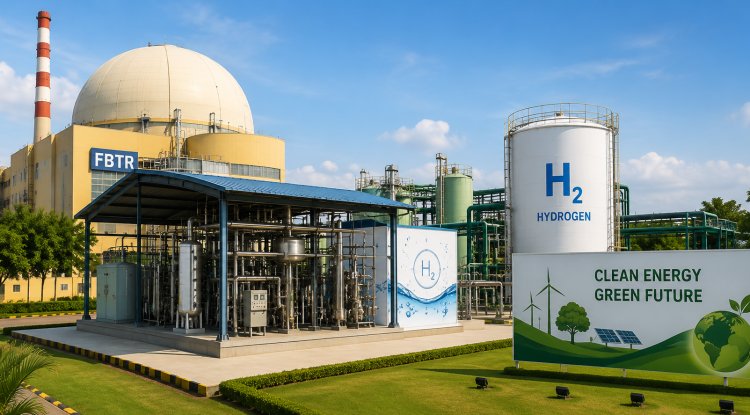
The Department of Atomic Energy (DAE) has commissioned the first-ever hydrogen production plant powered by nuclear process heat from the Fast Breeder Test Reactor (FBTR), marking a significant achievement in the field of clean energy and advanced nuclear technology. It is situated at the Indira Gandhi Centre for Atomic Research, Kalpakkam, Tamil Nadu.
The pioneering facility was inaugurated by Secretary, DAE, and Chairman of the Atomic Energy Commission, Ajit Kumar Mohanty, in the presence of Director, IGCAR, Sreekumar G. Pillai. The plant is a technology demonstrator that validates the integration of nuclear heat with hydrogen generation. It is the first time such an application of nuclear energy has been demonstrated anywhere in the world outside electricity generation.
The hydrogen production process is based on the indigenously developed Cu–Cl thermochemical process developed by Bhabha Atomic Research Centre. The Cu–Cl cycle is considered one of the most promising emerging technologies because of its potential for relatively low operating temperatures and high efficiency. When coupled with nuclear heat from fast reactors, it can produce hydrogen on a large scale with zero CO₂ emissions, without relying on fossil fuels.
The facility is the culmination of years of collaborative research and engineering efforts involving process development, equipment fabrication, testing, and commissioning by BARC and IGCAR. It will now be used to facilitate operational learning, process optimisation, and the future scale-up of nuclear-assisted hydrogen technologies for commercial use.
While inaugurating the center, Dr. Ajit Kumar Mohanty highlighted that the dual capability of nuclear energy to generate electricity as well as high-grade process heat makes it highly suitable for India's mission of clean hydrogen. He said that the developments made in this field will definitely contribute to India's energy security and sustainable development.
The project also builds on the 40-year legacy of the FBTR programme and further strengthens India's three-stage nuclear power strategy by expanding the use of nuclear energy beyond electricity generation. The inauguration marks a major milestone in India's journey towards becoming an "Atmanirbhar Bharat" and aims to position the country as a leader in advanced nuclear and clean hydrogen technologies, paving the way for a low-carbon, energy-secure future.
What's Your Reaction?