


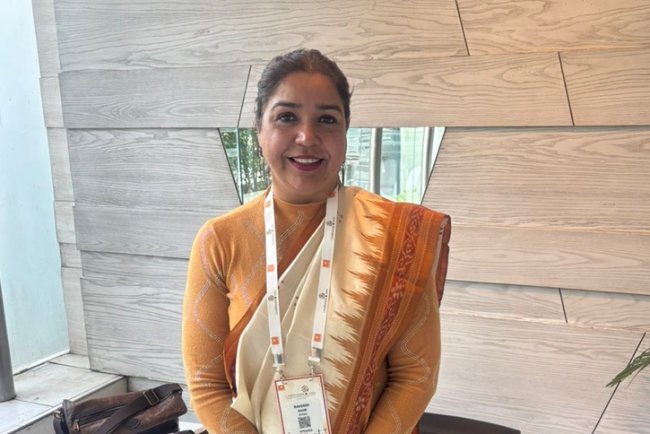
Vijay Gond, Co-founder and CEO of PeakAmp, highlighted a gap that is often overlooked. India does not yet have a strong reverse supply chain to collect used batteries at scale

India’s electric vehicle push is gaining momentum, but what happens after the battery dies remains an open question. With the country expected to see a surge in end-of-life EV batteries over the next few years, the bigger challenge may not be recycling itself, but getting those batteries back into the system.
In this conversation, Vijay Gond, Co-founder and CEO of PeakAmp, highlighted a gap that is often overlooked. India does not yet have a strong reverse supply chain to collect used batteries at scale. Without that, recycling cannot take off in a meaningful way.
Gond explains why many batteries still hold value even after their primary use, how second-life applications can ease costs for small users, and why informal disposal remains a risk. He also breaks down the economics of battery recovery, the limits of current recycling systems, and what it will take to build a reliable return network.
His argument is straightforward. Before India talks about large-scale recycling, it needs to fix the basics of collection, sorting and reuse.
Excerpts:
India may see over 1 million EV batteries reaching the end of life by 2030. Are we ready for that scale?
Recycling is not as simple as putting a battery pack into a machine and getting everything out. A battery pack still has some usable energy left even after its range falls from 500 km to 150–200 km. For private use, that battery may still work, but for commercial use, the viability goes down.
When a battery pack still has value, people do not want to throw it directly into recycling. They want to recover some value from it. That is where PeakAmp comes in. We segregate the battery pack into good cells and bad cells. Good cells go into second-life applications, while bad cells go for recycling.
What happens to the good cells?
Good cells are reused in second-life battery packs. These are not used again in EVs, but in energy storage systems.
There is a huge application for these packs in agricultural areas, small households, roadside vendors, shopkeepers and farmers who use solar panels and small battery packs to run their businesses.
These lithium battery packs are very costly, so not every small shopkeeper or farmer can afford a new battery. We are trying to make battery packs from second-life cells at a more sustainable price point.
Can you explain the overall battery recycling process?
We define it in three major segments: collection, segregation and processing. Collection is one of the biggest challenges because India does not yet have a strong reverse logistics system. Products move from factory to distributor to dealer to customer, but bringing products back from the customer to the factory has not evolved in the country.
We are creating a reverse logistics system through a hub-and-spoke model and plug-and-play partnerships. After collection comes segregation. Good cells go for a second life, while bad cells go for recycling. We are not the ones who own recycling facilities because running recycling plants and managing labour is tough. We partner with experienced recyclers, provide them supply for their machines and work together.
How much of a battery pack can actually be saved through a second life?
That number is not constant. It varies from battery pack to battery pack. For example, mobile phone batteries are single cells and are sent directly for recycling. But in EVs, where many cells are connected, some cells may still have life left. The percentage of usable cells can vary from 10% to 50%. In some accident cases, even 80% of the cells may still be usable.
What if lithium batteries are replaced by another technology in the future?
Change is the only constant, we have to agree. But the fact is, in the current situation, if we do not recycle, if we do not get into that business, and if we do not help the country in recycling lithium batteries, it will impact the soil like anything.
Yes, we were not talking about lithium battery recycling 10 years back. Probably something new will come up, and we will handle it. But for sure, as of now, where I see it, for the next 20 to 25 years, these lithium batteries are going to remain in the picture.
There are Chinese companies that are actually setting up battery packs based on solid-state batteries. Sodium batteries, we have been talking about for a long time. Hydrogen cells are also in the picture. These batteries are not the ones that create energy; they transport energy. Batteries are going to remain in our lives in any case, because they store energy.
Recycling can recover up to 90–98% of materials like lithium, cobalt and nickel. So why has the industry not scaled up yet?
The government only introduced the Battery Waste Management Rules in 2022. Before that, batteries were part of general e-waste rules. Now, companies are responsible for recycling the battery packs they put into the market. If they do not recycle, they may not be allowed to import or manufacture new batteries. Whenever there is a clear mandate, industries start moving faster.
Are you building a full-stack solution?
We came up as an end-of-life full-stack solution. We are creating a full-stack supply chain solution and a full buyback solution for customers. In the future, if your EV battery degrades after a few years, you should be able to call PeakAmp. We will take your battery pack, help you get the right value, provide the right buyer and even help you get a replacement battery.
Can second-life batteries work at scale in India?
Second-life batteries cannot currently be used in EVs because they cannot safely deliver the same acceleration and power.
When a battery is pushed hard, it generates heat. There is also internal resistance, which creates risk.
As of now, second-life batteries are more suitable for energy storage systems.
Why should someone buy a recycled battery or a battery made with recycled material?
One reason is responsibility. Over time, the government may mandate that manufacturers use a certain percentage of recycled lithium, copper and other materials. India imports lithium, so using recycled materials can reduce import dependence and lower costs.
People should also take pride in using products made with recycled materials.
What are the biggest challenges in building a reliable battery return network?
Either it takes time to build that channel, or it takes a lot of money. Whoever has a strong supply chain and enough money to build the network will move ahead. This market will not belong to one player alone. Multiple companies will enter.
How big is the risk from unsafe battery disposal and informal recycling?
Informal recyclers are not responsible. They may dump battery packs into landfills if they cannot recover value from them. That is a challenge. But over time, as value comes into the sector and government support increases, the informal market will shrink.
What is the biggest challenge in EV battery recycling today?
The biggest challenge is the supply chain because technology is spread across the world. China is way ahead. A lot of things are happening in terms of technology. We are not putting a lot of money into technology, but a lot of countries are putting a large amount into creating technology.
Are you working with government bodies and OEMs?
Yes. We are already in talks with very good companies. Things are happening with the government and with OEMs.
We are just a year-old company. We raised funding in March, received the money in August and September and have already done good business.
Does India import battery waste from other countries?
No, not right now. We should not take another country’s waste into our house unless we clean ourselves.
If we already have enough infrastructure to recycle materials within the country, and if imported waste comes at a lower cost than virgin material, then we may consider it. But that can happen only over time. First, India needs enough infrastructure to recycle its existing waste. Only then should we think about taking waste from other countries.
How much environmental damage can proper battery management prevent?
These battery packs are highly hazardous and toxic metals. If it is not recycled or properly processed, it is going to heavily impact the soil when it is dumped.
What is your advice for sustainability startups looking for funding?
The challenge is not just the idea, but how smartly you execute it. You should support the existing market instead of trying to kill it. If you try to remove all existing players, you will burn a lot of money. It is better to grow together with the market.
What's Your Reaction?










Leave a Comment







