India will showcase its renewable energy achievements, smart grid initiatives and biofuel progress at the BRICS Energy Ministers’ Meeting to highlight its clean energy transition and sustainable growth strategy.
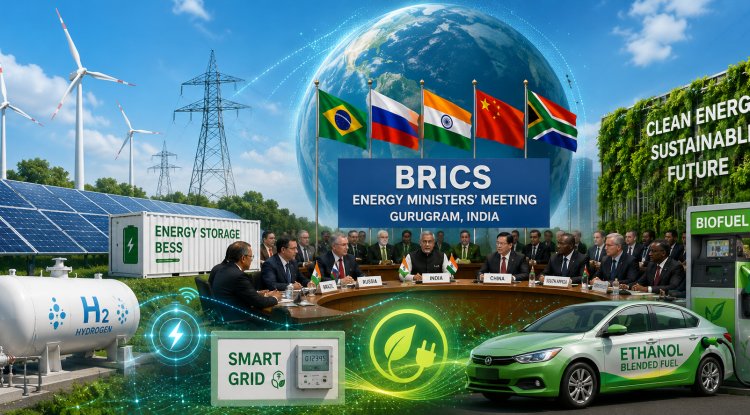
Global energy security is facing increasing pressure as countries strive to meet rising power demand while fulfilling ambitious climate commitments. India, which is working to balance these priorities, is emerging as an important voice in the sustainability conversation among developing economies. A key diplomatic effort to showcase its rapid energy transition comes as it hosts a high-level roundtable of energy stakeholders and decision-makers from around the world. At the 11th meeting of energy ministers of the BRICS countries in Gurugram, India will present its achievements in green energy and demonstrate how industrial growth can be pursued while reducing carbon emissions, reports The Economic Times.
At a pivotal moment, the two-day international conclave brings together a strong coalition of member states with significant global influence. The BRICS countries represent nearly 40% of the world's population and around 40% of global GDP. Given their economic and demographic importance, the decisions and partnerships formed by the bloc can play a key role in shaping the global energy landscape. India, as the chair, will take the conversation forward with the intention of developing action-oriented frameworks and solutions rather than focusing only on theoretical commitments, with emphasis on energy affordability, supply security and technological innovation.
A comprehensive demonstration of India's rapid grid transformation will be at the centre of its presentation to international peers. Officials from the power ministry have announced that the country will highlight its significant progress in adding utility-scale solar capacity, which has become a major component of the national energy mix. India will also showcase its efforts in implementing smart meters, which are key elements of power sector digitisation initiatives, and explain how these measures can help reduce transmission losses, manage peak demand and support consumers.
The delegates will also gain insights into India's extensive investments in renewable energy capacity and its progress towards next-generation developments in large-scale battery energy storage systems (BESS), which will be crucial in balancing the national grid as more wind, solar and other renewable energy sources are integrated.
In addition, India will highlight its advancements in sustainable biofuels at the BRICS platform. One of the major achievements of this approach has been the development of the national ethanol blending programme. The government has achieved an important milestone by implementing a 20% ethanol blend in petrol through its fuel supply chain network. This has enabled India to reduce millions of tonnes of carbon emissions while creating an additional source of income for the country's farming community. The blending programme provides a potential model for other BRICS countries with abundant resources to reduce dependence on expensive and unreliable foreign oil supplies.
India's commitment towards building a clean energy-independent framework is closely linked with its long-term development goals. India is the third-largest producer and consumer of energy and one of the fastest-growing major economies in the world, making secure and sustainable electricity supply a key pillar of its national development agenda. The country's clean energy achievements are an important part of its efforts to achieve developed nation status by 2047 and are regularly highlighted by the government.
The upcoming ministerial summit in Gurugram is not just a diplomatic event but also a platform where the future direction of the global energy landscape is being discussed. Through its solar power expansion, smart grid initiatives and biofuel developments, India is signalling to the Global South and international markets that economic modernisation can progress alongside environmental responsibility.
The progress made by India will provide an example of how political commitment and structural investment can contribute to building a cleaner and more resilient global energy system as BRICS countries explore new technological and energy security collaborations.
What's Your Reaction?