India is promoting flex-fuel vehicles to reduce crude oil imports, increase ethanol demand and support cleaner transportation.
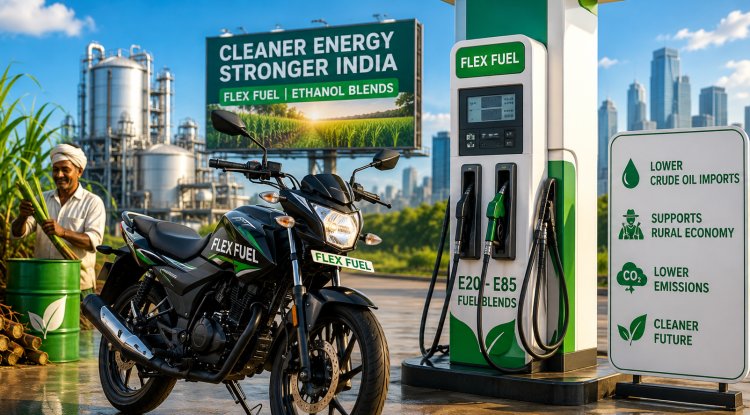
The Ministry of Petroleum & Natural Gas (Petroleum) has emphasised on Flex Fuel Vehicles (FFVs) as a viable option to cut crude oil imports, boost rural economies and promote low-carbon mobility in the country in a big way towards cleaner mobility and energy independence. The announcement coincided with the launch of Hero MotoCorp's first flex-fuel motorcycle, which can run on E20 to E85 fuel blends.
Flex-fuel technology will be a turning point in India's energy transition journey, said Union Minister Hardeep Singh Puri. In addition to their use of locally grown biofuels, FFVs can operate on higher ethanol blends than conventional vehicles. This innovation has the potential to reduce the country's reliance on imported crude oil, which currently accounts for about 88.5% of its crude oil requirements.
The Indian ethanol blending programme has already made a sea change in the country after its extension. Data from the government indicates that the additional blending has reduced the foreign exchange cost by approximately ₹1.84 lakh crore, replaced more than 302 lakh metric tonnes of crude oil imports and eliminated 909 lakh metric tonnes of CO₂ emissions. Puri pointed out that even the shift towards small use of FFVs can ensure increased generation of ethanol demand and bring in a fresh source of income to the rural agricultural value chain where the fuel feedstocks are sourced locally.
Flex-fuel mobility may also play a role in diversifying India's future mobility landscape, alongside electric vehicles and hydrogen-based solutions, with a technological blend that best fits the local context. The officials emphasized lower infrastructure costs and faster deployment make FFVs an attractive transitional technology especially when more than 300 million two-wheelers are driving in the country.
As India continues to expand ethanol production and increase blending levels, the government has been looking into enabling policy measures that make flex-fuel vehicles more affordable and consumer friendly, across the country.
What's Your Reaction?