India has added two new biodiversity repositories to protect rare species, marine life, fungi and microorganisms that can support farming, medicine and environmental conservation.
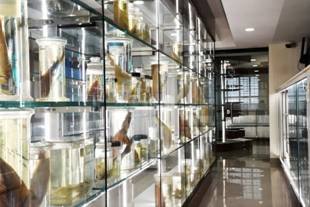
The government has made yet another effort to conserve their biological resources through the addition of two new repositories in India. These two new institutes will help in conserving rare species of plants, animals, fungi and microorganisms that plays an important role not only in nature but also in our daily life.
The National Biodiversity Authority, along with the Ministry of Environment, Government of India, has notified Referral Center Bhavasagara located at the Centre for Marine Living Resources & Ecology in Kochi and MACS Collection of Microorganisms along with National Fungal Culture Collection located at Agharkar Research Institute in Pune.
They operate as vaults where important biological samples are stored. The newly discovered biological specimens are stored in such ways that they can be used for study, protection and use at a later stage.
This sounds very technical but it actually has direct bearing on the lives of people.
The various medicines, vaccines, food items, fertilizers, and agricultural techniques are produced using biological samples obtained from nature. The fungi and microorganisms are useful in improving the soil quality, making crops healthier, cleaning contaminated water sources, and also producing medicines for saving lives. Protection of such biological specimens means securing the future discoveries which might prove beneficial for everyone.
The Referral Centre Bhavasagara in Kochi is of utmost importance since it concentrates on deep-sea biodiversity. The Indian seas contain a variety of species yet to be fully discovered. The center currently contains over 3,500 specimens identified by researchers, such as deep-sea fish and other marine life.
Resources from the ocean will allow scientists to conduct studies regarding the diversity of marine life, the impact of climatic changes on the oceans, fisheries, and the creation of new biological products that may have applications in the future. Marine diversity is very important for people who depend on fisheries for their survival.
Agharkar Research Institute in Pune serves an entirely different but equally important purpose. The MACS Collection of Microorganisms at this institute is an invaluable collection of microorganisms which includes rare microorganisms that can live under harsh conditions. They have application in agriculture, industries, and healthcare.
For example, some microorganisms can help crops absorb nutrients better, reduce the need for chemical fertilisers and improve soil quality. Others may help scientists develop new antibiotics, enzymes or industrial products.
The National Fungal Culture Collection, which is located at the same institute, safeguards various fungi collected across different regions of India. While fungi remain relatively unknown, they play an integral role in agriculture, forestry, and ecosystems in general. This is because fungi help in the process of breaking down organic waste, releasing nutrients in the soil, and promoting plant growth.
The absence of these fungi and other microorganisms would make it challenging for these ecosystems to survive. Plants would be unhealthy, while the forest ecosystem would be out of balance. The health and fertility of the soil would be negatively affected too.
Storage of these biological resources will be useful not only for today’s generations but also for the future generations. Researchers, educational institutions, industrialists, and farmers can make use of these resource centres.
At present, 18 institutes have been established as biodiversity resource centres in India. These new centres will help India in its endeavour to preserve nature while promoting science, agriculture, food safety, and environmental conservation.
To put it simply, these resource centres are not merely used for storing laboratory samples. In fact, they are meant for preserving the essential components of life that provide clean air, healthy food, medicines, agriculture, forests, and ecological balance.
What's Your Reaction?