The Union Health Ministry has advanced India's One Health approach by outlining a National Action Plan for zoonotic diseases and launching new learning resources to strengthen surveillance, preparedness, and outbreak response.
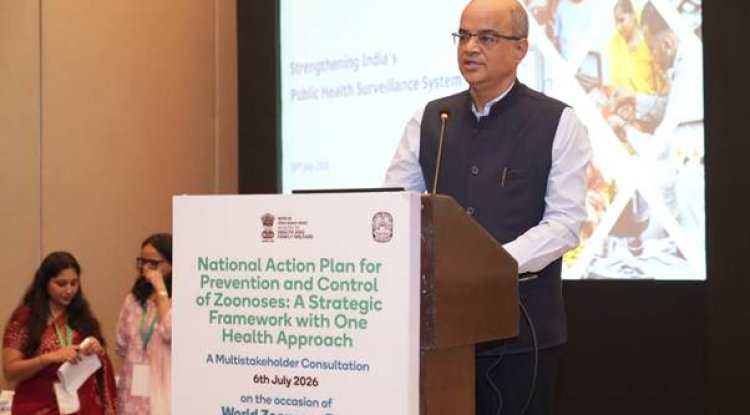
On the occasion of World Zoonoses Day, the Union Ministry of Health and Family Welfare organised a National Multistakeholder Consultation on the National Action Plan for Prevention and Control of Zoonoses in New Delhi, which brought together senior representatives from various stakeholders, including the human health, animal health, wildlife, environment, academia and development sectors.
Rakesh Gupta, Additional Secretary, Ministry of Health and Family Welfare, welcomed the gathering and spoke about the ongoing public health, animal health and economic challenges that zoonotic diseases continue to pose in the country as well as worldwide. He highlighted the government's resolve for improved multisectoral coordination, digitisation of surveillance systems using IHIP 2.0, improved lab networks, a skilled workforce, digital innovations and evidence-based decision-making.
The National Action Plan will be a comprehensive strategic plan that will build on governance, surveillance, laboratory systems, preparedness and response, risk communication, research and innovation, and sustainable financing. It will also assist the States and Union Territories in creating context-specific action plans in line with the national priorities.
In the first session, two important technical resources under the National One Health Programme were released – a Learning Resource Package on 10 Priority Zoonotic Diseases (PZDs) and a set of e-learning modules. The Learning Resource Package is designed to enhance the knowledge of health workers, veterinarians, and public health officials involved in zoonotic disease surveillance and control of the following diseases: Anthrax, Brucellosis, Kyasanur Forest Disease, Crimean-Congo Haemorrhagic Fever, Nipah, Mpox, Rabies, Leptospirosis, Scrub Typhus, and Zika.
Thematic technical sessions focused on issues of governance and institutional mechanisms, outbreak response, workforce development, financing and implementation strategies. The participants highlighted the need to increase the number of sentinel surveillance sites, and use digital technologies and artificial intelligence to improve disease intelligence, early warning systems, and timely information exchange via IHIP 2.0.
The outcomes of the consultation will be integrated into the final National Action Plan, which will be India's national strategic framework for coordinated multisectoral action within the framework of the One Health approach and will strengthen India's preparedness against zoonotic threats and help prevent emerging infectious diseases globally.
What's Your Reaction?