A new report projects India's annual solar manufacturing demand could reach 85 GW by FY30, driven by battery storage, green hydrogen, data centres and changing renewable energy needs.
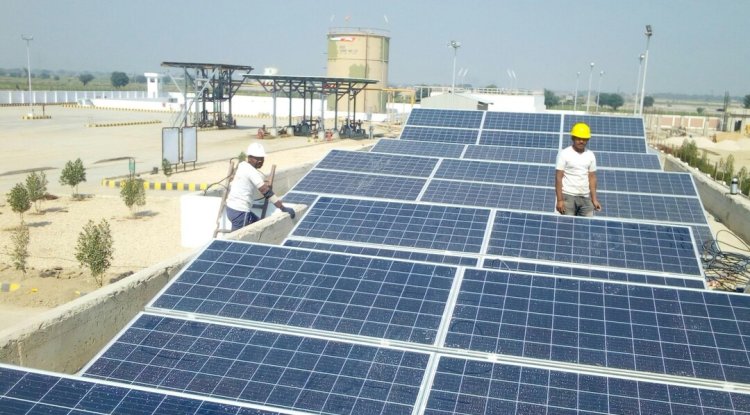
Annual demand for solar panel manufacturing can increase to as high as 85 gigawatts (GW) in FY2030 on account of battery storage, green hydrogen production, data centers, and electricity consumption, reveals ValueQuest Investment Advisors’ report. The report goes on to say that existing forecasts for the market might overlook these sources of new demand, which can transform India’s renewable energy market.
According to the report, annual installation of solar can rise from about 50 GW in FY2027 to 85 GW in FY2030. Moreover, the forecasted module demand can be as much as 120 GW during the same period, as the newer renewable projects will need more solar modules compared to the utility-scale plants.
According to the report, India’s renewable energy market is moving away from solar projects to hybrid projects that utilize solar power and battery energy storage systems. Such projects are aimed at generating power even after daytime. Unlike usual solar plants, solar storage projects would need extra solar power generation to store energy in batteries, thus increasing the module demand. According to the report, complex renewable projects may require 36% more modules than the usual solar projects with equivalent capacity.
The report mentions four primary sources of demand, such as utility-scale solar projects, commercial & industrial installations, rooftop solar plants, and solar plants for agricultural purposes through the PM KUSUM initiative. At the same time, the report mentions some developing areas like data centers, green hydrogen, and renewables at night as some of the areas that will contribute to the future demand for solar power but have not been considered in forecasts yet.
On the manufacturing front, the report suggests that there might be supply shortages in solar cells and wafers despite the rise in module production. Although the module manufacturing capabilities have increased considerably, the upstream manufacturing is still underdeveloped. The authors state that the localization strategies, especially the Approved List of Models and Manufacturers (ALMM), would increase the demand for locally produced cells and wafers in the coming years.
The report goes on to suggest that India had a capacity addition of 45 GW of solar in FY2026, which included utility, rooftop, commercial, and agricultural sections. It states that India was able to install its latest 50 GW of solar capacity addition within just over a year, which took it 11 years to install the earlier 50 GW of capacity. In accordance with the changing dynamics of renewable energy projects and the demand for electricity, the report suggests an increase in manufacturing needs.
What's Your Reaction?