Stronger compliance, better worker protection, and a shift in mindset from brands and entrepreneurs are needed to upgrade the workforce
For decades, India’s garment industry grew at speed, scale and low-cost manufacturing. Sustainability was never part of the conversation. Factories focused on production targets, exports and survival in a highly fragmented industry dominated by small manufacturers.
Now, that conversation is changing. From carbon taxes and recycling rules to global buyers asking questions about water use and labour conditions, the pressure on the apparel sector is no longer limited to cost and delivery timelines. The shift is forcing even traditional industry bodies to rethink how Indian manufacturing will survive in the next phase of global trade.
At the centre of that transition is the Clothing Manufacturers Association of India (CMAI), which began its sustainability push in 2019 through SU.RE, an initiative backed by the Ministry of Textiles and the United Nations. Earlier this year, CMAI launched another sustainability platform, EcoStitch.
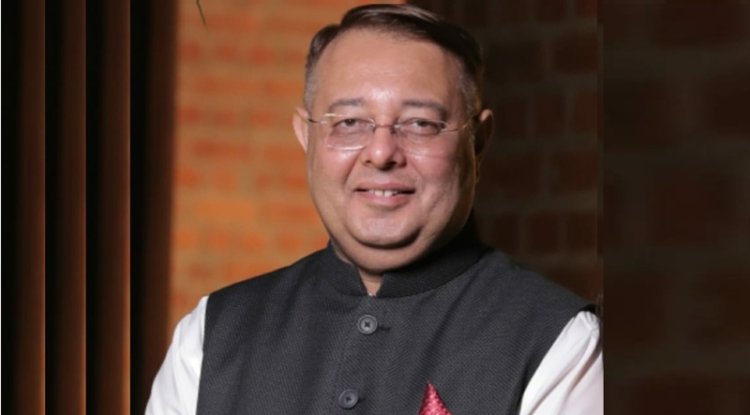
“Sustainability was definitely not a term when the textile industry started,” said Naveen Sainani, General Secretary and Chairman, ESG Committee, CMAI. “It is now on the agenda because of certain rules and regulations, like EPR and recycling rules.”
Sainani said the industry’s approach has changed sharply over the last few years, especially as free trade agreements with countries like the UK, Australia, UAE and the European Union begin reshaping export expectations. “We are telling the industry not to think that just because FTAs happen, exports will become easy. It is not going to be very easy,” he said. “There will be barriers created by countries in the form of carbon taxes.”
That concern is becoming central for Indian manufacturers as global brands begin tracking carbon emissions, textile waste, water use and ESG compliance across their supply chains.
“Consumers and global brands are now concerned about water consumption, textile waste, carbon emissions and the impact of fast fashion,” Sainani said. “If Indian apparel manufacturers are not prepared, export competitiveness may be reduced because buyers may shift sourcing to compliant countries.”
Yet India’s garment industry remains deeply fragmented. Nearly 95% of the sector is made up of MSMEs, many operating with just 200-300 machines. Unlike Bangladesh or Vietnam, where factories often function at massive industrial scale, India’s manufacturing ecosystem is scattered across small units. Sainani believes the future lies in “micro-clusters”.
“One major thing we are discussing with the Ministry of Textiles is the need for micro-clusters in the apparel industry,” he said. “If we create a denim micro-cluster or ethnic wear micro-cluster, then buyers, fabric suppliers, washing plants, embroidery units, logistics and testing facilities can all exist in one ecosystem. The whole micro-cluster can operate like a single factory.”
He described how the current production system leads to enormous wastage of time, money and energy. “Today, if a brand wants 100 sherwanis, the vendor first sources fabric, creates style sheets, sends material for embroidery and then produces samples. It takes nearly 75 days, and a lot of money and energy are wasted. After that, the brand may select only 25 styles,” he said.
“Fabric libraries, AI tools and 3D digital sampling software would already be available there. Brands can see digital samples within a week without physically producing everything,” he said. “Look at the carbon footprint, energy and money being saved here.”
Sainani said sustainability conversations in India are often reduced to environmental damage alone, while several structural changes inside the industry go unnoticed. “Today, many factories are adopting recycled and organic fabrics, water-saving dyeing technologies, solar and renewable energy, zero liquid discharge systems, water recycling and circular manufacturing,” he said. “Ethical labour practices are also improving.”
But he admitted the transition is still uneven. “The challenges today are the high cost of sustainable transformation, limited awareness among MSMEs, technology adoption barriers among older generations and lack of recycling infrastructure,” he said.
The water issue remains one of the industry’s biggest public image problems. Rivers polluted with dye discharge and untreated wastewater have become symbols of textile pollution across South Asia.
Asked about concerns around wastewater entering rivers like the Yamuna, Sainani said the industry is now working with the United Nations Industrial Development Organisation (UNIDO) on cleaner production systems. “UNIDO is shortly launching a programme called the GEF project,” he said. “They have identified clusters like Bhiwandi, Surat, Ludhiana, Karur and Tiruppur to promote zero-emission and cleaner production systems.”
He said the idea is to build CETP systems and water recycling infrastructure directly inside organised manufacturing clusters. “It becomes very difficult in India if manufacturing is scattered. You cannot build one CETP plant when factories are located 10 kilometres apart,” he said. “That is why the idea of micro-clusters becomes so important.”
The resistance, however, often comes from smaller manufacturers already struggling with thin margins. Sainani recalled a recent ethnic wear summit near Bhiwandi where he brought together karigars, embroidery workers, brands and vendors to discuss the future of manufacturing. “We explained that in a cluster ecosystem, everything can come under one roof, and that is where the future lies,” he said.
He pointed to Dharavi, where several informal manufacturing units continue operating without proper compliance systems. “In many places, even basic factory licences, fire clearances and compliance systems are missing,” he said. “If manufacturing continues in scattered workshop-style setups, it becomes difficult for brands to source from them in the long run.”
The sustainability conversation, according to Sainani, cannot remain limited to carbon and water alone. Labour conditions, especially for women workers, are becoming equally important. “In sustainability, social compliance is one of the most important aspects. No sustainability compliance is complete without social compliance,” he said.
While larger factories in Tiruppur employ large numbers of women workers, smaller units in cities like Mumbai and Surat still depend heavily on migrant male labour from states like Bihar, Odisha and Jharkhand. “What CMAI has done is reopen apparel training centres. In the next three months, we will train around 660 stitching workers and nearly 60-70 hand embroidery karigars. Out of the 660 trainees, nearly 95% will be women,” he said.
He added that facilities like crèches and walk-to-work systems become possible only when factories function inside organised clusters rather than isolated units. Even now, Sainani believes much of the domestic industry still does not fully understand what sustainability will eventually mean for business survival. “The industry is still in denial about the fact that sustainability is coming, it is important, and carbon taxation will eventually affect even the domestic industry in the near future,” he said.
According to him, larger exporters have already begun preparing by attending seminars and obtaining carbon-related certifications, but most factories are still far behind. “For nearly 90% of factories, sustainability is still seen as something distant that they do not fully understand,” he said.
The industry also faces another contradiction. Even as fears around automation replacing jobs continue, factories are struggling to find workers. “There is a shortage of workers, and it will remain unless automation and new technology machines come in,” Sainani said.
Asked why industries across sectors are facing labour shortages despite widespread concerns about unemployment, he said, “Nobody wants to work in these industries as such as there is not much encouragement because a lot of physical labour is involved. If somebody has to work for eight hours on a machine, but instead gets an opportunity to work in an air-conditioned mall as a salesman or something similar, they will prefer that.”
At the same time, he sees technology becoming unavoidable. “We should look at new technology machinery, which is already available,” he said. “For example, a Rs 22 lakh machine can produce 80% of a T-shirt with two workers. So people should look at new technologies and new machinery so that the combination of everything gives better results.”
Sainani said one of the biggest misconceptions about the textile sector is that it is only associated with pollution and waste, while efforts around recycling and circularity rarely get attention. “There is already a huge demand for recycled products, and India already has the infrastructure and experience to do this work,” he said. “We have the knowledge, and we have been doing it for many years. So the whole value chain is already there.”
What is needed now, he said, is stronger compliance systems, worker protection and a shift in mindset. “Some compliance is needed to upgrade the workforce. So it is not a very big challenge now, I feel,” he said. “It is up to the entrepreneur and the brand.”
Looking back, he admits that CMAI’s sustainability push may have come before the industry was ready for it. “CMAI was one of the pioneers that started sustainability initiatives long back,” he said. “But at that time, the industry was not ready to take it seriously.”
Now, he believes, the timing may finally be right. “Today, again, we are one of the leaders promoting sustainability in a different manner,” he said. “Now is the right time, and all the initiatives we started earlier are finally going to benefit everybody.”
What's Your Reaction?