India’s Oil Consumption Trends Shift Amid Global Slowdown and Changing Trade Dynamics
India's oil consumption is influenced by global economic shifts, trade tensions, and domestic energy strategies. This article explores the current trends and future outlook for India's oil demand and import patterns.
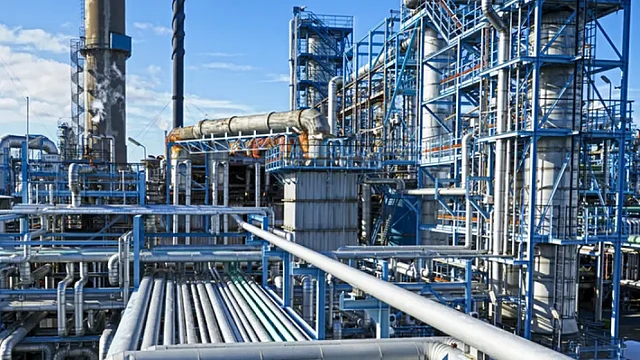
India's oil consumption patterns are undergoing significant changes due to global economic shifts, trade tensions, and evolving domestic energy strategies. As the world's third-largest oil importer, India is navigating a complex landscape influenced by both international dynamics and internal policy decisions.
In March 2025, India's fuel demand reached a 10-month high, increasing by 9.3% from February to 20.91 million metric tons. This surge was driven by notable increases in gasoline and diesel consumption, which grew by 10.6% and nearly 10% month-on-month, respectively. However, despite this monthly rise, demand was 3.1% lower than in March 2024. Cooking gas sales rose 4.2% annually to 2.72 million tons, while naphtha sales declined by 5% compared to the previous year but grew nearly 14% from February. Bitumen and fuel oil use also saw monthly increases of 18.4% and 1.5%, respectively.
India's oil import patterns are also shifting. In fiscal year 2024-25, India's oil imports from the Organization of the Petroleum Exporting Countries (OPEC) dropped to a record low, primarily due to increased purchases of discounted Russian oil amidst Western sanctions on Moscow. Russia remained India's top crude oil supplier for the third consecutive year, with imports rising 7.3% to 1.76 million barrels per day (bpd), accounting for 36% of India's total oil imports. Overall, India's oil imports grew by 5% to average 4.88 million bpd. In contrast, imports from traditional suppliers like Iraq and Saudi Arabia declined substantially, with Saudi oil imports falling to a 14-year low due to higher prices set by Saudi Aramco. As a result, OPEC's share in India’s oil imports fell to 48.5%.
Looking ahead, India's oil demand growth is expected to slow. Consumption is projected to expand by 150,000 barrels a day in 2024, down from about 290,000 barrels a day seen from 2021 to 2023. This slowdown reflects a return to growth rates observed between 2011 and 2019. The International Energy Agency (IEA) anticipates an even more modest increase, forecasting growth of 100,000 barrels a day.
Despite the anticipated slowdown, India is poised to become the largest source of global oil demand growth between now and 2030. The IEA projects that India will account for more than one-third of the projected 3.2 million barrels per day global gains, reaching 6.6 million barrels per day by 2030. This growth is underpinned by factors such as urbanization, industrialization, the emergence of a wealthier middle class, and efforts to achieve greater access to clean cooking.
To meet rising domestic demand, Indian oil companies are investing heavily in the refining sector. Over the next seven years, 1 million barrels per day of new refinery distillation capacity will be added, more than any other country in the world outside of China. India is also set to maintain its position as a key exporter of transportation fuels to markets in Asia and the Atlantic Basin. Continued investment in refining capacity and complexity will boost light and middle distillate production, even as the industry pivots further towards heavier and more sour crudes.
However, India's domestic oil production remains limited. In 2023, domestic oil production averaged around 700,000 barrels per day, accounting for just 13% of the country’s supply needs. Despite renewed efforts by the government to attract foreign upstream investment, domestic crude oil production is expected to see continued declines over the medium term, falling to 540,000 barrels per day by 2030.
India's energy strategy also includes a focus on clean energy transitions. Increased uptake in electric vehicles is set to play a key role in decarbonizing the transport sector. Combined, new EVs and energy efficiency improvements are expected to avoid 480,000 barrels per day of extra oil demand in the 2023-2030 period. Biofuels are also expected to play a key role in India’s decarbonization of the transport sector.
What's Your Reaction?

















