India's Renewable Revolution: Driving Towards 500 GW by 2030
India targets 500 GW of renewable capacity by 2030 and net-zero by 2070, driven by solar and wind but challenged by coal reliance and financing needs. India’s energy goals include 500 GW of renewables by 2030 and net-zero by 2070. Explore how solar, wind, and green hydrogen drive progress amid financing challenges.
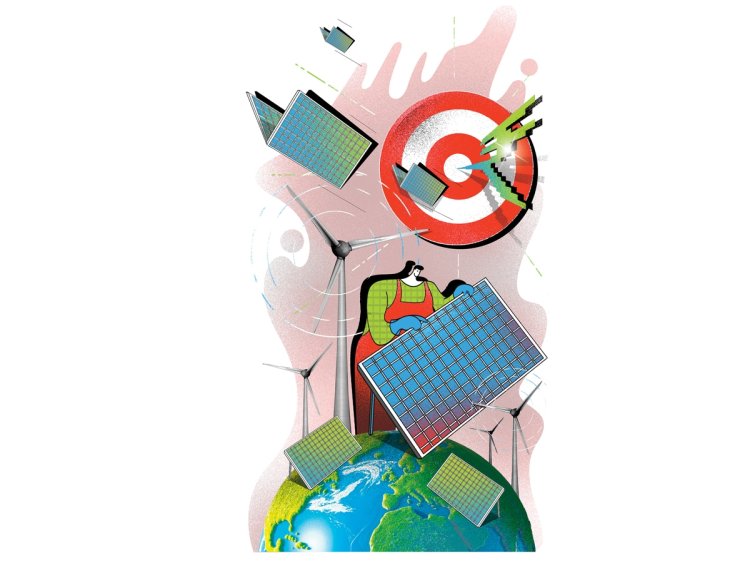
India aims for net-zero emissions by 2070, with interim targets of 500 GW renewable capacity and a 45% reduction in emissions intensity by 2030. While solar and wind projects drive progress, challenges like financing gaps and coal reliance persist. This article explores India’s energy goals and the hurdles to achieving them.
India’s renewable energy sector is expanding rapidly, with 90 GW of projects under construction and 44 GW in development. Solar power dominates, contributing 80% of new capacity, followed by wind and hydropower. Government schemes like PM Surya Ghar and PM KUSUM promote solar adoption, targeting 30 GW of residential solar by 2030. Annual tenders for 50 GW of renewable capacity ensure steady growth.
Despite progress, coal provides 400 million tonnes annually, supporting grid stability. The government is balancing coal’s role with renewable expansion, aiming for 50% non-fossil fuel energy by 2030. Energy storage systems and smart grids are critical to integrating variable renewable sources, reducing reliance on coal-based power.
Financing remains a major challenge, with an estimated $600 billion needed to meet the 500 GW target. Green bonds and foreign direct investment (FDI) are key, supported by India’s 100% FDI policy for renewables. However, high financing costs and regulatory complexities deter investors. Land acquisition and environmental clearances also delay projects, particularly in densely populated regions.
India’s green hydrogen mission, targeting 5 million tonnes by 2030, is another priority. Pilot projects and international partnerships are driving progress, but high production costs and water scarcity pose risks. Innovations in electrolysis and renewable integration can address these challenges, ensuring scalability.
Policy reforms, such as streamlining approvals and increasing domestic manufacturing, are essential to meeting energy goals. The Production Linked Incentive (PLI) scheme supports solar panel and battery production, reducing reliance on imports. India’s experience offers lessons for other developing nations pursuing sustainable energy transitions.
Conclusion
India’s energy goals, including 500 GW of renewable capacity by 2030, are ambitious but achievable with policy reforms and investments. While coal reliance and financing gaps pose challenges, the country’s focus on solar, wind, and green hydrogen positions it as a global leader in clean energy.
Source:Forbes India: India Energy Goals
What's Your Reaction?