India's textile industry is strengthening its circular economy through higher recycling rates, supportive policies and sustainable manufacturing practices to boost long-term growth.
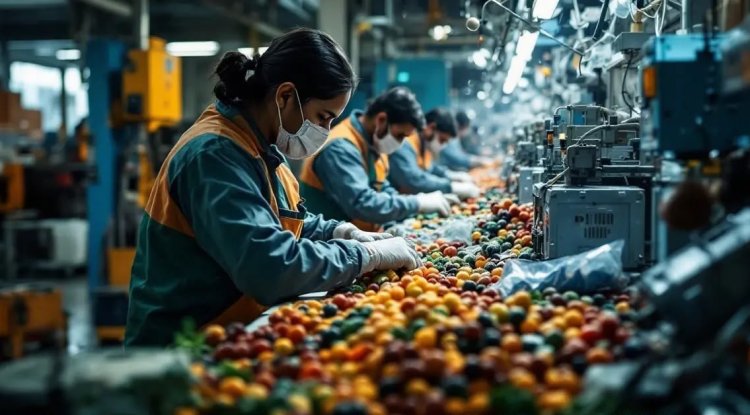
As the textile and apparel sector in India accounts for around 2 per cent of the GDP, 11 per cent of manufacturing gross value added and directly employs more than 45 million people, India is witnessing a significant transformation in sustainability, incorporating circular economy principles to support the sector's long-term growth.
In India, it is estimated that more than 70 per cent of textile waste is recovered for recycling, upcycling or reuse, around 7.8 million tonnes annually. Almost 95 per cent of pre-consumer textile waste is collected, and around 95 per cent of the spinning industry operates with nearly closed-loop processes. Around 55 per cent of post-consumer textile waste is diverted for recycling and reuse, supporting the livelihoods of around 4 to 4.5 million people, including many women from marginalised communities.
There are a number of grassroots models that are helping to move towards circularity at scale. Navi Mumbai's Belapur Municipal Textile Recovery Facility, India's first municipal-level circular textile hub, has contributed 30 metric tonnes (MT) of post-consumer waste, handled over 41,000 items, created over 400 upcycled samples and reached over 114,000 families. Panipat, in Haryana, has become one of the largest downstream recycling centres, recycling 3,500 to 5,250 tonnes of pre-consumer textile waste each day. The Katran Market in Mongolpuri, Delhi, connects informal waste handlers with formal ones and supplies more than 10 tonnes of textile waste per day to recycling centres.
On the policy front, the National Programme for Organic Production (NPOP) has been recognised by the European Commission and Switzerland and promotes certified organic cotton. The Jute-ICARE initiative has now grown to 289 blocks across 10 states, and the New Age Fibre Mission promotes fibres like ramie, sisal and flax that are environmentally friendly. The pilot projects on hazardous chemical elimination in 400 factories across eight clusters will reduce the use of harmful chemicals by more than 10,500 tonnes and carbon emissions.
In a fast-changing global trade environment, where eco-labelling, traceability and sustainability compliance are increasingly expected by international buyers, Indian textile companies that invest in circularity are more likely to attract premium buyers and sign long-term contracts.
What's Your Reaction?