Infinite Energy Vision: New Fusion Breakthrough Lights Up Clean Power Future
Scientists have unveiled a nuclear fusion breakthrough in 2025, potentially offering endless clean energy and reducing reliance on fossil fuels.
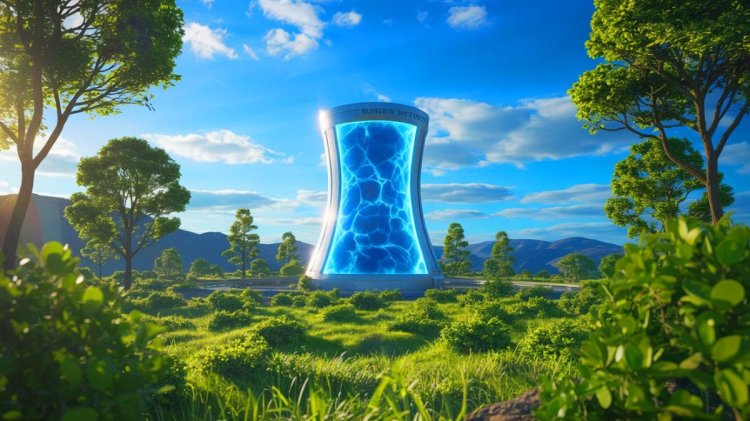
Scientists have achieved a significant breakthrough in nuclear fusion in 2025, bringing the world closer to a source of endless clean energy. The advancement, which improves energy output and stability, could reduce reliance on fossil fuels and transform global energy systems. This article explores the breakthrough’s technical details, its potential impact, and the challenges to commercialising fusion power.
Nuclear fusion involves combining atomic nuclei to release energy, mimicking the process that powers the sun. Unlike fossil fuels, fusion produces no greenhouse gas emissions and minimal radioactive waste. The 2025 breakthrough, achieved by an international research team, involves a new reactor design that sustains high-temperature plasma for longer periods, increasing energy efficiency. The reactor reached temperatures of 150 million degrees Celsius, surpassing previous records and generating a net energy gain for several seconds.
The breakthrough builds on decades of research, with projects like the International Thermonuclear Experimental Reactor (ITER) paving the way. The new design uses advanced magnetic confinement to stabilise plasma, addressing a key barrier to sustained fusion reactions. This improvement brings fusion closer to commercial viability, though significant hurdles remain. Current experiments consume more energy than they produce, but the 2025 results show progress towards a net-positive output.
Fusion’s potential is vast. A single kilogram of fusion fuel could power a city for a year, compared to tonnes of coal or gas. It relies on abundant materials like hydrogen isotopes, found in seawater, ensuring long-term availability. Unlike nuclear fission, fusion carries no risk of meltdowns or long-lived radioactive waste, making it a safer alternative. If scaled, fusion could meet global energy demand while cutting carbon emissions, addressing climate change.
However, commercial fusion remains years away. Building reactors is expensive, with costs running into billions of pounds. The 2025 breakthrough, while promising, requires further refinement to achieve consistent net energy gains. Scaling from experimental reactors to commercial plants also demands advances in materials and engineering. For example, reactor components must withstand extreme temperatures and neutron bombardment, necessitating new alloys and ceramics.
Global investment in fusion is growing, with private companies and governments funding research. The UK, US, and China have committed significant resources, aiming to deploy fusion power by 2050. Public-private partnerships are accelerating progress, with startups developing smaller, modular reactors to reduce costs. These efforts aim to make fusion competitive with renewables like solar and wind, which are currently cheaper but less reliable for constant energy needs.
Environmental benefits are a key driver. Fusion could replace coal and gas plants, which account for 40% of global CO2 emissions. However, the transition requires careful planning to avoid disrupting existing energy systems. Workforce retraining and infrastructure upgrades will be necessary to integrate fusion into national grids. Additionally, public perception of nuclear technology, often confused with fission, may pose adoption challenges.
The breakthrough has sparked optimism about fusion’s role in a sustainable future. Governments are aligning fusion research with climate goals, such as the Paris Agreement’s target of limiting warming to 1.5°C. However, experts caution that fusion is not a short-term fix. Renewables and energy efficiency measures will remain critical while fusion technology matures.
The 2025 nuclear fusion breakthrough marks a pivotal step towards clean, limitless energy. While challenges like cost and scalability persist, the progress in reactor design offers hope for a fossil-fuel-free future. Continued investment and international collaboration will be essential to turn fusion into a practical energy solution.
Source: Sustainability Times
What's Your Reaction?