Japan has issued heatstroke alerts across much of the country after temperatures exceeded 40°C in several cities, with authorities advising people to take precautions against extreme heat.
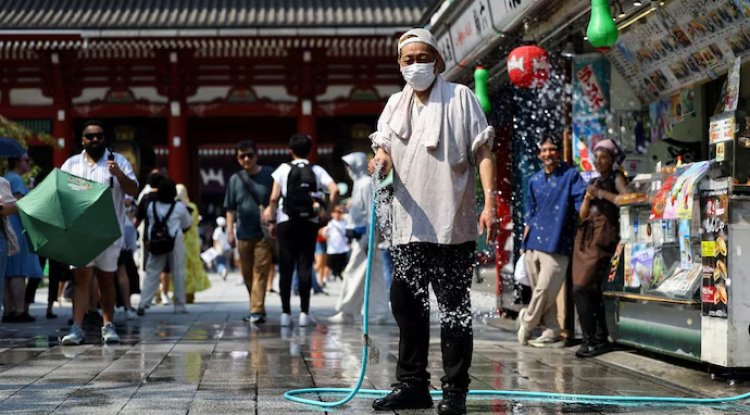
Japan has released heat stroke warnings in most parts of the country because temperatures have reached 40°C in various cities, as officials have urged people to be prepared against the hot season.
The Japan Meteorological Agency (JMA) confirmed that three cities in central Japan had recorded temperatures of more than 40°C on July 21. It marked the criteria for "kokushobi," a weather term introduced in 2018, which describes days when temperatures rise above 40°C.
Heat stroke warnings have been released in 41 out of 47 Japanese prefectures. Weather forecasts have revealed that there would be similar hot weather conditions in several parts of the country the next day.
The Fire and Disaster Management Agency of Japan has revealed that close to 11,000 people visited the hospital for heat strokes in the previous week. In addition, there have been 14 deaths reported within the last week because of heatstroke.
The authorities have suggested that people should drink plenty of fluids, avoid being outdoors during peak hours, and use air conditioners as far as possible. Various local governments have set up cooling centers in some regions of the country.
The government has announced that it is still working on efforts to minimize the effects of the warming temperatures through the expansion of air conditioning in the gymnasiums of schools as well as encouraging certain practices in the workplace that will reduce the risk of heat illness for both outdoor and indoor workers.
Japan suffers an estimated 1,300 heat deaths every year, according to the figures provided by the government. Last summer saw temperatures soar and was recorded as the warmest summer in the history of the country. National records were broken in Isesaki, located north of Tokyo, in August 2025 with temperatures reaching 41.8°C.
JMA introduced the kokushobi classification in April to indicate days when temperatures go up to 40°C or higher. This classification works in addition to the moshobi classification that indicates temperatures going beyond 35°C. The JMA has stated that the purpose of the introduction of this classification is to increase awareness during such periods of extreme temperatures.
High pressure and clear sky have been cited as some of the reasons for the long spell of hot weather in Japan.
Officials have asked residents to follow weather advisories and take basic precautions to reduce the risk of heat-related illness while the period of high temperatures continues.
What's Your Reaction?