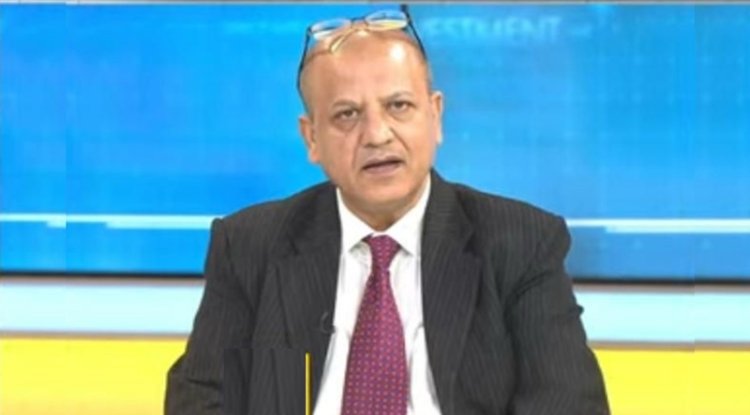
To understand what is actually broken — and what fixing it would really take — ResponsibleUs spoke to Prof. Vikas Singh, professor at the Indian Institute of Public Administration and one of India's sharper voices on political economy and labour policy
The violence that tore through Noida and Greater Noida's industrial belt in April was not a sudden explosion. It had been building — in underpaid wage slips, in shifts that stretched without compensation, in promises that never quite materialised. When it finally broke, it left broken factory gates, tear gas in the air, and over 350 people in custody.
But the bigger question — the one that outlasts the arrests and the damage assessments — is why it got to this point at all. India has labour codes. It has minimum wage laws. It has social security frameworks ambitious enough to look impressive on paper. So why does a warehouse worker in Bihar take home ₹8,000 a month while someone doing the same job in Tamil Nadu earns nearly double? Why are less than 30 per cent of informal workers even registered under the Code on Social Security 2020, three years after it was passed?
To understand what is actually broken — and what fixing it would really take — ResponsibleUs spoke to Prof. Vikas Singh, professor at the Indian Institute of Public Administration and one of India's sharper voices on political economy and labour policy. He has written extensively about how the gap between what laws say and what is actually enforced shapes the lives of millions of workers.
Why does a warehouse worker in one state earn far less than in another for similar work?
Because what actually gets enforced—and how much labour is chasing the job—sets the wage. In Bihar, you see Rs 8,000–10,000; in Tamil Nadu, it’s Rs 14,000–18,000. Tamil Nadu inspects more, so the minimum sticks. In high-supply belts, contractors know there’s a queue outside the gate, so they squeeze pay and stretch hours.
Why are social protections still inconsistent despite labour code reforms?
Because a large share of workers still isn’t on the system, and benefits don’t move with them. The Code on Social Security 2020 is ambitious, but under 30 per cent of informal workers are registered. Formalisation is the right call, but in the short run, it hurts—firms face higher compliance costs, onboarding lags, and contributions get missed. That is where government has to cushion the shift—temporary support, faster registration, real portability—so workers aren’t the ones paying for the transition.
Can India become a manufacturing hub without fixing worker security?
No. You can’t build scale with a revolving workforce. In the system, Vietnam tightened compliance and coverage and moved up to electronics. Here, patchy coverage keeps productivity and value-add low. Companies also need to behave—full compliance, stable contracts, on-time benefits—because reliable labour is how you get consistent output.
Are companies using geography to arbitrage labour costs?
Yes, but it’s not just about cheaper wages. Firms pick Uttar Pradesh or Karnataka for the overall deal—land, power, logistics, and state support. When governments act like partners, firms stay and comply. When it’s only an inspection, firms play the location game. Push too hard without support, and you slow investment; ignore it, and you lock in low productivity.
What's Your Reaction?