Land Demand Threatens Forests and Climate Goals: COP30 Report
A new COP30 report reveals that countries’ climate pledges require over one billion hectares of land which is risking displacement, food insecurity, and continued forest loss.
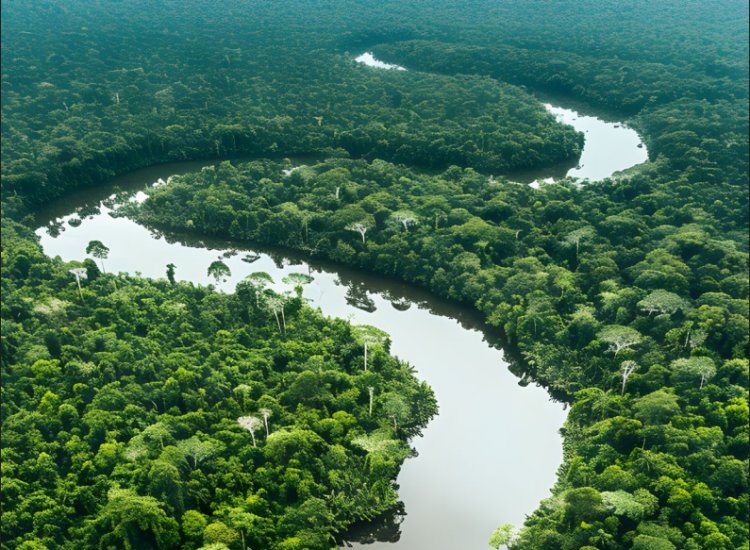
A new report shared at COP30 in Brazil says that the climate promises made by countries will require more than one billion hectares of land to remove carbon from the air, which is more land than the entire country of Australia.
The report’s authors warned that relying so heavily on huge land areas for carbon removal could push people off their land, reduce the amount of land available for growing food, and distract countries from making real emission cuts by protecting existing forests.
The Land Gap 2025 Report, led by the University of Melbourne, showed that instead of prioritising the protection and restoration of existing forests, governments are leaning on unrealistic tree-planting, bioenergy and carbon capture schemes to meet Net Zero targets. Speaking about the findings, the report’s lead author Kate Dooley said, “Countries are ignoring forest protection as a core pillar of their climate goals. Heavy debt burdens and trade and tax systems force many economies to exploit forests just to stay afloat. Yet healthy forests are the real foundation of healthy economies.”
The report identified two widening gaps in global climate plans. First is the “land gap” the difference between the vast areas required for carbon removal and what is realistically available. The second is a “forest gap”, which reflects the distance between global commitments to end deforestation by 2030 and the likely outcomes of current policies. According to the analysis, even under existing pledges, annual losses could reach four million hectares of forest by 2030, with another 16 million hectares degraded.
The study explained that the problem is not only the lack of financial support. Beyond insufficient finance, the study blamed the structure of the global economy for driving forest loss. It pointed to sovereign debt pressures, tax evasion and trade rules that encourage large-scale agriculture and logging. Highlighting the core issue, Rebecca Ray of Boston University’s Global Development Policy Centre said, “The biggest threat to forests isn’t lack of green finance, it’s a global economic system that rewards exploitation.”
To bridge the gap, the authors suggested reforms that connect economic strength with environmental protection. They said that debt relief is needed so developing countries can ease financial pressure and reduce their dependence on deforestation for income. They also emphasized the need for tax reforms to stop illegal financial flows and increase government revenue, so countries can invest more in sustainable development.
The report explained that although mechanisms like the Tropical Forest Forever Facility could generate up to $4 billion every year, the actual need is far greater. The report estimated that at least $117–299 billion per year is required to meet forest goals for 2030. Emphasizing the challenge ahead, Kate Horner, co-lead author, said, “Reform will be difficult, but the alternative — continued forest destruction and a climate on the brink, is far worse.” The report concluded that the road to Net Zero cannot be paved with unrealistic land targets. As Dooley added, “Forests are not a fallback for fossil fuels. They are frontline infrastructure for a liveable planet.”
What's Your Reaction?

















