Canada is advancing net-zero housing to meet climate goals, backed by government funding, industry innovation, and strategic partnerships. High costs and policy gaps remain challenges, but efforts are underway to increase affordability and scale adoption nationwide.
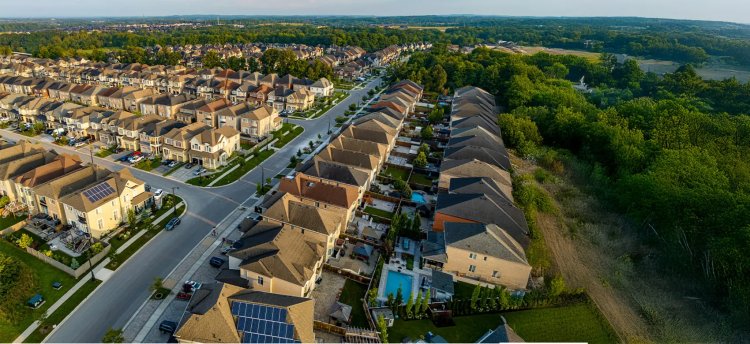
Net-zero homes are becoming a significant part of Canada's strategy to reduce greenhouse gas emissions and increase the energy efficiency of the residential housing market. Net-zero homes are designed to use as much energy as they produce in a year, either by creating renewable energy or by creating no carbon emissions whatsoever. Although these homes have their own benefits, the widespread implementation of net-zero homes is constrained by cost and policy barriers.
The Canada Green Buildings Strategy, which was released in mid-2024, aims to transform the building sector to be net-zero emissions and resilient by 2050. Net-zero homes directly contribute to this goal through the utilization of technologies such as thermal insulation shells, high-performance building components, and on-site renewable energy systems. Net-zero homes are able to annihilate home emissions and assist in cutting long-term energy expenses, but prohibitive up-front costs remain the largest barrier for most Canadians.
To respond to cost issues, Canadian homeowners can choose to lower their carbon footprint by buying green power or carbon offsets where home retrofits are not affordable. Builders, on the other hand, are embracing modular and pre-fabricated construction practices to minimize construction time and cost. Such improvements are being facilitated by the federal government, which in 2024 launched a $600 million investment package for speeding up the construction of houses through innovative technologies such as 3D printing, robotics, and mass timber.
Organizations such as the Canadian Home Builders' Association (CHBA) play a critical role in promoting net-zero housing via standard-setting, builder training, and market development. The CHBA collaborates with organizations such as Natural Resources Canada to enhance building practices and promote the implementation of affordable green technologies. Government programs offer financial incentives, technical assistance, and policy support to enable industry participants to make the transition.
Institutes like CanmetENERGY support by enhancing technology and spreading useful homebuilder and city planner resources. Systemic barriers to broader takeup remain, however. These include low public perception, fragmented building codes, high prices for new technologies, and glacial adoption of new home forms.
To reduce the cost of making net-zero houses, there is a need for a wide scheme. Higher subsidies and offering cash incentives to contractors as well as homeowners can ensure entry at lower costs. The federal government's 2030 Emission Reduction Plan spends $9.1 billion in additional funding spread across eight years in order to pay for such measures, adding on to an initial commitment of $17 billion stated in 2021.
There should be public education campaigns to make citizens aware of the long-term cost and environmental benefits of net-zero houses. Standardization of building codes and energy-efficiency requirements would further ease adoption by provinces and municipalities across the country. Investment in research to innovate affordable materials and scalable renewable technologies is also key to lowering the cost of construction.
Government, private developer, and non-profit collaborations across sectors can speed up the creation of sustainable housing by sharing resources and knowledge. Canada is also collaborating with the Sustainable Finance Action Council to promote investments from the private sector into decarbonizing the housing sector.
Globally, a number of successful net-zero housing strategies illustrate how policy coordination, innovation, and community cooperation can bring these homes into the mainstream. In the UK, the BedZED eco-village reduces emissions through local renewable power and smart design. Germany's Passive House standard emphasizes airtight construction and energy-efficient design. Zero Net Energy policies in California encourage innovative building methods. Japan's ZEH policy encourages efficient appliances and solar installations. The Netherlands' Energiesprong policy mass-retrofits current homes to meet net-zero standards.
These case studies illustrate the promise of success with the right policy frameworks, technological innovation, and multi-stakeholder partnership. Canada can translate these strategies to local conditions and move its climate objectives forward while improving housing affordability and resilience.
Net-zero houses are not just an emissions-reduction answer; they're a critical step toward sustainable city development. As Canada makes the shift to a low-carbon economy, expanding the affordability and availability of net-zero housing will be essential to achieving national climate targets. With each step forward to make this transition possible—subsidies, education, innovation—the country inches closer to a sustainable future.
Source/Credits:
Reposted with permission from The Conversation under Creative Commons License | Authors: Dr. Ehsan Noroozinejad Farsangi & Dr. T.Y. Yang | Photo: iStock and UBC
What's Your Reaction?