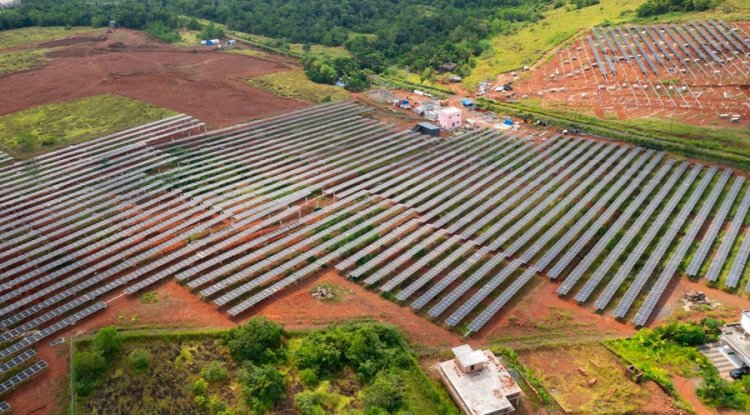
Localisation must be complemented with investments in deployable skills and diversification of the supply chain, writes the author

India has become a global leader on climate issues, through a bold stance for action on climate issues. India was one of the few, large economies that met its targets for the Paris Agreement well ahead of schedule and remains a leader in renewable energy installations. However, behind this rapid momentum lies a more pressing need that is quieter. While the plan to achieve net zero by 2070 is a great ambition, the technological foundation that is required to achieve it is still being built.
At the heart of India’s climate challenge is a contradiction: ambitions are outpacing the technological readiness to deliver them. This isn’t a matter of intent, India is committed to decarbonization. The real question is whether the country can build the tools, infrastructure, and systems needed to meet its targets at the scale and speed required.
Technology Gaps That Could Derail Progress
Industrial Decarbonisation
Industries like steel, cement, and chemicals are at the core of India's economic engine. However, de-carbonising hard-to-abate industries is difficult. Alternatives, such as greener hydrogen, are promising, but not yet ready. Pilot projects are underway, but large-scale commercial viability is constrained by high capital costs, limited infrastructure, and uncertain returns on investment.
Energy Storage and Grid Flexibility
India has been very successful in growing renewable capacity but has not been able to develop grid infrastructure to keep up. Renewable energy is intermittent by nature, therefore, to supply the grid with a round-the-clock energy supply more robust storage ways are needed, but battery costs remain high, and local manufacturing capacity is limited, making availability uncertain. Even where renewable energy is stored, key technologies like demand response systems, time-of-day pricing, and EV-based grid integration remain underutilised.
Carbon Capture, Utilisation and Storage
CCUS is fundamental in removing residual emissions, but remains largely absent from India's climate toolkit. The regulatory landscape is changing, but basic elements of geological mapping, liability regime, and commercial financing costs have not yet been developed. Without meaningful progress in CCUS sectors where emissions cannot be avoided, the lack of CCUS will remain a persistent challenge.
Monitoring and Emissions Data Infrastructure
While robust climate action requires robust data, India still has inconsistencies in practices for monitoring, reporting, and verification across sectors. Many companies lack the adequate digital infrastructure to collect and report emissions data in real time. This limitation dilutes not only internal decision making, but investor confidence and regulatory accountability as well.
Agriculture and Land Use
The agriculture sector is responsible for about 15 percent of India's greenhouse gas (GHG) emissions, but this is a complex and often overlooked area. Fragmented land holding structures, informal labor structures, and low technology penetration create barriers to the adoption of emissions reducing technologies. Practices like methane suppression in rice cultivation or carbon capture through regenerative agriculture are in early pilot phases and are yet to scale meaningfully.
How India Can Bridge the Gap
Climate technology policies must be backed by tangible action. India needs more than broad policy statements, it needs decisive execution. For instance, the National Green Hydrogen Mission must accelerate. Production-linked incentive schemes for battery storage and solar manufacturing should be expanded and complemented by state-level climate innovation funds.
Innovation ecosystems need to be built. India needs to facilitate actual collaboration between large industrial players, climate tech startups and research groups. Too many promising technologies remain trapped at the demonstration stage. Structured support can help bring them through to commercially viable solutions. Incubation networks and small challenge funds that have specific sectoral objectives could be a great way to push things forward.
We need support for international technology access. India needs to be active and engaged in global forums to deliver low-cost access to climate technologies of the future. This includes working at the multilateral level through the likes of Mission Innovation and the Green Climate Fund to ensure that global innovations are accessible and affordable for developing economies, not just tailored to the needs of developed ones.
Localise Key Technologies
India must reduce its overreliance on imported solutions.. It will need to create domestic capacity of core technologies (batteries, electrolyzers and smart grids) for long-term resilience and jobs which are critical. Building domestic supply chains will also help address current bottlenecks that are difficult to resolve through imports alone.
Localisation must be complemented with investments in deployable skills and diversification of the supply chain.
Net Zero as a Capability, not a Commitment.
Achieving net zero requires more than just setting targets, it demands building national capabilities across technology, institutions, and finance to meet those goals. If India does not develop these capabilities, it will lose the fight against the ambition-action divide, where bold ambitions do not translate to any work on the ground.
India has repeatedly demonstrated the ingenuity and resolve to address global challenges. The next decade will determine if net zero is a destination or an ambition.
Views are personal
What's Your Reaction?