Parliament passes bill replacing MGNREGA with a new 125-day rural job guarantee scheme, sparking opposition protests over the removal of Mahatma Gandhi's name.
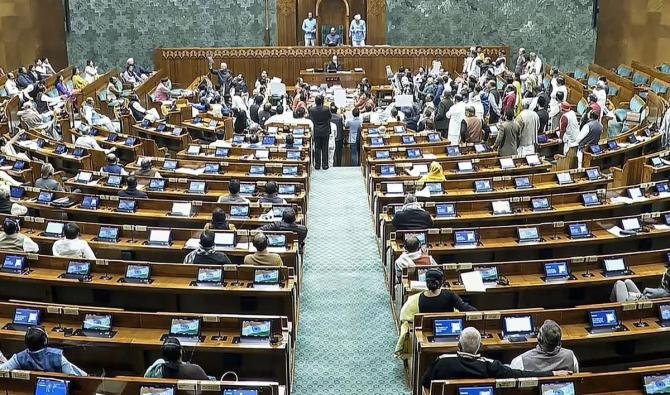
Parliament Passes New Rural Employment Law Amid Opposition Uproar
The Parliament of India has passed legislation to overhaul the country’s flagship rural employment scheme, replacing the twenty-year-old Mahatma Gandhi National Rural Employment Guarantee Act (MGNREGA) with the Viksit Bharat–Guarantee for Rozgar and Ajeevika Mission (Gramin), commonly known as VB-G RAM G, following a disorderly and heated debate.
The new law guarantees 125 days of employment per year for rural households, up from the previous 100 days under MGNREGA. The Bill was approved by a voice vote in the Lok Sabha amid strong opposition protests and was subsequently passed by the Rajya Sabha.
The final debate in the Lok Sabha was marked by disruption, with opposition members shouting slogans and tearing copies of the Bill while protesting near the Speaker’s chair. A major point of contention was the removal of Mahatma Gandhi’s name from the scheme’s title, which opposition parties described as an attempt to undermine the historical and ideological legacy of the original programme.
Due to the disorder, the Bill was passed without a recorded division, after which the House was adjourned for the day.
Government’s Arguments
The Minister for Rural Development told Parliament that Gandhian philosophy continues to guide government policy, even though Mahatma Gandhi’s name is no longer associated with this specific programme. The Minister stated that several welfare initiatives — including housing, sanitation, clean cooking fuel, and health insurance schemes — reflect Gandhi’s vision of poverty alleviation and social dignity.
According to the government, the new framework strengthens rural social safety nets by increasing the number of guaranteed workdays while aligning employment generation with the long-term vision of achieving “Viksit Bharat” by 2047.
Opposition’s Concerns
Opposition parties raised two key concerns. First, they criticised the symbolic removal of Mahatma Gandhi’s name, arguing that MGNREGA had become a globally recognised, rights-based welfare programme strongly associated with India’s commitment to rural employment security.
Second, they questioned the government’s ability to implement the expanded guarantee, citing concerns over funding adequacy, administrative capacity, and timely wage payments. Several opposition members warned that without sufficient financial and institutional support, the effectiveness of the expanded scheme could be undermined.
Introduced in 2005, MGNREGA is widely regarded as one of the world’s largest social security programmes, providing a legal guarantee of employment to rural households. As a result, any attempt to restructure or rebrand the scheme has remained politically sensitive.
What Happens Next
Following parliamentary approval, attention will now turn to implementation. Policy analysts and rural development stakeholders will closely examine beneficiary selection, the nature of employment created, wage payment mechanisms, and overall budgetary allocation.
Ultimately, the success of VB-G RAM G will depend on whether the expanded employment guarantee translates into stable job creation and improved economic resilience in rural India. The intense debate surrounding the Bill highlights deep political divisions over welfare policy, historical legacy, and governance priorities in the country.
What's Your Reaction?