As the organisation prepares to scale its impact—training youth, expanding healthcare access, and nurturing the next generation of social changemakers through its upcoming youth fellowship—Rangarajan outlines the road ahead for inclusive and accountable philanthropy
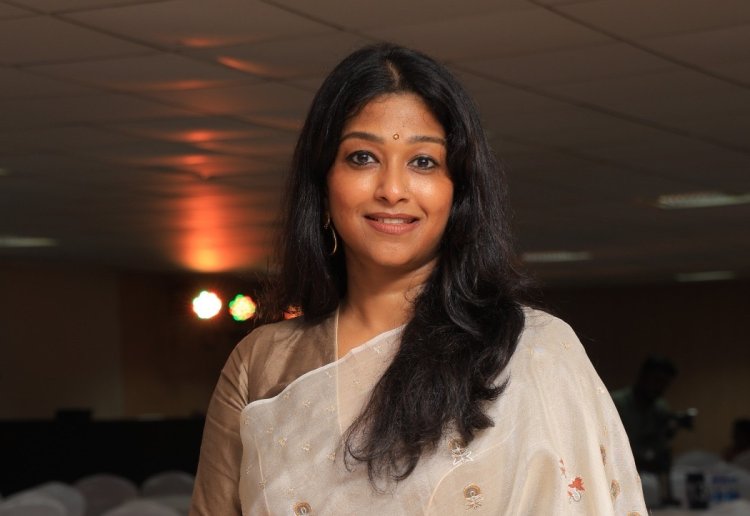
In an interview with ResponsibleUs, Sunanda Rangarajan, CEO of The Omega Forum for Social Impact (OFSI), shares the thinking behind OFSI’s unique approach and her vision for the future of responsible philanthropy in India. Since its launch, OFSI has marked a strategic shift from compliance-based CSR to long-term, community-led development. From providing interest-free microcredit and skilling support to launching federations and trusts led by community members, OFSI’s work is rooted in trust, collaboration, and sustainability. As the organisation prepares to scale its impact—training youth, expanding healthcare access, and nurturing the next generation of social changemakers through its upcoming youth fellowship—Rangarajan outlines the road ahead for inclusive and accountable philanthropy.
Omega has been fulfilling its CSR mandate since 2014. Given that, what gaps did the company identify that led to the launch of The Omega Forum for Social Impact (OFSI)? In other words, if CSR was already in place, what was missing that OFSI aims to address?
Since 2014, Omega Healthcare has remained committed to its CSR mandate, engaging in meaningful, community-responsive initiatives. However, over time, the leadership recognised an opportunity to evolve from addressing immediate needs to enabling longer-term, systemic change. The idea was not to replace our existing CSR efforts, but to build on them; to deepen our impact, foster sustained community development, and move from compliance-driven giving to a more strategic, integrated approach. This thinking led to the creation of The Omega Forum for Social Impact (OFSI), a dedicated platform that reflects our commitment to co-creating solutions with communities, supporting local leadership, and embedding social impact into the core of how we operate. OFSI represents a natural progression in our journey, allowing us to be more intentional, collaborative, and catalytic in the way we contribute to social change.
How many states have been covered under this initiative?
We are currently active in three states - primarily Tamil Nadu, where nearly 70% of our investments are focused. The remaining 30% supports programmes in specific regions of Telangana and Karnataka. Tamil Nadu was our starting point, and as we engaged more deeply with grassroots partners there, we recognised the value of sustained, place-based work. Instead of expanding too quickly, we made a conscious decision to focus on depth rather than breadth; prioritising long-term engagement over wide but shallow outreach. This allows us to address interconnected issues more effectively and build scalable models rooted in strong local partnerships.
Are you planning to look at the northern part of India?
As a mid-sized foundation, our core mission is to democratise access to healthcare and livelihoods, with a strong emphasis on empowering women as catalysts for change. While our current operations are concentrated in southern India, our vision is not bound by geography. We are very much open to expanding our work to the northern regions of India as well. That said, we are mindful of our current scale and resources. As the corporate foundation of Omega Healthcare, our funding presently aligns with the company’s CSR commitments. However, the very reason for establishing a foundation was to amplify our impact beyond traditional CSR mandates. Over time, we intend to leverage new partnerships and funding avenues that will enable us to broaden our reach across the country, including the north, while maintaining the depth and quality of our interventions.
Your model of helping communities is based on co-creation with the community members themselves. Can you explain how that works in practice?
While funders and partners, including us, can empathise with the challenges faced by marginalised communities, we cannot fully grasp the depth of lived experiences in rural and underserved areas. One of our earliest learnings was that strategies conceived in boardrooms rarely succeed unless communities are genuinely invested in the outcomes.
Our approach is rooted in co-creation. We believe meaningful change occurs when communities, especially women, are empowered not just as beneficiaries but as decision-makers. Today, in all our programmes - whether in livelihoods, healthcare, or social resilience - it is the community that leads. They identify priorities and shape the interventions. Our role is to facilitate access to resources, connect them with the right partners, and provide sustained support. The process begins with field research conducted in collaboration with our implementing partners. These sessions include our team, the local panchayat, and community members. Together, we map the challenges, identify existing strengths, and co-design solutions. These insights are then translated into programme plans, which are carried forward by our local NGO partners.
Two recent examples illustrate this model in action: a pilot programme with the Irular tribal community in Chengalpattu, and another with the transgender community in Madurai. Both initiatives reflect how deep engagement and community-driven design can lead to lasting impact and scalable growth.
Can you share an example of how your co-creation model worked on the ground—especially in a marginalised or tribal community—and what kind of transformation you saw?
We began with a small pilot that was entirely shaped by the voices of women in the community. Most had not completed school, many were married soon after puberty, and nearly all were raising young children. While some healthcare services were technically available, the women shared that they did not know what health-seeking behaviour even meant. Malnutrition, social isolation, and uncertainty were deeply ingrained in their day-to-day realities. The deeper we listened, the more we understood that any meaningful intervention had to begin with trust and relevance—not external assumptions.
When we first offered to support them with funds, there was hesitation. Many had witnessed well-intentioned schemes that became burdens - especially loans tied to unrealistic repayment demands. They were candid: “We don’t want loans.” So, we listened. We offered interest-free loans with no repayment pressure - just trust. The results spoke for themselves. We saw a 95 percent voluntary return of the principal amounts, without coercion.
Some women began investing in small livestock - goats or poultry - learning to rear them at home. While most were still daily wage earners, these additional income streams grew steadily. Two goats became five, five became ten. Many women expanded into small businesses. What began with 50 participants soon grew to 200. Of these, nearly 150 women have begun building personal wealth. Many have started investing Rs. 10,000 to Rs. 12,000 in the Mahila Samman Savings Scheme. At least 20 are already seeing returns, and others plan to follow.
But this shift wasn’t just financial - it was emotional. The sense of ownership, dignity, and self-worth that emerged was deeply significant in a community long excluded from formal systems. Eventually, the women formed a federation to lead collective efforts. Today, they even create products for us - jute bags, wire baskets, stitched goods - and have become active partners in our ecosystem. This is the kind of transformation that happens when communities are truly heard, trust is built over time, and change is shaped at the pace of those it’s meant for.
Are the loans or funds provided directly by the company, or do you have tie-ups with banks or financial institutions for this initiative?
At OFSI, we work exclusively through grassroots NGO partners. The funds come directly from our foundation and are disbursed as a revolving fund to the NGO, which in turn extends the loans to women in the community. The average loan amount ranges from ₹10,000 to ₹15,000, and based on our data, a ₹15,000 loan can lead to an increase in monthly income of approximately ₹3,500.
Once the initial loan cycle is complete and repayments are made, we support the community in establishing local federations. The revolving fund is then formally handed over by the NGO and OFSI to the women themselves. One such example is the Wings to Fly Trust - or Siragugal Trust in Tamil - which is now fully owned and managed by the women in the community.
These federations empower women to manage the fund independently. They issue loans to other women, invest in personal or household assets, or channel resources toward community infrastructure - based entirely on local needs and priorities. This marks the beginning of their journey toward financial independence and collective leadership.
The model has been deeply empowering. With zero interest and no external repayment pressure, women feel confident to borrow and invest. More importantly, they see the fund not just as financial support, but as a shared resource to drive meaningful transformation in their own communities.
How does OFSI support women entrepreneurs beyond providing loans, particularly in skills training and market access?
At OFSI, we work closely with communities over a sustained period; typically three to five years, or longer, until they feel confident managing independently. Our teams are embedded within these communities, building trust and offering consistent support. While our loan programmes function similarly to self-help groups, we facilitate a more formal structure by helping women register their own trusts, eventually transferring full ownership of the revolving fund. Even after that handover, we continue to offer skilling support and advisory guidance as needed.
To support women entrepreneurs beyond financial capital, we invest in intensive skills development and market access initiatives. Over the past two years, we’ve conducted hands-on product-making training tailored to local needs and aspirations. This includes skills such as embroidery, tailoring, candle-making, and other income-generating crafts, often aligned with seasonal demand like the wedding season.
To enhance market access, we provide curated exhibition opportunities. For instance, women entrepreneurs were invited to set up stalls at Omega Healthcare’s Chennai office, where employees, clients, and partners could engage with and purchase their products. These events are organised three times a year, offering valuable visibility and feedback.
We’re also introducing digital literacy and marketing training, including how to use WhatsApp and Instagram for business. So far, over 500 women from three locations have expressed interest in entrepreneurship. This responsive, community-led approach, based on continuous feedback and evolving needs, remains central to how we support women in building sustainable livelihoods.
How does OFSI balance working with both established foundations and grassroots organisations, and how do you maintain transparency and trust in these partnerships?
At OFSI, our portfolio is thoughtfully balanced between established foundations and grassroots organisations. Roughly 30 percent of our partnerships are with larger, well-established foundations, while the remaining 70 percent involve grassroots organisations that are deeply embedded in the communities they serve; many of which are led by community members themselves.
With grassroots partners, we invest heavily in capacity-building. This includes co-developing internal systems for monitoring and evaluation, often starting with simple tools such as Excel dashboards. We provide templates and hands-on support to help these organisations build the skills needed to track progress and outcomes effectively. On our end, OFSI maintains an internal monitoring dashboard that tracks programme delivery across all initiatives.
Transparency is a priority across both types of partnerships. Larger foundations typically have their own well-developed monitoring systems, and we align with these while also customising our tools for grassroots-led programmes. This layered governance approach helps ensure accountability, consistency, and shared visibility.
Equally important to us is the element of trust. While our teams remain actively engaged on the ground and closely monitor each initiative, we also recognise that working in rural and underserved areas comes with unpredictable challenges. Participation may vary, unforeseen roadblocks may arise, and community engagement is not always linear.
We do not view these as failures. Instead, we focus on building enduring relationships with our partners, offering flexibility, and treating them as collaborators - committed to the same vision of long-term, community-led transformation.
What are OFSI’s goals for the next few years, and can you share more about the new initiatives like the research and advocacy vertical and the youth fellowship?
Our primary goal for the coming year is to reach at least 200,000 individuals through expanded initiatives in healthcare; spanning mental, physical, and emotional well-being alongside livelihood programmes and empowerment workshops. We also aim to equip 10,000 youth with relevant twenty-first century skills, focusing on those who have dropped out of school or never completed formal education. Encouragingly, we are ahead of schedule and confident of reaching this milestone within the next 18 months.
Looking further ahead, we see OFSI growing significantly over the next two years. Our long-term vision is to establish OFSI as a thought leader in responsible philanthropy and community-led development. We hope our journey serves as an example for other organisations, particularly in how deeply aligned leadership and patient, purpose-driven engagement can lead to meaningful, sustained impact. Leadership immersion programmes - including direct involvement from our CEO - are a testament to this commitment.
This year, we are also launching two key initiatives. First, a dedicated research and advocacy vertical to generate actionable insights from the ground and influence sector-wide conversations. Second, a youth fellowship programme designed to inspire and nurture the next generation of social changemakers. This two-week, paid immersive experience will introduce young people to responsible philanthropy, CSR strategy, and field realities - providing both exposure and practical tools to shape a career in the impact sector. We are actively looking for passionate young individuals ready to contribute meaningfully to social transformation.
Looking ahead 5 to 10 years, what are your goals? You’ve already reached 500 women through microcredit and training programs.
Across all our programmes, whether it’s improving access to healthcare, expanding social-emotional and mental health services, advancing gender rights, or preventing violence, we have reached approximately 150,000 individuals to date in various capacities.
Looking ahead, our vision for the next 5 to 10 years is to deepen this impact while expanding our geographic footprint. We want to continue empowering women and communities through scalable, locally rooted solutions that are sustainable in the long term. This includes strengthening our microcredit and skilling programmes, building robust community-owned models, and amplifying our work in mental health and youth leadership.
Our aim is not just to scale numbers but to ensure depth and quality of transformation - supporting communities until they feel confident to lead and sustain change on their own. We also hope to be recognised as a thought leader in responsible, community-first philanthropy, inspiring other organisations to adopt more collaborative and inclusive approaches.
Ultimately, we see OFSI growing into a national platform that brings together diverse partners - corporates, grassroots organisations, government, and civil society - to co-create solutions that are both impactful and equitable.
What's Your Reaction?