Heidelberg Materials has launched the world’s first industrial-scale carbon capture facility for the cement industry in Brevik, Norway, marking a major step in cutting CO₂ emissions and delivering net-zero concrete solutions across Europe.
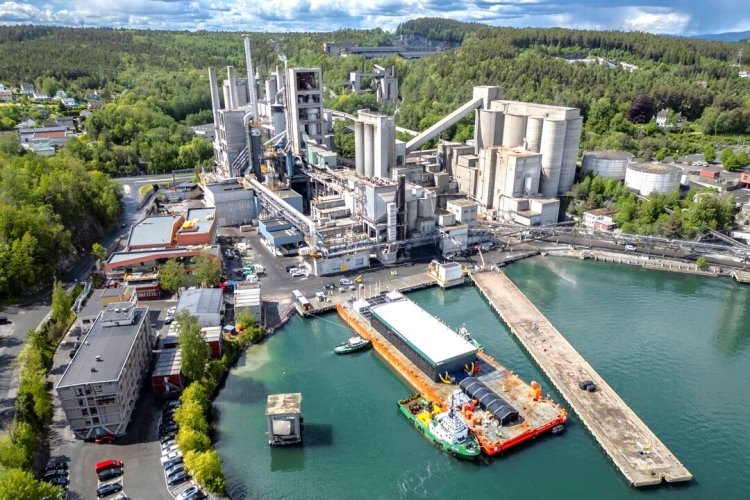
Heidelberg Materials has opened the world's first industrial-scale carbon capture and storage (CCS) unit for the cement industry at its Brevik cement plant in Norway. The innovation marks a significant step towards decarbonising one of the world's most emissions-intensive industries. Cement manufacturing releases around 7% of the world's carbon dioxide (CO₂) emissions because the high-temperature process of turning limestone into clinker is the main material for cement.
The new CCS plant at Brevik should capture approximately 400,000 tonnes of CO₂ every year, equivalent to almost 50% of the plant's total emissions. The project is within Norway's Longship program that is constructing Europe's first integrated CCS value chain. The injected CO₂ will be liquefied and shipped out to the Northern Lights terminal in Øygarden before transportation by pipeline to a permanent sub-sea storage location under the North Sea.
The opening ceremony was graced by dignitaries such as H.R.H. Crown Prince Haakon of Norway and Norwegian Energy Minister Terje Aasland, among over 320 government and industry representatives. The Brevik CCS plant was built in over 1.2 million working hours with the maximum number of site staff ever present amounting to 400 workers at any given time during construction. The system was successfully integrated into the operating plant without interfering with the regular cement production. In addition, 30 new personnel were hired and trained to run the CCS services.
First tons of CO₂ have already been captured during the ramp-up phase. Heidelberg Materials will start delivering its new product portfolio, evoZero — a captured carbon cement — towards the end of this year. The product aims to enable net-zero concrete construction in Europe, providing customers in infrastructure and real estate development with a solution for minimizing embodied emissions in their projects.
The Brevik CCS project is also being thought of as a pilot for future projects in the industry. Cement has been accepted as a "hard-to-abate" sector because of the chemical nature of the emissions that occur in the process. Traditional ways of reducing emissions, such as enhanced energy efficiency or fuel substitution, only solve half the problem. CCS is also being thought of as crucial in order to achieve near-zero emissions in this sector.
The plant will be used as a model for future CCS developments across Heidelberg Materials' own network of plants and within the industry as a whole, the company added. Brevik is the flagship project in a pipeline of CCS and carbon capture, utilisation and storage (CCUS) projects aimed at lowering the carbon footprint of its operations around the world, said the company.
The Longship project, which the Brevik CCS plant is funded in, is paid for by the Norwegian government with an aim of developing an expandable CCS system that can service multiple carbon-emitting industries. It encompasses the entire value chain — capture, liquefaction, transport, and storage — and is designed to show CCS as a long-term climate solution.
Brevik CCS arrives at a time when European regulation is raising the bar for industrial decarbonisation. The European Union has issued stricter rules on emissions and is promoting accelerated uptake of low-carbon technologies. Heavy industry operators must get on board with climate targets under the European Green Deal to reach net-zero emissions by 2050 in the EU.
Carbon capture in cement manufacturing is the singular challenge in that it involves process emissions which cannot be mitigated by normal practice. Success of the Brevik project could expedite policy and investment in the sector more rapidly, potentially leading to probable increased deployment of such technology.
Being the first of its kind, Brevik CCS plant would also set industry standards when it comes to technology integration, cost savings, and compliance with regulations. In demonstrating that CCS at commercial scale can be integrated into existing industrial facilities without stopping production, it has provided evidence that the transition to cleaner options does not involve halting plants.
This achievement is regarded as a game-changer for materials engineering and sustainable development, particularly in the face of growing demand for low-carbon infrastructure globally. As Heidelberg Materials begins to supply evoZero cement finally into the market, the sector will keenly observe customers' reaction to carbon-free building materials and whether CCS-technology-enabled products become the new norm along the value chain.
The project is also anticipated to be supplemented with other advantages like knowledge transfer, enhanced regulatory channels, and the production of an experienced workforce trained to operate and maintain CCS facilities. These are imperative in taking the technology beyond pilot scale levels and into full-scale deployment in several industries.
Source & Credits:
Through a press release and report of Norway opening Heidelberg Materials' Brevik CCS facility, June 2025.Photo credit: Heidelberg Materials.
What's Your Reaction?