The SHANTI Bill replaces older nuclear laws, opens the sector to private participation, and updates safety and liability rules to support India’s clean energy goals.
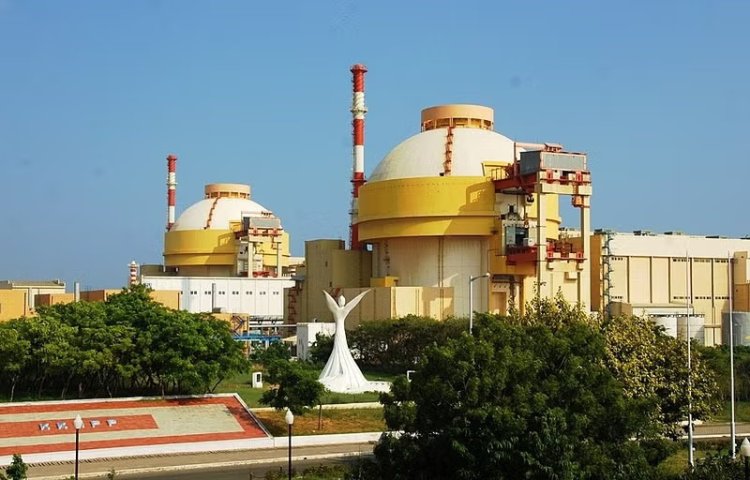
Parliament passed a new law called the Sustainable Harnessing and Advancement of Nuclear Energy for Transforming India (SHANTI) Bill, 2025. The new law brings major changes to India’s nuclear energy rules. This law replaces two older laws the Atomic Energy Act, 1962 and the Civil Liability for Nuclear Damage Act, 2010. The move reflects a policy shift aimed at expanding nuclear power while updating rules related to safety, regulation, and liability norms.
Earlier, the 1962 law governed how nuclear energy was developed and used in India, while another law the 2010 law defined who would pay compensation in case of a nuclear accident. By combining and updating these laws, the SHANTI Bill aims to support India’s long-term energy plans and attract encouraging more investment into the nuclear sector.
One of the most important changes is that private companies can now participate in certain nuclear activities. Earlier, only central government entities or government-owned companies were allowed to operate atomic mineral mines or handle nuclear materials. Under the new law, the central government can grant licences to Indian private companies, joint ventures between government and private firms, and other approved entities. However, foreign companies are still not allowed to take part.
The new law allows approved companies to build and run nuclear power plants as well as making, transporting, trading, and storing nuclear fuel. However, the law maintains strict safety oversight and any activity that involves radiation exposure must receive permission from the Atomic Energy Regulatory Board (AERB).
On the issue of nuclear liability, the law largely keeps the structure of the 2010 Act. The principle of no-fault liability continues, meaning that nuclear plant operators must compensate victims even if there is no negligence. Operators must also maintain insurance coverage, and the central government will step in if the liability exceeds a fixed limit. Certain exemptions, such as those related to specific natural disasters, remain unchanged.
However, the law introduces a new tiered liability system. Earlier, nuclear reactors with a capacity of 10 megawatts or more had a fixed liability cap of ₹1,500 crore. Under the new law, liability limits will range from ₹100 crore to ₹3,000 crore, depending on the size and power capacity of the nuclear installation.
Another major change concerns the operator’s right to recover costs from suppliers. Earlier, operators could claim compensation from suppliers if an accident occurred due to faulty equipment or materials. The new law removes this option. Operators can now recover costs only if it is specifically mentioned in a contract or if the incident was caused by a deliberate act meant to cause damage. This change addresses long-standing concerns raised by nuclear equipment suppliers about unlimited liability.
The law also expands the scope of compensation claims. Earlier, compensation applied only to damage within India. Under the new law, claims can also cover nuclear damage caused in a foreign country due to an incident in India, subject to certain conditions.
Another key development is that the Atomic Energy Regulatory Board (AERB) now gets legal backing through this law. Earlier, it functioned only under executive orders. The AERB will oversee radiation and nuclear safety and will include a chairperson, one full-time member, and up to seven part-time members appointed by the central government. The chairperson and full-time member must be experts in nuclear energy.
Appointments to the Board will be made based on recommendations from a search and selection committee formed by the Atomic Energy Commission. Members will serve an initial term of three years, which can be extended by another three years.
Finally, the law creates an Atomic Energy Redressal Advisory Council to hear appeals against decisions taken by the central government or the AERB. The Council will be headed by the Chairperson of the Atomic Energy Commission and will include senior officials from key nuclear and energy institutions. Any further appeals against the Council’s decisions can be taken to the Appellate Tribunal for Electricity.
Prime Minister welcomes passage of SHANTI Bill by Parliament
Prime Minister Narendra Modi has welcomed the passage of the SHANTI Bill by both Houses of Parliament, describing it as a transformational moment for India’s technology landscape.
He wrote on social media X platform; “The passing of the SHANTI Bill by both Houses of Parliament marks a transformational moment for our technology landscape. My gratitude to MPs who have supported its passage. From safely powering AI to enabling green manufacturing, it delivers a decisive boost to a clean-energy future for the country and the world. It also opens numerous opportunities for the private sector and our youth. This is the ideal time to invest, innovate and build in India!”

What's Your Reaction?